
Introduction
Preparing for the Graduate Aptitude Test in Engineering (GATE) requires more than simply completing a syllabus and memorising formulas. For students choosing the Engineering Sciences paper, preparation can be particularly demanding because the examination combines compulsory components with selected subject areas. A clear understanding of the paper structure, syllabus, subject selection, and preparation strategy is therefore important before beginning serious preparation.
The GATE XE paper is designed for candidates who want to explore Engineering Sciences through a combination of mathematical foundations and specialised technical areas. Unlike many traditional GATE papers that focus primarily on one engineering discipline, XE allows candidates to prepare through a broader structure involving Engineering Mathematics and selected optional sections. This makes the paper flexible, but it also requires careful planning and informed decision-making.
Students preparing independently may sometimes find it difficult to manage multiple sections, select suitable study resources, maintain a consistent revision schedule, and evaluate their performance through regular practice. A structured approach to GATE XE Coaching in Bangalore can help aspirants organise their preparation around concepts, problem-solving, previous year questions, revision, and mock-test practice.
Whether a student is beginning preparation from the basics or already has a strong academic background, understanding the GATE XE syllabus, examination structure, and subject requirements can make preparation more focused. The right study plan should combine conceptual clarity with consistent practice and regular performance analysis.
1. What Is GATE XE?
GATE XE refers to the Engineering Sciences paper of the Graduate Aptitude Test in Engineering. The paper is intended for candidates who want to demonstrate their understanding of mathematical and scientific concepts along with selected engineering and applied science subjects.
The Engineering Sciences paper is different from a conventional branch-specific GATE paper because it provides a structured combination of compulsory and optional sections. According to the latest GATE 2026 examination structure, the XE paper includes Engineering Mathematics (XE-A) as a compulsory section, while candidates select any two optional sections from the available choices. The paper also includes the common General Aptitude component.
Who Can Consider the GATE XE Paper?
The GATE XE paper may be considered by students and graduates whose academic background or career interests align with Engineering Sciences and its available subject areas. Candidates may come from different engineering, science, or related academic backgrounds, depending on their preparation strengths and the examination requirements applicable in the relevant year.
Students should carefully review the latest official GATE eligibility criteria before applying. Eligibility requirements, examination rules, and paper-related information should always be checked through the official examination notification.
Why Do Students Choose GATE XE?
One of the main reasons students consider the Engineering Sciences paper is its flexible subject structure. Instead of preparing for only one traditional engineering branch, candidates can select optional areas that match their academic background, conceptual strengths, and future interests.
For example, a candidate with a strong background in mechanical engineering may find subjects such as Fluid Mechanics, Solid Mechanics, or Thermodynamics relevant to their preparation. Similarly, students with interests in materials, polymers, food technology, energy, or atmospheric sciences may explore the optional sections that align with their academic goals.
This flexibility makes GATE XE preparation interesting, but it also means that students should not select subjects randomly. The choice of optional sections should be based on syllabus familiarity, previous academic exposure, available study material, and the amount of time available for preparation.
How Is the GATE XE Paper Structured?
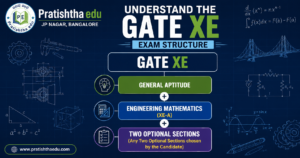
The GATE XE paper combines:
- General Aptitude
- Engineering Mathematics (XE-A)
- Any two selected optional XE sections
The latest official GATE pattern lists question types such as Multiple Choice Questions (MCQs), Multiple Select Questions (MSQs), and Numerical Answer Type (NAT) questions. Candidates should always verify the current examination pattern before starting preparation because the official structure may be updated for future examination cycles.
For beginners, understanding this structure is the first step towards creating a practical GATE XE preparation strategy. Once students know which sections they need to prepare, they can organise their study schedule, choose suitable books and resources, and plan their practice more effectively.
2. Why Choose GATE XE as Your GATE Paper?
Choosing the right GATE paper is an important decision because the syllabus, preparation method, and subject requirements can significantly influence the overall study plan. The Engineering Sciences paper can be a suitable option for candidates who are comfortable with mathematical concepts and want to prepare across selected engineering and applied science areas.
A Flexible Subject Structure
One of the distinctive features of GATE XE is the availability of optional sections. Candidates can select two optional areas from the sections provided in the official examination structure. This allows aspirants to choose subjects that are closer to their academic background or areas of interest.
However, flexibility should not be confused with simplicity. Preparing for multiple sections requires a clear timetable, consistent practice, and effective revision. Students planning to join GATE XE Coaching in Bangalore should also evaluate whether the available academic guidance matches their subject choices and preparation requirements.
Suitable for Different Academic Backgrounds
The Engineering Sciences paper may attract students from different academic backgrounds because its optional sections cover a range of technical and applied science areas. A candidate’s previous academic experience can be useful when selecting subjects and developing a preparation plan.
For instance, students with prior exposure to mechanics or thermal sciences may find certain sections more familiar, while others may prefer areas related to materials, polymers, food technology, energy, or atmospheric and oceanic sciences.
Useful for Higher Education and Academic Goals
A strong performance in GATE can support candidates pursuing postgraduate education and other academic opportunities, subject to the admission requirements of individual institutions and programmes. Students interested in advanced study should research the eligibility criteria and accepted GATE paper requirements of their target institutes before making a final decision.
The Engineering Sciences paper can therefore be relevant for candidates who want to build a foundation for further study in interdisciplinary areas. However, the suitability of GATE XE depends on the student’s academic background, preferred subjects, and long-term goals.
Scope for Interdisciplinary Learning
Another reason students consider GATE XE is its interdisciplinary nature. The paper brings together mathematical foundations with selected areas of engineering and applied science. This can appeal to students who are interested in learning beyond the boundaries of a single traditional engineering branch.
At the same time, this broad structure makes planning especially important. Candidates need to balance their compulsory preparation with two optional sections, while also allocating time for question practice and revision.
Why Structured Preparation Can Help
Many students begin GATE preparation with enthusiasm but face difficulties when they have to manage multiple subjects independently. Common challenges include selecting the right optional sections, finding reliable study resources, completing the syllabus on time, and maintaining consistency during revision.
A structured GATE XE preparation plan can help divide the syllabus into manageable stages. Regular classes, guided study, doubt-solving, practice questions, and mock-test analysis can provide a systematic framework for students who prefer organised preparation.
The goal of coaching should not be to replace self-study. Instead, structured guidance can help students use their self-study time more effectively and remain focused throughout the preparation journey.
Choosing GATE XE According to Your Strengths
Before selecting the Engineering Sciences paper, students should honestly evaluate:
- Their academic background
- Strongest technical subjects
- Understanding of mathematics
- Previous preparation experience
- Availability of study time
- Interest in the available XE sections
- Long-term academic or career goals
A well-informed decision at the beginning can make the rest of the preparation process more manageable. Students can also refer to the latest GATE Engineering Sciences syllabus and official examination information before finalising their preparation strategy.
For aspirants looking for structured guidance, GATE XE Coaching in Bangalore can be considered as one part of a broader preparation plan that includes self-study, practice, revision, and regular performance evaluation.
3. GATE XE Exam Pattern
Understanding the examination pattern is an important part of GATE XE preparation. Before beginning detailed subject-wise study, candidates should understand how the paper is structured, which sections are compulsory, how optional sections are selected, and what types of questions may appear in the examination.
The GATE XE paper combines General Aptitude, Engineering Mathematics, and selected optional sections. This structure makes it important for candidates to plan their preparation across different areas rather than focusing only on one subject.
According to the latest official GATE 2026 examination structure, the XE paper includes General Aptitude, Engineering Mathematics (XE-A), and any two optional XE sections selected by the candidate. Candidates should always check the latest official GATE notification before preparing for a particular examination year because the paper pattern, marking details, and other examination rules may be updated.
GATE XE Paper Structure
| Component | Details |
| General Aptitude | Common section |
| Engineering Mathematics (XE-A) | Compulsory section |
| Optional XE Sections | Any two sections selected by the candidate |
| Question Types | MCQ, MSQ and NAT |
| Examination Mode | Computer-based test |
| Examination Duration | As specified in the latest official notification |
The exact number of questions, marks distribution, negative marking rules, and section-wise details should be verified through the latest official GATE examination information before the examination.
General Aptitude
General Aptitude is a common component of the GATE examination and tests candidates on areas such as verbal ability, numerical ability, and reasoning-based skills. Although the section may carry fewer marks than the technical components, it should not be ignored during preparation.
Regular practice can help candidates improve their accuracy and speed in areas such as:
- Reading comprehension
- Basic grammar and verbal reasoning
- Numerical calculations
- Data interpretation
- Logical reasoning
- Analytical thinking
Students preparing with the help of GATE XE Coaching in Bangalore should ideally include General Aptitude practice in their weekly study schedule rather than leaving it entirely for the final stage.
Engineering Mathematics (XE-A)
Engineering Mathematics is a compulsory section of the XE paper and provides the mathematical foundation required for the examination. Candidates should focus on understanding concepts before moving towards extensive problem-solving.
Important areas may include:
- Linear Algebra
- Calculus
- Differential Equations
- Probability and Statistics
- Numerical Methods
- Other topics included in the latest official syllabus
Mathematics preparation should combine theory, formula revision, and regular practice. Simply memorising formulas may not be sufficient because questions can require candidates to apply concepts in different ways.
Optional XE Sections
The optional sections provide candidates with the flexibility to select two areas according to their academic background, strengths, and interests. The available options should always be checked in the latest official GATE syllabus.
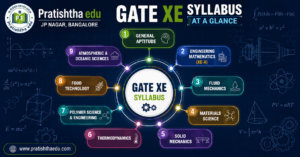
Depending on the current examination structure, candidates may find options related to areas such as:
- Fluid Mechanics
- Materials Science
- Solid Mechanics
- Thermodynamics
- Polymer Science and Engineering
- Food Technology
- Atmospheric and Oceanic Sciences
- Other officially listed XE sections
Candidates should not select optional sections only because they are popular among other aspirants. The right choice depends on factors such as previous academic exposure, familiarity with the syllabus, availability of study material, and the time available for preparation.
Types of Questions in GATE XE
The GATE examination may include different question formats, including:
Multiple Choice Questions (MCQs)
These questions provide multiple answer choices, with candidates required to select the correct option. Depending on the official marking scheme, negative marking may apply to certain MCQ questions.
Multiple Select Questions (MSQs)
In MSQ questions, more than one option may be correct. Candidates need to identify all applicable correct options according to the question.
Numerical Answer Type (NAT) Questions
NAT questions require candidates to enter a numerical answer instead of selecting an option from a list.
Understanding these question formats is important because the approach to solving each type can be different. Regular practice with previous year questions and mock tests can help students become more comfortable with the examination format.
Why Understanding the Exam Pattern Matters
Many students begin preparation by directly opening textbooks without first understanding the examination structure. This can result in an unbalanced preparation plan.
For example, a candidate may spend too much time on one optional subject while giving insufficient attention to Engineering Mathematics or General Aptitude. Understanding the paper pattern helps candidates distribute their time more effectively.
A structured preparation approach followed through GATE XE Coaching in Bangalore can help students organise their study schedule around compulsory sections, selected optional subjects, practice, revision, and mock-test analysis. However, regular individual study remains an essential part of preparation.
4. Complete GATE XE Syllabus
The GATE XE syllabus should be studied carefully before creating a preparation timetable. Since the paper combines multiple components, candidates need to understand the requirements of each section and plan their preparation accordingly.
The syllabus should always be checked against the latest official GATE notification before publication or preparation because topics and examination structures can change from one examination cycle to another.
General Aptitude Syllabus
The General Aptitude section generally tests candidates on verbal and numerical reasoning abilities.
Important areas may include:
Verbal Ability
- Basic English grammar
- Vocabulary
- Sentence completion
- Reading comprehension
- Verbal reasoning
- Sentence structure
Numerical Ability
- Basic arithmetic
- Percentages
- Ratios and proportions
- Averages
- Basic algebra
- Numerical calculations
- Data interpretation
Analytical and Logical Reasoning
- Logical relationships
- Patterns
- Analytical reasoning
- Interpretation of information
- Problem-solving
Candidates can improve this section through regular practice. Short and consistent sessions are often more useful than attempting to complete the entire General Aptitude syllabus just before the examination.
Engineering Mathematics (XE-A) Syllabus
Engineering Mathematics is one of the most important sections of the GATE XE paper because it is compulsory for all XE candidates.
Linear Algebra
Candidates may need to study concepts related to:
- Matrices
- Determinants
- Systems of linear equations
- Eigenvalues and eigenvectors
- Vector spaces
- Linear transformations
A strong understanding of fundamental concepts can help candidates solve both direct and application-based questions.
Calculus
Important areas may include:
- Functions
- Limits
- Continuity
- Differentiation
- Integration
- Applications of derivatives
- Multivariable calculus
Students should focus on both conceptual understanding and problem-solving practice.
Differential Equations
Preparation may include:
- Ordinary differential equations
- First-order differential equations
- Higher-order differential equations
- Methods of solving differential equations
- Applications of differential equations
The exact topics should be checked against the latest official syllabus.
Probability and Statistics
Important areas may include:
- Basic probability
- Random variables
- Probability distributions
- Mean and variance
- Statistical concepts
- Data analysis
These topics often require regular practice because candidates need to understand both formulas and their application.
Numerical Methods
This area may include concepts related to:
- Numerical solutions
- Approximation methods
- Errors
- Iterative methods
- Numerical calculations
Students should practise numerical problems carefully and understand the steps involved in different methods.
Optional XE Sections
The optional sections form an important part of the overall GATE XE preparation strategy. Candidates must select the required number of sections according to the latest official examination pattern.
The decision should be made after comparing the syllabus with the candidate’s academic background and preparation level.
Fluid Mechanics
Students preparing for Fluid Mechanics may encounter topics related to:
- Fluid properties
- Fluid statics
- Fluid dynamics
- Flow systems
- Conservation principles
- Fluid flow applications
This section may be suitable for candidates who already have an academic background in mechanical, civil, chemical, or related engineering areas, depending on their individual preparation strengths.
Materials Science
Materials Science may involve concepts related to:
- Structure of materials
- Material properties
- Phase-related concepts
- Material behaviour
- Processing and applications
Candidates should review the detailed syllabus before selecting this option.
Solid Mechanics
This area may include concepts related to:
- Stress and strain
- Mechanical behaviour of materials
- Deformation
- Strength-related concepts
- Structural response
Students with prior exposure to mechanics may find this section familiar, although the actual suitability depends on their academic background and preparation level.
Thermodynamics
Thermodynamics may cover concepts such as:
- Basic thermodynamic principles
- Properties of systems
- Energy concepts
- Entropy
- Thermodynamic processes
- Applications of thermodynamic principles
Candidates should consider their previous exposure to the subject before choosing it as an optional section.
Polymer Science and Engineering
This section may be relevant for students interested in polymer-related concepts and engineering applications. Preparation may involve understanding:
- Polymer structure
- Polymer properties
- Polymerisation
- Processing
- Applications
The latest official syllabus should be consulted for the complete topic list.
Food Technology
Food Technology may include areas related to:
- Food processing
- Food properties
- Preservation
- Food engineering principles
- Related scientific concepts
Candidates should carefully examine the syllabus and available study resources before selecting this section.
Atmospheric and Oceanic Sciences
This area may cover scientific concepts related to:
- The atmosphere
- Ocean systems
- Environmental processes
- Physical processes
- Related scientific principles
Students should choose this section based on their interest, academic background, and preparation resources.
How to Study the GATE XE Syllabus Effectively
Completing the syllabus should not be treated as simply reading every chapter once. Candidates should divide each section into three stages:
Stage 1: Concept Building
Understand the basic theory and fundamental principles of each topic.
Stage 2: Problem-Solving
Practise questions related to the concepts studied. This helps identify whether the theory can be applied effectively.
Stage 3: Revision and Evaluation
Revise formulas, concepts, and mistakes regularly. Mock tests and previous year questions can help evaluate preparation.
Students preparing through self-study or GATE XE Coaching in Bangalore can use this three-stage approach to create a more organised preparation system.
How to Create a Subject-Wise Syllabus Tracker
A simple syllabus tracker can include:
| Subject | Topic | Concept Completed | Practice Completed | Revision Completed |
| Engineering Mathematics | Calculus | Yes/No | Yes/No | Yes/No |
| Optional Section 1 | Topic-wise | Yes/No | Yes/No | Yes/No |
| Optional Section 2 | Topic-wise | Yes/No | Yes/No | Yes/No |
| General Aptitude | Topic-wise | Yes/No | Yes/No | Yes/No |
This approach helps students identify incomplete areas instead of relying only on memory.
The most effective preparation plan is one that combines a clear understanding of the GATE XE syllabus, consistent practice, regular revision, and performance analysis. Once candidates understand the examination structure and syllabus, they can move towards selecting the right optional sections and creating a personalised study plan.
5. How to Choose the Right GATE XE Optional Sections
Selecting the right optional sections is one of the most important decisions in GATE XE preparation. Since candidates need to prepare for selected optional areas along with General Aptitude and Engineering Mathematics, the choice of subjects can have a direct impact on the overall preparation strategy.
Students should avoid selecting optional sections simply because a particular subject is popular among other aspirants. A subject that is suitable for one candidate may not necessarily be the best choice for another. Instead, the decision should be based on academic background, existing knowledge, interest, available study resources, and the time available before the examination.
Consider Your Academic Background
A candidate’s previous academic experience can be an important factor when selecting optional sections. Students who have already studied a particular subject during their undergraduate programme may have a better understanding of its fundamental concepts.
For example, a student with a background in mechanical engineering may already be familiar with subjects such as Thermodynamics, Fluid Mechanics, or Solid Mechanics. This previous exposure can provide a useful starting point during GATE XE preparation.
However, academic background alone should not be the only factor. Candidates should also compare the complete syllabus and evaluate their current level of understanding.
Identify Your Strongest Subjects
Students should honestly identify the subjects in which they are most comfortable. A strong subject is not necessarily the one in which a candidate scored the highest marks in college. It may also be a subject in which the candidate understands concepts quickly and can solve problems with consistent practice.
Before finalising optional sections, candidates can ask themselves:
- Which subjects have I studied previously?
- Which concepts do I understand well?
- Which subjects require the least time to revise?
- Which topics can I practise consistently?
- Which subjects have reliable study resources available?
This self-evaluation can help candidates make a more informed decision.
Compare the Syllabus Before Choosing
Candidates should download and carefully compare the official syllabus of the available XE sections. A subject may appear interesting at first, but its detailed syllabus may contain topics that require significant preparation.
A practical comparison should include:
- Number of topics
- Familiarity with the concepts
- Difficulty level
- Availability of textbooks and lectures
- Previous year question availability
- Time required for completion
Students preparing with GATE XE Coaching in Bangalore can also discuss their academic background and subject preferences with faculty before finalising their preparation strategy.
Consider Previous GATE Preparation
Previous preparation can also influence the choice of optional sections. For example, a candidate who has already studied certain engineering subjects for another GATE paper may have a foundation that can be useful for related XE sections.
However, students should not assume that previous preparation automatically means complete readiness. The latest syllabus should still be reviewed carefully, and additional topics should be identified before creating a study plan.
Evaluate the Availability of Study Resources
Reliable study resources are important for completing any GATE subject effectively. Before selecting an optional section, candidates should check whether they have access to:
- Standard textbooks
- Reliable lectures
- Previous year questions
- Practice problems
- Mock tests
- Revision notes
A subject with good study resources may be easier to organise than a subject for which candidates struggle to find reliable material.
Consider Your Interest and Long-Term Goals
Interest can also influence consistency. Preparing for a subject that a candidate finds completely uninteresting may become difficult over a long preparation period.
Students should also consider their future academic interests. If a candidate plans to pursue higher studies or research in a particular field, an optional section related to that field may be worth considering, subject to the relevant examination and admission requirements.
Example of Optional Section Selection
A student with a mechanical engineering background may naturally feel more comfortable with areas such as Thermodynamics, Fluid Mechanics, or Solid Mechanics. However, the final choice should depend on the student’s actual understanding of the syllabus, previous preparation, available study time, and practice requirements.
The best optional sections are not necessarily the ones considered easiest by other students. They are the sections that match the candidate’s own strengths and can be prepared systematically.
6. GATE XE Preparation Strategy
A successful GATE XE preparation strategy should combine conceptual understanding, problem-solving, previous year question practice, revision, and mock-test analysis. Since the paper includes multiple components, candidates need to avoid an unbalanced approach.
Students should not spend several months preparing only one section while completely ignoring the compulsory components. A balanced preparation plan can help candidates make steady progress across the complete paper.

Step 1: Understand the GATE XE Exam Structure
Before beginning detailed preparation, candidates should understand:
- The compulsory sections
- The selected optional sections
- Question types
- Marking system
- Examination duration
- Time available before the examination
This first step helps students create a realistic preparation plan.
A candidate who understands the complete structure can divide the available preparation time more effectively between Engineering Mathematics, General Aptitude, and the two selected optional sections.
Step 2: Select the Right Optional Sections
The optional sections should be finalised after comparing the syllabus with the candidate’s academic background and preparation level.
Candidates should avoid changing their optional sections repeatedly after beginning serious preparation. Frequent changes can result in wasted time and incomplete syllabus coverage.
However, if a candidate realises during the initial evaluation stage that a subject is completely unsuitable, it may be better to reconsider the choice early rather than continue with an ineffective preparation plan.
Step 3: Build Strong Conceptual Understanding
Conceptual clarity should be the foundation of GATE XE preparation. Students should first understand the principles behind a topic before attempting a large number of questions.
A practical study cycle can include:
- Read or attend a lesson on the concept.
- Create short revision notes.
- Solve basic questions.
- Practise moderate and advanced problems.
- Review mistakes.
- Revise the topic after a fixed interval.
This approach helps students move from understanding a concept to applying it in examination-style questions.
Step 4: Create Short and Useful Revision Notes
Revision notes should not become a second textbook. They should focus on:
- Important formulas
- Key concepts
- Common mistakes
- Important conditions
- Short methods
- Frequently tested areas
Students can maintain separate notes for Engineering Mathematics and each selected optional section. These notes can become especially useful during the final revision stage.
Step 5: Practise Previous Year Questions
Previous year questions are an important part of any serious GATE preparation strategy. They help candidates understand how concepts are applied in actual examination questions.
PYQs can help students identify:
- Frequently tested concepts
- Question patterns
- Difficulty level
- Time required for different problems
- Common mistakes
Students should not simply solve a question and immediately move to the next one. The analysis after solving the question is equally important.
How to Analyse a PYQ
After attempting a previous year question, ask:
- Did I understand the concept?
- Did I select the correct approach?
- Did I make a calculation mistake?
- Did I take too much time?
- Was there a shorter method?
- Do I need to revise the underlying concept?
This analysis can make PYQ practice much more effective.
Step 6: Practise Questions Topic by Topic
Topic-wise practice is useful during the initial and middle stages of preparation. It allows students to focus on one concept area and identify weaknesses more easily.
For example, after completing a topic in Engineering Mathematics, students can solve questions specifically related to that topic before moving to mixed practice.
Later, candidates should gradually move towards mixed questions because the actual examination may test concepts from different areas.
Step 7: Take Regular Mock Tests
Mock tests provide an opportunity to practise under examination-like conditions. They can help students improve time management, identify weak areas, and understand their overall preparation level.
Students preparing through GATE XE Coaching in Bangalore may benefit from a structured test schedule that includes topic-wise tests, sectional tests, and full-length mock tests.
However, simply taking a mock test is not enough. The analysis after the test is often more valuable than the score itself.
7. How to Analyse GATE XE Mock Tests
A mock test analysis should include more than checking the final marks.
Analyse Incorrect Questions
Identify why each question was answered incorrectly:
- Conceptual misunderstanding
- Calculation error
- Misreading the question
- Incorrect formula
- Time pressure
- Guessing
Understanding the reason behind the mistake can help prevent similar errors in future tests.
Analyse Unattempted Questions
Some questions may remain unattempted because of:
- Lack of knowledge
- Lack of time
- Confusion between options
- Difficulty in solving the problem
Candidates should review these questions and determine whether they could have been attempted with better preparation or time management.
Analyse Time Management
Candidates should evaluate:
- Time spent on easy questions
- Time spent on difficult questions
- Time lost on lengthy calculations
- Time available for final review
This can help students develop a better strategy for the actual examination.
Maintain a Mistake Log
A mistake log can include:
| Date | Topic | Mistake | Reason | Correct Approach |
| 10 Jan | Calculus | Incorrect method | Concept confusion | Revise concept |
| 15 Jan | Thermodynamics | Calculation error | Careless mistake | Practise similar questions |
| 20 Jan | Aptitude | Time-consuming | Slow approach | Improve speed |
Reviewing this log regularly can help candidates identify repeated patterns in their mistakes.
8. GATE XE Preparation Through a Balanced Study Approach
A balanced preparation strategy should give attention to all important components of the paper.
Students can divide their preparation into:
Concept Learning
Understand new topics and build fundamental knowledge.
Practice
Solve topic-wise and mixed questions to improve application skills.
Revision
Review formulas, concepts, and mistakes at regular intervals.
Evaluation
Use PYQs and mock tests to measure preparation progress.
This cycle should continue throughout the preparation period.
Candidates should also avoid comparing their preparation speed with other students. Every aspirant has a different academic background, available study time, and level of previous preparation.
A structured approach to GATE XE Coaching in Bangalore can provide academic direction, but students should continue to dedicate sufficient time to individual practice and revision.
A Practical Weekly Preparation Pattern
A candidate may structure a weekly study plan around:
- Technical concept learning
- Engineering Mathematics practice
- General Aptitude practice
- Previous year questions
- Revision of completed topics
- Mock-test or sectional-test practice
The exact schedule can be modified according to the candidate’s academic timetable and preparation stage.
What Makes GATE XE Preparation More Effective?
The most effective preparation is usually based on consistency rather than studying for extremely long hours for a few days and then taking long breaks.
Candidates should focus on:
- Regular study
- Limited and reliable resources
- Continuous problem-solving
- Timely revision
- PYQ analysis
- Mock-test evaluation
A well-planned strategy can help students manage the different components of the GATE XE paper more systematically.
9. 6-Month GATE XE Study Plan
A six-month preparation plan can provide a useful structure for students who have sufficient time to prepare consistently. However, the exact duration required for GATE XE preparation may vary depending on a candidate’s academic background, previous knowledge, selected optional sections, and available study time.
Students with strong fundamentals may complete certain topics more quickly, while candidates beginning from the basics may need additional time for concept building. Therefore, the following six-month plan should be treated as a framework that can be adapted according to individual preparation needs.
A structured approach to GATE XE Coaching in Bangalore can help students organise classroom learning, self-study, practice, revision, and performance evaluation throughout these stages.

Months 1–2: Build the Foundation
The first two months should focus on understanding the syllabus and building fundamental concepts.
Before beginning detailed preparation, candidates should:
- Finalise their two optional XE sections
- Understand the complete syllabus
- Prepare a realistic timetable
- Collect limited and reliable study resources
- Begin Engineering Mathematics preparation
- Start General Aptitude practice
- Begin the first selected optional section
During this stage, students should avoid rushing through topics simply to complete the syllabus quickly. The focus should be on understanding fundamental concepts.
Engineering Mathematics Preparation
Candidates can begin with the topics included in the official XE-A syllabus and gradually build their understanding through theory and practice.
A practical approach can include:
- Understanding the basic concept
- Reviewing important formulas
- Solving introductory questions
- Practising standard problems
- Revising the topic after a few days
General Aptitude Preparation
General Aptitude should also be introduced during the initial stage. Candidates can spend a short amount of time regularly practising:
- Verbal ability
- Numerical ability
- Logical reasoning
- Data interpretation
Regular practice can help students improve gradually without placing excessive pressure on the final months of preparation.
Optional Section Preparation
Students should begin with the optional section that they have selected based on their academic background and preparation plan.
The focus during the first two months should be:
- Understanding the syllabus
- Building basic concepts
- Creating short notes
- Solving introductory questions
- Identifying difficult topics
Students should maintain a topic tracker to monitor their progress.
Months 3–4: Complete Major Concepts and Begin Intensive Practice
The third and fourth months should focus on strengthening preparation and covering the major parts of the syllabus.
By this stage, candidates should ideally have a clear understanding of the basic concepts in Engineering Mathematics and their selected optional sections.
The preparation should now gradually move from learning concepts to applying them through questions.
Complete Major Syllabus Areas
Students should continue studying the remaining topics in:
- Engineering Mathematics
- Optional Section 1
- Optional Section 2
- General Aptitude
The goal should not simply be to read every chapter once. Students should combine learning with regular practice.
Begin Topic-Wise PYQ Practice
Once a topic has been completed, candidates should begin solving relevant GATE previous year questions.
For each topic, students can follow this process:
- Study the concept.
- Solve basic practice questions.
- Attempt relevant PYQs.
- Analyse mistakes.
- Revise difficult concepts.
This approach can help candidates understand how theoretical concepts are applied in examination-style problems.
Identify Weak Areas
The third and fourth months are also a good time to identify weak topics.
Students should maintain a list of topics that require:
- Additional concept revision
- More question practice
- Formula revision
- Better time management
Identifying weak areas early gives candidates sufficient time to improve before the final revision stage.
Begin Mixed Practice
After completing sufficient topic-wise practice, students should gradually begin solving questions from different topics together.
Mixed practice is important because the actual examination may require candidates to move between different concepts and question types.
Students preparing through GATE XE Coaching in Bangalore should also use their regular performance feedback to identify areas where additional self-study may be required.
Month 5: Complete the Syllabus and Focus on Practice
The fifth month should be used to complete any remaining syllabus and increase the intensity of practice.
By the beginning of this stage, candidates should ideally have covered most of the important topics.
The focus should now shift towards:
- Completing remaining topics
- Revising previously studied concepts
- Solving more PYQs
- Taking sectional tests
- Revising formulas
- Improving speed and accuracy
Complete Remaining Topics
Candidates should avoid leaving major topics for the final month. Any incomplete portions of the syllabus should be completed as early as possible during this stage.
If some topics require significant preparation, students should prioritise them according to:
- Importance
- Difficulty
- Previous performance
- Time required
Increase PYQ Practice
At this stage, candidates should solve PYQs from different topics and sections.
Instead of solving questions only once, students should also revisit questions that were:
- Answered incorrectly
- Left unattempted
- Solved with excessive time
- Based on concepts that were previously unclear
This repeated analysis can help improve overall problem-solving ability.
Start Regular Mock Tests
Students can begin incorporating sectional and full-length mock tests into their preparation schedule.
Initially, the focus should be on understanding the test format and identifying weaknesses rather than focusing only on the score.
After every test, candidates should analyse:
- Incorrect answers
- Unattempted questions
- Time management
- Conceptual gaps
- Calculation mistake
Month 6: Final Revision and Examination Practice
The final month should focus on revision, mock tests, and improving examination readiness.
Students should avoid starting multiple new resources during this stage. The focus should be on revising what has already been studied and strengthening weak areas.
Full-Length Mock Tests
Candidates can take regular full-length mock tests under examination-like conditions.
During these tests, students should practise:
- Time management
- Question selection
- Section management
- Maintaining accuracy
- Avoiding unnecessary time loss
The exact frequency of mock tests can vary depending on the candidate’s preparation level.
Revise Weak Topics
The final month should not be limited to revising only strong topics. Candidates should also review topics where they have repeatedly made mistakes.
However, students should avoid spending excessive time trying to master completely unfamiliar topics at the last moment. The revision strategy should be realistic and focused.
Revise Formulas and Short Notes
Short notes can be especially useful during the final revision stage.
Candidates can revise:
- Important formulas
- Key concepts
- Common mistakes
- Frequently tested topics
- Important problem-solving methods
Regular revision can help improve recall and reduce the need to repeatedly study complete chapters.
Practise Time Management
The final stage should also include examination-style practice.
Students should develop a practical approach for:
- Reading questions
- Identifying easier questions
- Avoiding excessive time on one problem
- Returning to difficult questions later
- Keeping sufficient time for review
The purpose of this practice is to make the examination approach more systematic.

10. Daily Study Plan for GATE XE
A daily study plan can help candidates maintain consistency during GATE XE preparation. However, there is no single timetable that works for every student.
The ideal schedule depends on:
- College or work commitments
- Previous academic preparation
- Selected optional sections
- Available study hours
- Individual learning speed
The following schedule can be used as a general framework and modified according to personal requirements.
Example Daily Study Schedule
| Study Activity | Approximate Time |
| Main Technical/Optional Subject | 2 Hours |
| Engineering Mathematics | 1 Hour |
| General Aptitude | 45 Minutes |
| Practice Questions/PYQs | 1 Hour |
| Revision | 30 Minutes |
This schedule provides approximately five hours of focused study. Students with less available time can reduce the duration while maintaining regularity.
Session 1: Main Technical or Optional Subject
The first major study session can be used for learning new concepts in one of the selected optional sections.
Students can:
- Study a new topic
- Attend a class or lecture
- Read a standard reference
- Create short notes
- Solve basic questions
Candidates should try to study difficult or concept-heavy topics when their concentration level is highest.
Session 2: Engineering Mathematics
Engineering Mathematics should receive regular attention because it is a compulsory part of the XE paper.
A one-hour session can include:
- Learning a new concept
- Revising formulas
- Solving topic-wise questions
- Reviewing previous mistakes
Regular practice is generally more useful than studying mathematics only occasionally for long hours.
Session 3: General Aptitude
A short daily or regular practice session can be used for General Aptitude.
Students can rotate between:
- Verbal ability
- Numerical ability
- Logical reasoning
- Data interpretation
The aim should be to improve familiarity and accuracy gradually.
Session 4: PYQs and Practice Questions
Question-solving should form an important part of the daily schedule.
Students should not limit practice to questions from topics studied on the same day. Depending on the preparation stage, they can also revise previously completed topics.
This helps improve long-term retention and problem-solving flexibility.
Session 5: Daily Revision
A short revision session can be used to review:
- Formulas
- Important concepts
- Mistakes made during practice
- Short notes
- Difficult questions
Daily revision does not need to involve reading complete chapters again. Focused revision can be more practical and time-efficient.
11. How to Balance GATE XE Preparation with College or Other Commitments
Many GATE aspirants prepare while attending college, completing academic assignments, or managing other responsibilities. A realistic preparation plan should take these commitments into account.
Students should avoid creating a timetable that looks impressive but cannot be followed consistently.
Instead, candidates can:
- Set weekly study targets
- Divide large topics into smaller tasks
- Use weekends for longer practice sessions
- Maintain a daily minimum study target
- Review progress every week
For example, a student may not be able to study for five hours every weekday but may still make consistent progress through shorter focused sessions and longer weekend study periods.
Students considering GATE XE Coaching in Bangalore should also evaluate how coaching schedules fit into their college, work, and self-study commitments. Structured guidance is most useful when students can dedicate sufficient time to individual practice and revision.
12. How to Track Your GATE XE Preparation Progress
A simple progress tracker can help candidates understand whether their preparation is moving according to plan.
Students can track:
| Area | Status |
| Engineering Mathematics | Not Started / In Progress / Completed |
| Optional Section 1 | Not Started / In Progress / Completed |
| Optional Section 2 | Not Started / In Progress / Completed |
| PYQ Practice | Not Started / In Progress / Completed |
| Mock Tests | Not Started / In Progress / Completed |
| Revision | Not Started / In Progress / Completed |
Candidates can update the tracker every week.
The purpose of tracking is not to create unnecessary pressure. It is to identify unfinished areas and make timely adjustments to the preparation plan.
A well-planned six-month strategy can provide direction, but consistency remains one of the most important factors in GATE XE preparation. Students should focus on understanding concepts, solving questions regularly, revising completed topics, and analysing their performance over time.
13. Best Books and Study Resources for GATE XE Preparation
Choosing the right study resources is an important part of effective GATE XE preparation. Since the Engineering Sciences paper includes Engineering Mathematics, General Aptitude, and selected optional sections, candidates may need different resources for different areas.
However, using too many books and study materials can sometimes create confusion. Students may spend more time collecting resources than actually studying and practising. A better approach is to select a limited set of reliable, syllabus-focused resources.
Use the Official GATE Syllabus as a Reference
The latest official GATE syllabus should be the starting point for preparation. Candidates should compare every book, lecture, or study material with the official syllabus to ensure that their preparation remains relevant.
The syllabus can help students:
- Identify important topics
- Divide subjects into smaller sections
- Track completed topics
- Avoid unnecessary chapters
- Create a realistic study plan
Students should regularly refer to the official GATE Engineering Sciences syllabus while preparing their subject-wise study schedule.
Standard Textbooks for Concept Building
Standard textbooks can be useful for understanding fundamental concepts, especially when students are preparing for subjects that require strong theoretical knowledge.
However, candidates do not necessarily need to read multiple textbooks for the same subject. One reliable primary resource, supported by practice material and previous year questions, may be sufficient for many topics.
Students should focus on:
- Conceptual clarity
- Relevant syllabus coverage
- Solved examples
- Practice questions
- Revision
The best book is not always the book with the largest number of pages. It is the resource that helps a student understand the required concepts and apply them effectively.
Previous Year Question Papers
GATE previous year question papers are among the most important resources for preparation.
PYQs can help candidates understand:
- The way concepts are tested
- Question difficulty
- Frequently tested topics
- Different question formats
- Time required for problem-solving
Students should solve PYQs after completing the relevant concepts instead of waiting until the final stage.
A useful approach is to maintain a record of:
- Correct answers
- Incorrect answers
- Unattempted questions
- Questions that took too much time
This record can be reviewed during revision.
Mock Tests and Practice Tests
Mock tests help candidates practise under examination-like conditions. They can also help students evaluate their preparation and identify areas requiring improvement.
A useful test schedule may include:
- Topic-wise tests during the early preparation stage
- Sectional tests after completing major topics
- Full-length tests during the final preparation stage
However, students should remember that the purpose of a mock test is not only to obtain a score. Test analysis is equally important.
Reliable Online Lectures and Study Material
Online lectures can be useful for understanding difficult concepts or revising topics. However, students should avoid continuously switching between multiple teachers and platforms.
Before choosing an online resource, candidates should evaluate:
- Syllabus coverage
- Teaching clarity
- Conceptual depth
- Practice questions
- Relevance to the GATE examination
Using a consistent learning source can make preparation more organised.
Short Notes and Formula Sheets
Short notes can help students quickly revise important concepts.
Useful notes may include:
- Important formulas
- Key definitions
- Common mistakes
- Important conditions
- Short problem-solving methods
- Difficult concepts
Students should create notes gradually during preparation instead of trying to prepare complete revision notes at the last moment.
How to Avoid Resource Overload
One common mistake during GATE XE preparation is collecting too many books, PDFs, lectures, and online resources.
Resource overload can lead to:
- Repeated study of the same topic
- Confusion between different approaches
- Incomplete syllabus coverage
- Less time for question practice
A practical preparation strategy should focus on:
One primary learning resource + relevant practice questions + PYQs + mock tests + regular revision.
This approach can help students use their preparation time more efficiently.
14. Why Consider GATE XE Coaching in Bangalore?
Preparing for the Engineering Sciences paper requires candidates to manage multiple sections and maintain consistency over a long preparation period. While self-study can work well for some students, others may prefer structured guidance.
Students considering GATE XE Coaching in Bangalore should evaluate whether a coaching programme matches their preparation needs, academic background, selected optional sections, and available study time.
Structured Study Planning
A structured preparation programme can help students divide the syllabus into manageable stages.
Instead of deciding every day what to study, students can follow a planned approach involving:
- Concept learning
- Subject-wise practice
- PYQ solving
- Revision
- Mock tests
A structured plan can be especially useful for students who find it difficult to maintain consistency through self-study alone.
Faculty Guidance
Guidance from experienced faculty can help students understand difficult concepts and identify suitable preparation approaches.
Faculty support may help with:
- Concept clarification
- Problem-solving methods
- Subject selection
- Study planning
- Preparation-related doubts
Students should also continue individual practice because classroom learning alone cannot replace self-study.
Subject-Wise Preparation
Since GATE XE includes multiple components, subject-wise preparation can help students organise their study more effectively.
A structured learning approach may divide preparation into:
- General Aptitude
- Engineering Mathematics
- Selected XE Section 1
- Selected XE Section 2
This can help students monitor progress across the complete paper.
Doubt-Solving Support
Students may face doubts while studying concepts or solving practice questions. Regular doubt-solving support can help prevent small misunderstandings from becoming larger gaps in preparation.
A useful doubt-solving process should help students understand:
- Why an answer is correct
- Why an approach is incorrect
- Which concept is involved
- How similar questions can be solved
Regular Practice
Consistent question practice is an important part of GATE preparation.
A structured learning environment can encourage students to practise:
- Topic-wise questions
- Previous year questions
- Sectional tests
- Full-length mock tests
Regular practice can help candidates improve their accuracy and confidence over time.
Mock Tests and Performance Analysis
Mock tests can help candidates understand their preparation level.
Performance analysis can identify:
- Weak topics
- Repeated mistakes
- Time-management issues
- Accuracy problems
- Areas requiring additional revision
The purpose of analysis is to help students improve their preparation strategy rather than simply compare scores with others.
Revision Guidance
Many students complete topics but do not revise them regularly. Over time, this can affect recall and problem-solving ability.
A structured revision approach can help candidates revisit:
- Important formulas
- Difficult concepts
- Previous mistakes
- PYQs
- Mock-test performance
Regular revision should be included throughout the preparation journey rather than being postponed entirely until the last month.
15. Why Choose Pratishtha Edu for GATE XE Preparation?
Choosing a coaching institute is an important decision, and students should evaluate an institute based on the type of guidance and academic support it provides.
At Pratishtha Edu, students preparing for GATE can follow a structured approach that combines guided learning with individual preparation. The objective of preparation should be to help students understand concepts, practise consistently, revise effectively, and evaluate their progress.
Structured Preparation Approach
A planned preparation approach can help students organise their GATE XE journey around different stages of learning.
These stages may include:
- Understanding concepts
- Completing the syllabus
- Solving practice questions
- Attempting PYQs
- Revising important topics
- Taking mock tests
- Analysing performance
This structure can help candidates maintain better direction during preparation.
Guidance for Subject-Wise Preparation
GATE XE candidates need to prepare across different sections. A subject-wise approach can help students focus on each component systematically.
Candidates should understand the requirements of:
- General Aptitude
- Engineering Mathematics
- Selected Optional Section 1
- Selected Optional Section 2
The preparation plan should be adapted according to the student’s academic background and selected subject areas.
Practice and Test-Based Preparation
Regular practice is an important part of competitive examination preparation. Students can benefit from solving different types of questions and evaluating their performance regularly.
Practice may include:
- Concept-based questions
- Topic-wise questions
- Previous year questions
- Sectional tests
- Full-length mock tests
Test performance can then be reviewed to identify areas that require improvement.
Support During Preparation
Students may require guidance at different stages of preparation. This can include support with:
- Understanding difficult topics
- Planning the syllabus
- Reviewing mistakes
- Revising important concepts
- Improving examination preparation
However, students should also take responsibility for their own preparation through regular self-study and consistent practice.
A Balanced Approach to Coaching and Self-Study
The most effective preparation is generally not based only on classroom learning or only on self-study. A balanced approach can combine:
Guided Learning + Self-Study + Practice + Revision + Performance Analysis
Students considering GATE XE Coaching in Bangalore should therefore look for a preparation environment that supports both structured guidance and independent effort.
The final outcome of preparation depends on several factors, including conceptual understanding, consistency, practice, revision, and the candidate’s individual effort. Coaching can provide direction, but students must remain actively involved throughout the preparation process.
16. Self-Study vs GATE XE Coaching: Which Approach Is Right for You?
Students preparing for the Engineering Sciences paper often wonder whether they should prepare independently or join a coaching programme. There is no single answer that applies to every candidate. The right approach depends on academic background, preparation level, available time, learning preferences, and the ability to follow a consistent study plan.
Both self-study and coaching can be effective when combined with regular practice, revision, and performance evaluation.
Self-Study May Work Well For Students Who:
- Have strong fundamentals in their selected subjects
- Can understand concepts independently
- Are comfortable creating their own study plan
- Can maintain consistency without external supervision
- Know how to select reliable study resources
- Can analyse their own mistakes and performance
Self-study gives students flexibility. They can decide their study hours, choose their resources, and spend additional time on topics they find difficult.
However, self-study also requires discipline. Students need to plan their preparation, monitor their progress, and identify their weaknesses independently.
Coaching May Help Students Who Need:
- A structured preparation plan
- Guidance for difficult concepts
- Regular doubt-solving support
- Subject-wise preparation
- A fixed study schedule
- Regular tests and performance analysis
- Guidance for revision and exam preparation
Students considering GATE Coaching in Bangalore should evaluate whether structured guidance matches their preparation needs. Coaching can provide direction and academic support, but students still need to dedicate sufficient time to self-study and individual practice.
A Combination of Coaching and Self-Study
For many students, a combination of structured guidance and self-study can be a practical approach.
A balanced preparation model can include:
Coaching or Guided Learning → Self-Study → Question Practice → PYQs → Mock Tests → Revision
Each component serves a different purpose.
- Coaching can provide direction.
- Self-study helps strengthen understanding.
- Practice improves problem-solving ability.
- PYQs provide familiarity with examination-style questions.
- Mock tests help evaluate preparation.
- Revision improves recall.
Therefore, students should not view coaching and self-study as opposite approaches. The most suitable preparation method depends on the individual candidate.
17. Common Mistakes in GATE XE Preparation
A well-planned preparation strategy can help students avoid common mistakes that may affect their progress. Identifying these mistakes early can make preparation more organised and effective.
Mistake 1: Choosing Optional Sections Without Comparing the Syllabus
Some candidates select optional sections based only on recommendations from friends or other aspirants.
A subject that is suitable for one student may not be suitable for another. Candidates should compare:
- Academic background
- Syllabus
- Previous knowledge
- Study resources
- Available preparation time
The decision should be based on individual strengths rather than popularity.
Mistake 2: Ignoring Engineering Mathematics
Engineering Mathematics is a compulsory component of the XE paper. Some students focus heavily on their optional sections and postpone mathematics preparation.
This can create unnecessary pressure later.
Candidates should include Mathematics in their preparation schedule from the beginning and practise it regularly.
Mistake 3: Ignoring General Aptitude
General Aptitude may appear easier than technical subjects, but ignoring it completely can affect overall preparation.
Regular practice in verbal, numerical, and reasoning areas can help candidates become more comfortable with different question types.
Mistake 4: Using Too Many Study Resources
Collecting multiple books, PDFs, lectures, and online courses can create confusion.
Students may repeatedly study the same topics from different resources while leaving other parts of the syllabus incomplete.
A better approach is to use:
- One reliable primary resource
- Relevant practice material
- Previous year questions
- Mock tests
- Short revision notes
Mistake 5: Not Solving Previous Year Questions
Reading theory without solving questions can create a false sense of preparation.
PYQs help candidates understand how concepts are applied in the examination. Students should solve and analyse them throughout the preparation process.
Mistake 6: Taking Mock Tests Without Analysing Mistakes
A mock test score alone does not show the complete preparation level.
After every test, candidates should review:
- Incorrect answers
- Unattempted questions
- Time-consuming questions
- Conceptual mistakes
- Calculation errors
The purpose of a mock test is to identify areas for improvement.
Mistake 7: Starting Revision Too Late
Many students complete the syllabus but postpone revision until the final weeks.
This can make it difficult to recall topics studied several months earlier.
Revision should begin while preparation is still in progress. Regular short revisions can make final revision more manageable.
Mistake 8: Focusing Only on Study Hours
Long study hours do not automatically guarantee effective preparation.
The quality of study is also important.
Candidates should focus on:
- Understanding concepts
- Solving questions
- Analysing mistakes
- Revising regularly
- Maintaining consistency
A realistic timetable that can be followed consistently is often more useful than an unrealistic schedule.
18. Frequently Asked Questions About GATE XE Preparation
Is GATE XE difficult to prepare for?
The difficulty of GATE XE preparation depends on the candidate’s academic background, selected optional sections, conceptual understanding, and preparation time.
The paper includes compulsory components along with selected optional sections, so candidates need to manage multiple areas effectively. A structured study plan, consistent practice, PYQs, and regular revision can help make preparation more systematic.
How should I choose my GATE XE optional sections?
Candidates should select optional sections according to their academic background, strongest subjects, previous preparation, interest, available study resources, and preparation time.
Students should compare the detailed syllabus before finalising their choice instead of selecting a subject only because it is popular among other aspirants.
Can I prepare for GATE XE through self-study?
Yes, self-study can be a suitable approach for students who have strong fundamentals, can create a realistic study plan, and maintain consistency.
However, students who need structured guidance, regular doubt-solving, planned preparation, or performance tracking may consider GATE XE Coaching in Bangalore as part of their preparation approach.
How important are GATE previous year questions?
Previous year questions are an important part of GATE preparation. They help candidates understand question patterns, concept application, difficulty level, and time requirements.
Students should not only solve PYQs but also analyse their mistakes and review the concepts behind difficult questions.
How many months are required for GATE XE preparation?
The preparation duration depends on the candidate’s academic background, previous knowledge, selected optional sections, and available study time.
Some students may require several months of structured preparation, while others with strong fundamentals may need less time. A six-month preparation plan can provide a useful framework, but it should be adjusted according to individual requirements.
Is coaching necessary for GATE XE preparation?
Coaching is not compulsory for every student. Some candidates may be comfortable preparing independently, while others may benefit from structured guidance and academic support.
Students should evaluate their own preparation needs before deciding between self-study, coaching, or a combination of both.
What study resources should I use for GATE XE?
Candidates should use the latest official syllabus, reliable textbooks or learning resources, previous year questions, practice material, mock tests, and revision notes.
Students should avoid collecting too many resources and focus on completing and revising a limited set of reliable study material.
How can I improve my GATE XE mock test performance?
Candidates can improve mock test performance by analysing every test carefully.
After each test, review:
- Incorrect questions
- Unattempted questions
- Time-consuming problems
- Conceptual gaps
- Calculation mistakes
Regular analysis can help improve accuracy, time management, and question selection.
19. Conclusion
Preparing for the Engineering Sciences paper requires a clear understanding of the examination structure, syllabus, optional sections, and preparation requirements. Since the GATE XE paper combines General Aptitude, Engineering Mathematics, and selected optional sections, candidates need to create a balanced study plan instead of focusing on only one area.
The first step is to understand the latest GATE XE syllabus and carefully select optional sections according to academic background, subject familiarity, available study resources, and preparation goals. Once the subject choices are finalised, students can follow a structured preparation strategy based on conceptual understanding, regular problem-solving, previous year questions, revision, and mock-test analysis.
A six-month study plan can provide a useful framework for students who have sufficient preparation time. However, the duration and daily schedule should be adapted according to individual academic commitments and learning requirements. Consistency is generally more important than following an unrealistic timetable.
Students who are comfortable planning their own preparation may choose self-study, while those who need structured guidance, faculty support, doubt-solving, regular practice, and performance evaluation may consider GATE XE Coaching in Bangalore according to their individual needs.
Ultimately, effective preparation depends on combining the right resources with disciplined self-study, regular practice, timely revision, and continuous performance analysis. With a systematic approach and a clear understanding of the examination requirements, aspirants can work towards their GATE XE preparation goals with greater direction and confidence.
20. GATE XE Exam-Day Strategy and Final Revision Tips
The final stage of GATE XE preparation is not only about studying more topics. It is also about revising effectively, practising under examination conditions, and developing a clear strategy for the actual examination day.
Many students complete a large portion of the syllabus but feel anxious during the final weeks because they do not have a clear revision plan. A structured final strategy can help candidates focus on important concepts, review mistakes, and improve their confidence before the examination.
Start Final Revision in a Planned Manner
During the final stage, students should avoid trying to learn every topic from the beginning again. Instead, revision should focus on:
- Important concepts
- Formulas
- Frequently tested topics
- Previous mistakes
- Difficult questions
- Previous year questions
- Mock-test performance
Candidates can divide their revision into Engineering Mathematics, General Aptitude, and their two selected optional sections.
Follow a 30-Day Revision Strategy
A practical 30-day revision plan may include:
Days 1–10: Revise Core Concepts
Focus on the important concepts from:
- Engineering Mathematics
- Optional Section 1
- Optional Section 2
- General Aptitude
Review short notes, formulas, and topics where mistakes were previously made.
Days 11–20: Practice and Test Yourself
During this stage, candidates can focus on:
- Previous year questions
- Sectional tests
- Mixed practice
- Formula revision
- Weak topic improvement
Students should also continue analysing their mistakes instead of simply increasing the number of questions attempted.
Days 21–26: Full-Length Mock Tests
Candidates can attempt full-length mock tests under examination-like conditions.
During this stage, focus on:
- Time management
- Question selection
- Accuracy
- Section management
- Avoiding careless mistakes
After every mock test, conduct a detailed analysis.
Days 27–30: Final Revision
The last few days should focus on:
- Short notes
- Important formulas
- Common mistakes
- Difficult concepts
- Previously attempted PYQs
Students should avoid starting multiple new books or completely unfamiliar resources during the final days.
21. GATE XE Exam-Day Time Management Strategy
Time management is an important part of the examination strategy. Candidates should have a clear approach before entering the examination hall.
A practical approach can involve three stages.
First Stage: Identify Easy Questions
Begin by identifying questions that appear familiar and can be solved with reasonable confidence.
Solving easier questions first can help:
- Build confidence
- Secure marks
- Avoid wasting time
- Create more time for difficult questions
Second Stage: Attempt Moderate Questions
After completing the questions that can be solved confidently, candidates can move towards moderate-difficulty questions.
Students should carefully evaluate the time required for each question. Spending too much time on a single problem can affect the overall performance.
Third Stage: Review Difficult Questions
Difficult or time-consuming questions can be attempted later if sufficient time remains.
Candidates should avoid spending excessive time on one question simply because they have already invested several minutes in it.
A flexible question-selection strategy can be more useful than attempting questions strictly in a particular order.
22. How to Approach Different Question Types
The GATE examination may include different question formats, and candidates should be familiar with each type before the examination.
Multiple Choice Questions
Candidates should carefully read all options before selecting an answer.
Avoid selecting an option only because it appears familiar. Check the calculation and logic wherever necessary.
Multiple Select Questions
Candidates should carefully evaluate each option because more than one answer may be correct.
Students should avoid selecting an option based on partial understanding of the question.
Numerical Answer Type Questions
Candidates should pay attention to:
- Calculation accuracy
- Units
- Decimal values
- Approximation requirements
Careless calculation mistakes can affect otherwise correct solutions.
23. Final Week Preparation Tips
The final week should be used for focused revision rather than excessive new learning.
Candidates can:
- Revise important formulas
- Review short notes
- Analyse previous mistakes
- Solve selected PYQs
- Maintain a regular sleep schedule
- Avoid unnecessary resource switching
Students should also ensure that they are familiar with the examination instructions and required documents according to the latest official examination guidelines.
Avoid Excessive Last-Minute Preparation
Studying continuously for extremely long hours during the final days may affect concentration and sleep.
A balanced routine can help students remain mentally prepared for the examination.
The objective of the final week should be to revise important material and maintain confidence rather than trying to complete the entire preparation again.
24. Common Mistakes to Avoid on GATE XE Exam Day
Candidates should try to avoid:
- Spending too much time on one difficult question
- Attempting questions without reading them carefully
- Making avoidable calculation errors
- Ignoring time during the examination
- Panicking after encountering a difficult question
- Changing correct answers without a valid reason
- Ignoring examination instructions
Not every question needs to be solved. The focus should be on making informed decisions and managing the available time effectively.
25. Final Checklist for GATE XE Aspirants
Before the examination, candidates should review:
Preparation Checklist
- Complete the important syllabus areas
- Revise Engineering Mathematics
- Practise General Aptitude
- Revise both selected optional sections
- Solve relevant previous year questions
- Attempt mock tests
- Analyse mistakes
- Revise formulas and short notes
Examination Readiness Checklist
- Check the latest examination instructions
- Keep required documents ready
- Understand the examination schedule
- Plan travel if required
- Get adequate rest before the examination
A calm and organised approach can help candidates focus better during the examination.
Students preparing through GATE XE Coaching in Bangalore can use the final revision stage to combine classroom guidance, individual study, mock-test analysis, and targeted revision. However, every candidate should develop a personal examination strategy based on their own preparation and practice experience.
The final stage of preparation should be focused on improving accuracy, managing time effectively, revising important concepts, and entering the examination with a clear plan.
26. Why Choose Pratishtha Edu for GATE XE Preparation?
Choosing the right preparation environment can help students maintain better direction throughout their GATE preparation journey. Since the GATE XE paper includes Engineering Mathematics, General Aptitude, and selected optional sections, candidates may benefit from a structured approach that combines learning, practice, revision, and performance evaluation.
At Pratishtha Edu, students preparing for GATE can follow a preparation approach focused on building conceptual understanding and developing regular practice habits. The preparation process can be organised around the different stages of the examination journey.
Structured Learning Approach
A structured learning approach can help students divide their preparation into manageable stages, including:
- Understanding the syllabus
- Building fundamental concepts
- Completing subject-wise topics
- Solving practice questions
- Attempting previous year questions
- Revising important concepts
- Taking mock tests
- Analysing performance
This approach can help candidates maintain better direction throughout their preparation.
Subject-Wise Preparation
GATE XE candidates need to prepare for different sections of the paper. A subject-wise approach can help students organise their preparation more systematically.
Candidates can plan their preparation around:
- General Aptitude
- Engineering Mathematics
- Selected XE Optional Section 1
- Selected XE Optional Section 2
The preparation strategy should be adjusted according to the candidate’s academic background, preparation level, and selected subjects.
Regular Practice and Performance Evaluation
Regular practice is an important part of competitive examination preparation. Students can improve their problem-solving approach by practising different types of questions and reviewing their performance.
A structured preparation process may include:
- Topic-wise practice
- Previous year question solving
- Sectional tests
- Full-length mock tests
- Mistake analysis
- Revision of weak areas
Performance evaluation can help candidates understand which areas require additional preparation.
Guidance and Doubt-Solving Support
Students may encounter difficult concepts or questions during their preparation. Academic guidance and doubt-solving support can help candidates understand challenging topics more clearly.
However, students should also continue with regular self-study and individual practice. Coaching and guidance can provide direction, but consistent effort remains an important part of GATE preparation.
A Balanced Preparation Strategy
Effective GATE XE preparation requires a combination of different activities:
Conceptual Understanding + Self-Study + Practice + PYQs + Mock Tests + Revision
Students considering GATE XE Coaching in Bangalore should evaluate whether the preparation approach matches their individual academic requirements and goals.
The right preparation environment can provide structure and guidance, while the student’s own consistency and effort remain essential throughout the preparation journey.
Start Your GATE XE Preparation with a Structured Plan
Preparing for GATE XE requires a clear understanding of the examination pattern, syllabus, optional sections, and preparation strategy. Candidates should begin by selecting suitable subjects, creating a realistic study plan, and using reliable study resources. Students who need structured academic guidance can also consider Pratishtha Edu for support with systematic GATE XE preparation, subject-wise learning, practice, revision, and performance evaluation.
Regular practice, previous year questions, mock tests, and revision can help students evaluate and improve their preparation over time.
If you are looking for GATE XE Coaching in Bangalore, Pratishtha Edu can be considered as part of a structured preparation approach focused on guided learning, practice, revision, and performance evaluation.
The most important step is to begin preparation with a clear plan and maintain consistency throughout the journey.
Leave a Reply