
Introduction
Preparing for the Graduate Aptitude Test in Engineering (GATE) requires a clear understanding of the syllabus, strong subject fundamentals, consistent practice, and the right preparation strategy. For students and graduates from aerospace engineering backgrounds, the GATE examination can provide opportunities for higher education, research, and career growth in technical fields. However, preparing for a competitive examination like GATE Aerospace Engineering can become challenging without proper guidance and a structured study plan.
Students searching for GATE Aerospace Coaching in Bangalore often look for experienced faculty, complete syllabus coverage, quality study material, regular practice, mock tests, and doubt-solving support. A well-organised learning environment can help aspirants understand complex subjects, improve problem-solving skills, and maintain consistency throughout their preparation journey.
Bangalore is one of India’s major education and technology hubs, making it a preferred destination for engineering students preparing for competitive examinations. With the right guidance and a disciplined approach, aspirants can develop a strong foundation in subjects such as aerodynamics, flight mechanics, aerospace structures, propulsion, engineering mathematics, and other important areas related to the GATE Aerospace Engineering examination.
At Pratishtha Edu, students preparing for competitive examinations can benefit from a structured learning environment focused on concept clarity, regular practice, revision, and examination-oriented preparation. Whether you are starting your preparation from the basics or looking for a systematic approach to improve your performance, the right guidance and a consistent study routine can help you prepare more effectively for the GATE Aerospace Engineering examination.
Why Choose GATE Aerospace Coaching in Bangalore?
Preparing for GATE Aerospace Engineering requires more than simply reading textbooks and solving a few questions. The syllabus covers multiple technical subjects, and each subject requires a different approach. Many students find it difficult to create a proper study schedule, identify important topics, and analyse their performance without professional guidance.
This is where GATE Aerospace Coaching in Bangalore can support aspirants through a more structured preparation process.
Structured Learning Approach
A planned learning approach helps students systematically study different subjects. Instead of randomly moving between topics, aspirants can follow a structured sequence that begins with fundamental concepts and gradually moves towards advanced topics and problem-solving.
A structured approach can help students:
- Complete the syllabus in a planned manner
- Maintain consistency in their preparation
- Identify important topics
- Allocate sufficient time to different subjects
- Track their progress regularly
Expert Guidance for Technical Subjects
Aerospace engineering includes several technical subjects that require strong conceptual understanding. Topics related to fluid mechanics, aerodynamics, propulsion, flight mechanics, and aerospace structures may appear complex when studied without proper guidance.
With the support of experienced faculty and an organised learning plan, students can understand difficult concepts more clearly and learn how to apply theoretical knowledge while solving numerical and conceptual questions.
Regular Practice and Problem Solving
Regular practice plays an important role in GATE preparation. Understanding a concept is only the first step. Students must also practise different types of questions to improve their accuracy and speed.
A proper preparation programme may include:
- Topic-wise question practice
- Previous year question analysis
- Numerical problem-solving
- Concept-based questions
- Full-length mock tests
Regular practice helps aspirants become more familiar with the examination pattern and identify areas that require further improvement.
Importance of Structured Preparation for GATE Aerospace Engineering
Aspirants preparing for GATE Aerospace Engineering often have different levels of subject knowledge. Some students may have strong technical fundamentals, while others may need to revise basic concepts before moving towards advanced topics.
A structured preparation strategy allows students to focus on their individual learning requirements.
Start with the Complete Syllabus
Before beginning preparation, students should understand the complete GATE Aerospace Engineering syllabus. Knowing the syllabus helps aspirants identify the subjects they need to study and create a realistic preparation schedule.
It also prevents students from spending excessive time on topics that have limited relevance to the examination.
Build Strong Fundamentals
Strong fundamentals are important for solving technical questions. Students should focus on understanding concepts instead of relying only on memorisation.
For example, understanding the basic principles of fluid mechanics can help students approach several topics related to aerodynamics more confidently. Similarly, strong knowledge of thermodynamics can support the study of propulsion-related concepts.
Practise Previous Year Questions
Previous year questions help students understand the types of questions asked in the examination. They can also provide valuable insights into:
- Frequently tested concepts
- Question difficulty
- Numerical problem patterns
- Important subject areas
- Time required to solve different questions
Solving previous year questions should be an important part of any GATE Aerospace Engineering preparation plan.
Analyse Mock Test Performance
Mock tests help aspirants evaluate their preparation under examination-like conditions. However, simply taking a test is not enough. Students should analyse their performance after every mock test.
The analysis should include:
- Incorrect answers
- Unanswered questions
- Questions that took too much time
- Calculation mistakes
- Conceptual errors
This type of analysis can help students improve their accuracy and time management before the actual examination.
How the Right Coaching Environment Can Support Aspirants
The learning environment plays an important role in competitive examination preparation. A focused study environment, such as Pratishtha Library, can help students maintain consistency and reduce distractions.
A suitable GATE Aerospace Coaching in Bangalore programme should ideally provide a combination of academic guidance, regular practice, doubt-solving support, and performance evaluation.
Students should consider the following factors while selecting a coaching institute:
- Faculty experience and subject knowledge
- Course structure
- Syllabus coverage
- Quality of study material
- Availability of practice questions
- Previous year question practice
- Mock test support
- Doubt-solving assistance
- Regular progress evaluation
The right learning environment can help students follow a disciplined routine and remain focused throughout their preparation journey.
GATE Aerospace Engineering Syllabus: Important Subjects and Topics
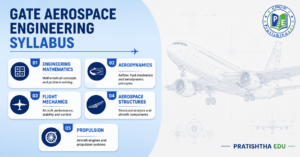
Understanding the syllabus is one of the first steps towards effective GATE preparation. Students looking for GATE Aerospace Coaching in Bangalore should begin their preparation by becoming familiar with the major subjects and topics included in the examination.
Aspirants should also refer to the official GATE Aerospace Engineering syllabus to understand the latest topics and structure of the examination before starting their preparation.
The Aerospace Engineering syllabus includes several technical areas that test a candidate’s understanding of engineering fundamentals, analytical concepts, and problem-solving skills. A clear understanding of the syllabus helps students divide their preparation into different phases and allocate sufficient time to each subject.
Engineering Mathematics
Engineering Mathematics forms an important part of technical examination preparation. Students should develop a strong understanding of mathematical concepts because mathematics is also useful while solving problems from several aerospace engineering subjects.
Important areas may include:
- Linear Algebra
- Calculus
- Differential Equations
- Complex Variables
- Probability and Statistics
- Numerical Methods
Regular practice is important for improving calculation speed and accuracy in mathematics.
Aerodynamics
Aerodynamics is one of the core areas of Aerospace Engineering. It focuses on the study of fluid flow and the forces acting on bodies moving through a fluid.
Important topics may include:
- Basic Fluid Mechanics
- Fluid Flow
- Boundary Layer Theory
- Airfoil and Wing Theory
- Compressible Flow
- Potential Flow
- Viscous Flow
Students should focus on understanding the fundamental principles of each topic before moving on to advanced problem-solving.
Flight Mechanics
Flight Mechanics deals with the performance, stability, and control of aircraft. It is an important area for aspirants preparing for the GATE Aerospace Engineering examination.
Important topics may include:
- Aircraft Performance
- Static Stability
- Dynamic Stability
- Aircraft Equations of Motion
- Flight Dynamics
- Aircraft Control
A strong understanding of basic mechanics and mathematical concepts can help students approach flight mechanics problems more confidently.
Aerospace Structures
Aerospace Structures focuses on the structural behaviour of aircraft and aerospace components. This subject requires an understanding of mechanics and material behaviour.
Important areas may include:
- Strength of Materials
- Structural Analysis
- Stress and Strain
- Bending
- Torsion
- Buckling
- Aircraft Structural Components
Students should practise numerical problems regularly to improve their understanding of structural concepts.
Propulsion
Propulsion is another important area of Aerospace Engineering. It covers the principles and working of systems used to generate thrust for aircraft and other aerospace vehicles.
Important topics may include:
- Thermodynamics
- Gas Turbines
- Jet Engines
- Combustion
- Propulsion Systems
- Performance of Propulsion Systems
Understanding the fundamental principles of thermodynamics and fluid mechanics can help students build a strong foundation for propulsion-related topics.
GATE Aerospace Engineering Exam Pattern
Understanding the exam pattern is equally important for students preparing for the GATE examination. The exam pattern helps aspirants understand the structure of the paper and plan their preparation accordingly.
Students enrolled in or considering GATE Aerospace Coaching in Bangalore should understand the question formats and marking system before beginning full-length mock test practice.
The examination generally includes different types of questions designed to test conceptual understanding, numerical ability, and analytical thinking.
Multiple Choice Questions
Multiple Choice Questions include multiple options, from which candidates must select the correct answer. Students should read these questions carefully because incorrect answers may attract negative marking depending on the question type.
Multiple Select Questions
Multiple Select Questions may have more than one correct option. Candidates need to identify all the correct options to answer such questions accurately.
These questions require a clear understanding of the concept because selecting an incorrect option can affect the final answer.
Numerical Answer Type Questions
Numerical Answer Type questions require candidates to enter a numerical value instead of selecting an option.
These questions test:
- Calculation ability
- Conceptual understanding
- Accuracy
- Problem-solving skills
Regular practice is important for improving performance in numerical questions.
How to Study the GATE Aerospace Engineering Syllabus
After understanding the syllabus, students should create a practical study plan. Trying to complete all subjects at the same time can make preparation difficult. A better approach is to divide the syllabus into manageable sections.
Step 1: Categorise Subjects
Students can divide subjects into different categories:
- Core technical subjects
- Mathematics
- General Aptitude
- Subjects requiring more revision
- Subjects requiring more numerical practice
This helps students create a balanced study schedule.
Step 2: Start with Fundamental Concepts
Before solving advanced problems, students should understand the basic concepts of each subject. A strong foundation makes it easier to understand complex topics later.
For example, students may first revise the basic principles of fluid mechanics before moving towards advanced aerodynamics concepts.
Step 3: Create Topic-Wise Notes
Short and organised notes can make revision easier. Students should focus on recording:
- Important formulas
- Key concepts
- Common mistakes
- Important problem-solving methods
These notes can be especially useful during the final revision phase.
Step 4: Practise Questions After Every Topic
After completing a topic, students should solve relevant questions. This helps them check whether they have understood the concept correctly.
A good preparation routine should include a combination of:
- Concept learning
- Question practice
- Previous year questions
- Revision
- Mock tests
Why Syllabus-Based Preparation Is Important
Many students spend a significant amount of time studying without following the official syllabus. This can result in an unbalanced preparation strategy.
A syllabus-based approach helps students:
- Focus on relevant topics
- Avoid unnecessary study material
- Track syllabus completion
- Plan revision effectively
- Identify weak areas
For students preparing through GATE Aerospace Coaching in Bangalore, following a structured syllabus-based plan can make the preparation journey more organised and manageable.
GATE Aerospace Engineering Preparation Strategy
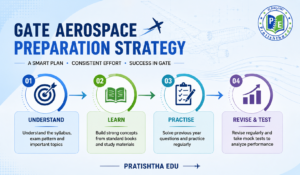
A well-planned preparation strategy can make the GATE journey more organised and productive. Students preparing through GATE Aerospace Coaching in Bangalore can benefit from following a systematic approach that combines concept learning, regular practice, revision, and performance analysis.
Every student may have a different level of preparation. Some aspirants may already have strong fundamentals, while others may need to begin with basic concepts. Therefore, the preparation strategy should be flexible enough to accommodate individual learning needs.
Step 1: Understand Your Current Preparation Level
Before starting serious preparation, students should evaluate their current understanding of the major subjects. This can be done through a basic assessment test or by reviewing the syllabus and attempting a few topic-wise questions.
Students should identify:
- Strong subjects
- Weak subjects
- Topics that require revision
- Topics that require more question practice
- Areas where calculation speed needs improvement
This initial evaluation helps aspirants create a realistic preparation plan instead of following a schedule that may not match their actual requirements.
Step 2: Build Strong Conceptual Fundamentals
Conceptual clarity is one of the most important aspects of GATE preparation. Aerospace Engineering includes several interconnected subjects, and understanding the fundamentals of one topic can help students approach related topics more effectively.
For example, knowledge of fluid mechanics can support the understanding of aerodynamics, while thermodynamics and fluid flow concepts can be useful while studying propulsion.
During the initial preparation phase, students should:
- Study one topic at a time
- Understand the basic principles
- Review important formulas
- Solve basic problems
- Gradually move towards advanced questions
Students can also refer to reliable educational resources such as NPTEL courses to strengthen their understanding of aerospace engineering concepts and supplement their regular preparation.
Instead of focusing only on completing chapters quickly, students should aim to understand how concepts are applied in different types of questions.
Step 3: Follow a Subject-Wise Study Approach
A subject-wise preparation strategy can help students maintain better control over the syllabus. Rather than studying multiple unrelated subjects in a single session, aspirants can allocate specific study periods to different areas.
Aerodynamics Preparation
Aerodynamics requires a strong understanding of fluid flow and related principles. Students should first revise the fundamentals of fluid mechanics before studying advanced aerodynamic concepts.
Preparation should include:
- Concept revision
- Formula understanding
- Diagram-based learning
- Numerical problem-solving
- Previous year question practice
Students should pay attention to the relationship between different concepts instead of memorising formulas without understanding their application.
Flight Mechanics Preparation
Flight mechanics includes topics related to aircraft performance, stability, and control. Students should focus on understanding the principles behind the equations and their applications.
Regular numerical practice is important because many questions require analytical thinking and accurate calculations.
Students can improve their preparation by:
- Revising important concepts regularly
- Practising numerical questions
- Understanding equations and their physical meaning
- Reviewing common problem-solving approaches
Aerospace Structures Preparation
Aerospace structures require a clear understanding of mechanics, stress, strain, structural behaviour, and related concepts.
Students should focus on:
- Understanding fundamental principles
- Learning important formulas
- Practising numerical questions
- Reviewing common mistakes
- Solving previous year questions
Regular practice can help improve both accuracy and confidence in this subject.
Propulsion Preparation
Propulsion preparation requires an understanding of thermodynamics, fluid mechanics, combustion, and engine-related concepts.
Students should focus on building a strong conceptual foundation before attempting advanced numerical questions.
A good study approach includes:
- Concept learning
- Formula revision
- Numerical practice
- Topic-wise question solving
- Regular revision
Step 4: Make Previous Year Questions a Part of Your Preparation
Previous year questions are an important resource for understanding the GATE examination. They help students become familiar with the types of concepts that are tested and the way questions are framed.
Students should not wait until the end of preparation to start solving previous year questions. Topic-wise PYQ practice can begin after completing the basic concepts of a subject.
While solving PYQs, students should analyse:
- The concept tested
- The difficulty level
- The time taken to solve the question
- The reason behind incorrect answers
- Whether the mistake was conceptual or calculation-related
Maintaining a PYQ notebook can also help students record important concepts and repeated mistakes.
Step 5: Use Mock Tests to Evaluate Preparation
Mock tests provide an opportunity to practise under examination-like conditions. They can help students improve time management and understand their overall preparation level.

However, taking mock tests alone is not enough. The most important step is analysing the test after completion.
Students should review:
- Questions answered incorrectly
- Questions left unanswered
- Questions that took excessive time
- Calculation errors
- Questions where the concept was unclear
This analysis helps students identify their weak areas and modify their preparation strategy accordingly.
Step 6: Focus on Revision from the Beginning
Revision should not be postponed until the last month. Students should revise previously studied topics regularly to improve retention.
A practical revision routine may include:
- Daily revision of important formulas
- Weekly revision of completed topics
- Monthly revision of major subjects
- Regular practice of previously solved questions
Short revision sessions can help students retain concepts for a longer period.
Importance of Consistency in GATE Preparation
Preparing for GATE is a long-term process. Studying for several hours on one day and then taking a long break can make it difficult to maintain continuity.
Students should focus on creating a realistic routine that they can follow consistently.
A consistent preparation routine may include:
- Fixed study hours
- Daily question practice
- Regular revision
- Weekly performance evaluation
- Periodic mock tests
Students preparing with the support of GATE Aerospace Coaching in Bangalore can use a structured routine to maintain better consistency and track their progress throughout the preparation journey.
Common Mistakes to Avoid During Preparation
Many aspirants make avoidable mistakes while preparing for competitive examinations. Identifying these mistakes early can help students improve their preparation.
Studying Without a Plan
Without a proper plan, students may spend too much time on one subject and leave insufficient time for others.
Ignoring Previous Year Questions
Only studying theory without solving PYQs can make it difficult to understand the actual question pattern.
Taking Tests Without Analysis
Mock tests are most useful when students analyse their mistakes and learn from them.
Using Too Many Study Resources
Using multiple books and resources for the same topic can create confusion. Students should select reliable resources and revise them properly.
Ignoring Revision
Even well-understood concepts can be forgotten without regular revision. Revision should be included in the preparation schedule from the beginning.
6-Month GATE Aerospace Engineering Study Plan

A six-month preparation plan can help students divide the syllabus into manageable phases. However, the exact study duration may vary depending on the student’s existing knowledge, available study time, and preparation level.
Students preparing through GATE Aerospace Coaching in Bangalore can follow a structured timeline that combines syllabus completion, practice, revision, and mock tests.
The following six-month plan can be customised according to individual preparation requirements.
Month 1: Build the Foundation
The first month should focus on understanding the syllabus and building strong fundamentals.
Students can focus on:
- Understanding the complete syllabus
- Revising basic engineering concepts
- Starting core technical subjects
- Creating short notes
- Developing a daily study routine
During this phase, students should avoid rushing through difficult topics. Building a strong foundation can make advanced preparation easier.
Month 2: Continue Core Subject Preparation
In the second month, students can continue studying important technical subjects and begin solving topic-wise questions.
The focus should be on:
- Completing important topics
- Solving basic and moderate-level questions
- Revising formulas
- Practising numerical problems
- Identifying difficult areas
Students should also begin solving selected previous year questions after completing individual topics.
Month 3: Complete Major Topics and Practise PYQs
By the third month, students should focus on completing a significant portion of the syllabus.
The preparation routine can include:
- Advanced concept learning
- Topic-wise PYQ practice
- Numerical problem-solving
- Weekly revision
- Short tests
At this stage, students should begin tracking their performance more carefully and identify subjects that require additional attention.
Month 4: Strengthen Weak Areas
The fourth month should focus on improving weak topics and completing the remaining portions of the syllabus.
Students can:
- Revisit difficult concepts
- Solve more practice questions
- Complete pending topics
- Take subject-wise tests
- Analyse previous mistakes
This phase is important because identifying and improving weak areas can significantly strengthen overall preparation.
Month 5: Full-Length Practice and Revision
The fifth month should focus more on revision and examination-oriented practice.
Students can begin taking regular full-length mock tests and analyse their performance after each test.
The focus should be on:
- Full syllabus revision
- Mock tests
- Formula revision
- PYQ revision
- Time management
Students should avoid starting too many new resources during this stage.
Month 6: Final Revision and Test Analysis
The final month should be used for revision, practice, and improving examination readiness.
Students should focus on:
- Revising short notes
- Revising important formulas
- Solving selected PYQs
- Taking mock tests
- Analysing mistakes
- Improving speed and accuracy
The final phase should focus on strengthening existing knowledge rather than attempting to study everything from the beginning again.
Daily Study Schedule for GATE Aerospace Engineering Preparation
A consistent daily routine can help students maintain momentum throughout their preparation. The exact schedule can vary depending on college, work, and personal commitments.
A sample daily study routine may include:
| Study Activity | Suggested Time |
| Concept Learning | 2–3 Hours |
| Problem Solving | 1–2 Hours |
| Previous Year Questions | 1 Hour |
| Revision | 30–60 Minutes |
| Mock Test or Test Analysis | 1–2 Hours |
Students do not necessarily need to follow the same timetable every day. The most important factor is maintaining consistency and completing planned study targets.
How to Create an Effective Study Routine
A practical study routine should be realistic. Students should avoid creating a timetable that is impossible to follow.
Set Daily Targets
Instead of only deciding to study for a fixed number of hours, students can set specific targets such as:
- Complete one topic
- Solve 30 questions
- Revise one chapter
- Analyse one test
Specific goals make progress easier to track.
Keep Time for Revision
Students should include revision in their daily schedule. Even 30 minutes of revision can help reinforce previously studied concepts.
Take Regular Breaks
Long study sessions without breaks can affect concentration. Short breaks can help students maintain focus during extended preparation.
Review Weekly Progress
At the end of every week, students should evaluate their preparation.
They can ask:
- How much of the syllabus was completed?
- Which topics remain weak?
- How many questions were solved?
- Were the planned study targets achieved?
- What should be improved in the following week?
Revision Strategy for GATE Aerospace Engineering
Revision is an essential part of long-term preparation. Students may understand a topic during the first study session but forget important details if they do not revise regularly.
A simple revision cycle can include:
Daily Revision
Review important formulas, concepts, and questions studied during the day.
Weekly Revision
Revise all topics completed during the week and solve selected questions.
Monthly Revision
Review major subjects and evaluate overall progress through a subject-wise test.
Final Revision
During the final preparation phase, focus on short notes, formulas, important concepts, previous mistakes, and selected practice questions.
30-Day Revision Strategy
The final 30 days can be divided into different revision phases.
Days 1–10: Core Concept Revision
Focus on important concepts and formulas from major technical subjects.
Days 11–20: PYQs and Practice Tests
Solve previous year questions and take subject-wise or full-length tests.
Days 21–25: Weak Area Improvement
Revise topics where mistakes are occurring repeatedly.
Days 26–30: Final Revision
Focus on short notes, formulas, important concepts, and examination strategy.
Students preparing with GATE Aerospace Coaching in Bangalore can customise this revision plan according to their individual strengths and weaknesses.
How to Maintain Motivation During Long-Term Preparation
GATE preparation can be a long process, and students may experience periods of low motivation. Maintaining a consistent routine is more important than relying only on motivation.
Students can stay focused by:
- Setting short-term goals
- Tracking daily progress
- Celebrating small improvements
- Avoiding unnecessary comparison
- Reviewing mistakes positively
- Maintaining a regular study routine
A disciplined approach can help aspirants continue their preparation even when progress appears slow.
How to Choose the Best GATE Aerospace Coaching Institute in Bangalore?
Choosing the right coaching institute is an important decision for students preparing for a competitive examination. The right learning environment can help aspirants follow a structured study plan, understand difficult concepts, practise questions regularly, and evaluate their preparation through tests.
Students searching for GATE Aerospace Coaching in Bangalore should not select an institute only based on location or advertisements. They should carefully evaluate the quality of academic guidance, course structure, study resources, and available student support.
Experienced and Knowledgeable Faculty
Faculty members play an important role in the learning process. Students should consider whether the faculty have a strong understanding of the subjects they teach and whether they can explain complex concepts in a simple and practical manner.
Good academic guidance can help students:
- Understand difficult concepts
- Learn effective problem-solving methods
- Identify important topics
- Clear their doubts
- Improve their subject fundamentals
Complete Syllabus Coverage
A suitable coaching programme should follow a planned syllabus structure. Students should check whether the course provides sufficient time for all important subjects and topics.
Complete syllabus coverage helps aspirants avoid last-minute pressure and provides adequate time for revision and practice.
Quality Study Material
Good study material can make preparation more organised. Students should look for resources that include:
- Concept explanations
- Important formulas
- Practice questions
- Previous year questions
- Topic-wise exercises
- Revision material
Students should also avoid relying on too many different resources, as this can make preparation confusing.
Regular Tests and Mock Exams
Regular tests help students evaluate their preparation. A good test series should include topic-wise tests, subject-wise tests, and full-length mock examinations.
Mock tests can help students improve:
- Time management
- Question selection
- Accuracy
- Speed
- Examination confidence
However, test analysis is equally important. Students should review their mistakes after every test and work on the areas that require improvement.
Doubt-Solving Support
Students may face doubts while studying technical subjects. Timely doubt resolution can help prevent confusion and ensure that concepts are understood correctly.
A supportive learning environment should provide students with suitable opportunities to discuss their academic doubts and receive guidance.
Structured Learning Environment
A disciplined learning environment can help students maintain consistency. Regular classes, planned study schedules, practice sessions, and performance tracking can make preparation more organised.
Students looking for GATE Aerospace Coaching in Bangalore should consider whether the institute provides a learning structure that matches their preparation requirements.
Why Choose Pratishtha Edu for GATE Aerospace Preparation?
Pratishtha Edu focuses on providing a structured and student-oriented learning environment for aspirants preparing for competitive examinations. Students preparing for GATE can benefit from a systematic approach that combines conceptual learning, practice, revision, and performance evaluation.
Focus on Conceptual Understanding
A strong foundation is important for GATE preparation. Instead of focusing only on memorisation, students should understand the concepts and learn how to apply them while solving different types of questions.
A concept-focused learning approach can help students develop better problem-solving skills.
Organised Preparation Approach
A structured preparation plan can help students manage the syllabus more effectively. Students can follow a planned learning process that includes concept study, question practice, revision, and test preparation.
This approach can help aspirants remain consistent throughout their preparation journey.
Practice-Oriented Learning
Regular practice is an important part of GATE preparation. Students need to solve different types of questions to improve their understanding and examination readiness.
Practice may include:
- Topic-wise questions
- Conceptual problems
- Numerical questions
- Previous year questions
- Mock tests
Regular Revision and Performance Improvement
Revision helps students retain important concepts and formulas. Regular evaluation also helps aspirants identify areas where they need further improvement.
Students can use their test performance and practice results to modify their preparation strategy.
Supportive Learning Environment
A focused learning environment can help students maintain a disciplined routine. Students preparing for competitive examinations often benefit from a place where they can study consistently, practise questions, and remain focused on their academic goals.
Benefits of Joining a Structured GATE Preparation Programme
A structured preparation programme can provide several advantages to students.
Better Time Management
Students can follow a planned schedule instead of spending excessive time deciding what to study next.
Systematic Syllabus Completion
A structured approach can help aspirants track their progress and complete different subjects in a planned manner.
Regular Performance Evaluation
Tests and practice sessions help students understand their current preparation level.
Improved Confidence
Consistent preparation and regular practice can help students become more confident while attempting different types of questions.
Focused Preparation
A structured learning environment can help students reduce distractions and maintain better consistency.
Start Your GATE Aerospace Engineering Preparation with the Right Approach
Preparing for the GATE Aerospace Engineering examination requires consistency, planning, and regular practice. Students should understand the syllabus, develop strong fundamentals, solve previous year questions, take mock tests, and revise regularly.
Choosing the right GATE Aerospace Coaching in Bangalore can provide additional structure and guidance during this preparation journey. However, the final result also depends on the student’s consistency, effort, discipline, and willingness to learn from mistakes.
With a clear study plan and a focused preparation approach, aspirants can work towards improving their knowledge, problem-solving skills, and examination readiness.
Frequently Asked Questions About GATE Aerospace Coaching in Bangalore
Which is the best GATE Aerospace Coaching in Bangalore?
The best coaching option depends on several factors, including faculty guidance, course structure, study material, practice support, mock tests, doubt-solving assistance, and the learning environment. Students should compare these factors before selecting a suitable GATE Aerospace Coaching in Bangalore programme.
Is coaching necessary for GATE Aerospace Engineering preparation?
Coaching is not compulsory for every student. Some aspirants may prefer self-study, while others may benefit from structured classes and expert guidance. A coaching programme can help students follow a planned syllabus, understand difficult concepts, practise questions regularly, and evaluate their preparation through tests.
How much time is required to prepare for GATE Aerospace Engineering?
The preparation time depends on a student’s existing knowledge, study routine, and preparation goals. Some students may require several months of structured preparation, while others may need more time to strengthen their fundamentals. A consistent study plan is more important than simply counting the number of preparation months.
Students should also keep track of important examination updates and notifications while preparing for GATE.
What subjects should I study for GATE Aerospace Engineering?
Students should prepare the subjects included in the official GATE Aerospace Engineering syllabus. Major areas generally include engineering mathematics, aerodynamics, flight mechanics, aerospace structures, propulsion, and other relevant technical topics. Aspirants should always refer to the latest official syllabus while planning their preparation.
How important are previous year questions for GATE preparation?
Previous year questions are highly useful for understanding the question pattern, important concepts, difficulty level, and types of problems asked in the examination. Students should solve PYQs after completing the relevant concepts and analyse their mistakes carefully.
Are mock tests important for GATE Aerospace Engineering preparation?
Yes, mock tests can help students evaluate their preparation and improve time management, speed, and accuracy. However, analysing the test after completion is equally important. Students should identify incorrect answers, unanswered questions, calculation errors, and concepts that require further revision.
How can I improve my GATE Aerospace Engineering preparation?
Students can improve their preparation by following a structured study plan, understanding the syllabus, building strong fundamentals, solving questions regularly, practising previous year questions, taking mock tests, and revising consistently.
Students preparing with the support of GATE Aerospace Coaching in Bangalore can also benefit from a planned learning environment and regular academic guidance.
Final Preparation Tips for GATE Aerospace Engineering Aspirants
Before beginning or continuing your preparation, keep the following points in mind:
- Understand the complete syllabus before starting
- Create a realistic and consistent study schedule
- Focus on conceptual understanding
- Practise numerical and conceptual questions regularly
- Solve previous year questions
- Take mock tests at regular intervals
- Analyse mistakes after every test
- Revise important concepts and formulas consistently
- Avoid using too many study resources
- Stay patient and consistent throughout the preparation journey
GATE preparation is a long-term process. Progress may not always be visible immediately, but regular effort and disciplined preparation can gradually improve understanding and performance.
Conclusion
Preparing for the GATE Aerospace Engineering examination requires a combination of conceptual clarity, regular practice, effective time management, and consistent revision. Students need to understand the syllabus, study important technical subjects systematically, solve previous year questions, and evaluate their preparation through mock tests.
For students looking for GATE Aerospace Coaching in Bangalore, selecting the right learning environment can make the preparation process more organised and focused. A structured approach can help aspirants manage the syllabus, identify their weak areas, practise regularly, and prepare more effectively for the examination.
Pratishtha Edu aims to provide a focused learning environment for students preparing for competitive examinations. With the right preparation strategy, regular practice, and consistent effort, aspirants can work towards improving their knowledge and examination readiness.
If you are planning to begin your GATE Aerospace Engineering preparation, start by understanding the syllabus, creating a practical study plan, and following a consistent preparation routine. The right guidance combined with personal effort can help you move forward with greater confidence and clarity.
Start Your GATE Aerospace Engineering Preparation with Pratishtha Edu
Looking for a structured approach to GATE Aerospace Coaching in Bangalore? Explore the available learning opportunities at Pratishtha Edu and begin your preparation with a clear plan, regular practice, and consistent academic effort.
Leave a Reply