The IIT JAM Biotechnology 2027 exam is one of the most prestigious national-level entrance examinations for students who wish to pursue postgraduate studies in biotechnology and related life science disciplines from the Indian Institutes of Technology (IITs) and other participating institutes. Conducted annually under the Joint Admission Test for Masters (JAM), the Biotechnology (BT) paper is designed to assess candidates’ conceptual understanding, analytical thinking, and problem-solving abilities in various biological science subjects.
Every year, thousands of students from Biotechnology, Microbiology, Biochemistry, Life Sciences, Genetics, Pharmacy, Agriculture, Veterinary Science, Zoology, Botany, and related backgrounds appear for the IIT JAM BT Exam to secure admission into M.Sc., Joint M.Sc.-Ph.D., and other postgraduate programs. Qualifying this examination not only provides access to some of India’s finest academic institutions but also opens doors to careers in research, pharmaceuticals, healthcare, biotechnology industries, environmental science, and higher education.
As the biotechnology sector continues to expand rapidly, the demand for highly skilled professionals is increasing across research organizations, biotech companies, pharmaceutical industries, and government institutions. Therefore, preparing for IIT JAM Biotechnology 2027 with the right strategy has become more important than ever.
This comprehensive guide covers everything you need to know about the IIT JAM Biotechnology 2027 examination, including eligibility criteria, exam pattern, complete syllabus, important dates, subject-wise weightage, best books, preparation strategy, previous year cut-offs, career opportunities, and frequently asked questions. Whether you are beginning your preparation or planning to improve your performance, this guide will help you understand every important aspect of the examination in a simple and structured manner.
This guide is regularly updated with the latest IIT JAM Biotechnology 2027 notification, syllabus, eligibility criteria, exam pattern, important dates, preparation strategy, previous year papers, cut-off, and admission updates to help aspirants prepare effectively.
Before starting your preparation, it is important to thoroughly understand the IIT JAM Biotechnology 2027, as this helps you identify high-weightage topics and plan your study schedule effectively.
What is IIT JAM Biotechnology?
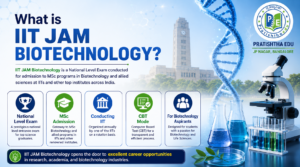
The Indian Institute of Technology Joint Admission Test for Masters (IIT JAM) is a national-level entrance examination conducted every year for admission to postgraduate science programs offered by IITs and other participating institutes. Among the various subjects offered under IIT JAM, Biotechnology (BT) is specifically designed for students who wish to build careers in biotechnology, life sciences, biomedical research, pharmaceuticals, genetics, molecular biology, and related interdisciplinary fields.
Unlike many traditional entrance examinations that emphasize memorization, IIT JAM Biotechnology focuses on evaluating a candidate’s conceptual clarity, scientific reasoning, and ability to apply biological principles to solve real-world problems. The examination is highly competitive and requires a strong understanding of both fundamental and applied biological sciences.
A good rank in IIT JAM Biotechnology allows candidates to apply for postgraduate programs offered by prestigious institutions known for their excellent faculty, advanced laboratories, research facilities, and industry collaborations. Every year, thousands of students appear for IIT JAM Biotechnology 2027 to secure admission to top IITs. Understanding the complete admission process before starting your preparation can help you avoid common mistakes.
Full Form
IIT JAM stands for the Indian Institute of Technology Joint Admission Test for Masters, while BT refers to the Biotechnology paper conducted as part of the IIT JAM examination.
Purpose of IIT JAM Biotechnology
The primary objective of IIT JAM Biotechnology is to identify talented students who possess a strong academic foundation in biological sciences and have the potential to pursue advanced education and research.
The examination evaluates candidates based on:
- Conceptual understanding of biotechnology and life sciences
- Scientific reasoning and analytical ability
- Application of biological concepts
- Problem-solving skills
- Readiness for postgraduate education and research
Rather than testing rote learning, the exam emphasizes conceptual knowledge and logical thinking, making it one of the most respected postgraduate entrance examinations in India.
Participating IITs
Admission through IIT JAM Biotechnology is available at several prestigious Indian Institutes of Technology and participating institutions. Depending on the admission cycle, candidates may be eligible for programs offered by institutes such as:
- IIT Bombay
- IIT Delhi
- IIT Kanpur
- IIT Kharagpur
- IIT Madras
- IIT Guwahati
- IIT Roorkee
- IIT Hyderabad
- IIT Indore
- IIT Bhubaneswar
- IIT Gandhinagar
- IIT Jodhpur
- IIT Mandi
- IIT Ropar
- IIT Bhilai
In addition to IITs, several other reputed institutes also accept IIT JAM scores for admission to selected postgraduate science programs.
Programs Offered Through IIT JAM Biotechnology
Based on their rank and institute-specific admission criteria, qualified candidates can apply for postgraduate programs such as:
- M.Sc. Biotechnology
- Joint M.Sc.-Ph.D. Programs
- M.Sc.-Ph.D. Dual Degree Programs
- Interdisciplinary Biological Sciences Programs
- Applied Biotechnology Programs
- Other postgraduate life science programs offered by participating institutes
These programs are designed to equip students with advanced theoretical knowledge, practical laboratory skills, and research experience required for successful careers in biotechnology and life sciences.
Why Choose IIT JAM Biotechnology?
IIT JAM Biotechnology has become one of the most preferred postgraduate entrance examinations because it provides access to India’s leading institutes and outstanding academic opportunities.
Some of the major advantages include:
- Admission to prestigious IITs and premier science institutes
- High-quality education with experienced faculty
- Modern research laboratories and advanced infrastructure
- Opportunities for interdisciplinary research
- Better placement opportunities in biotechnology and pharmaceutical companies
- Excellent preparation for Ph.D. programs in India and abroad
- Scholarships and financial assistance in eligible programs
- Strong career prospects in biotechnology, healthcare, pharmaceuticals, agriculture, bioinformatics, environmental science, and academic research
For students who are passionate about biological sciences and innovation, IIT JAM Biotechnology serves as an ideal pathway toward higher education, scientific research, and rewarding career opportunities.
IIT JAM Biotechnology 2027 Highlights
| Particular | Details |
| Examination Name | IIT JAM Biotechnology (BT) 2027 |
| Conducting Body | One of the IITs on behalf of the IIT JAM Committee |
| Examination Level | National Level |
| Examination Mode | Computer-Based Test (CBT) |
| Duration | 3 Hours |
| Medium of Examination | English |
| Question Types | MCQ, MSQ and NAT |
| Total Marks | 100 |
| Negative Marking | Applicable for selected MCQs only |
| Courses Offered | M.Sc., Joint M.Sc.-Ph.D., Dual Degree and Other PG Programs |
| Participating Institutes | IITs and Other Participating Institutes |
| Official Website | Official IIT JAM Admission Portal |
The above highlights provide a quick overview of IIT JAM Biotechnology 2027. Candidates are advised to understand the eligibility criteria, exam pattern, and syllabus before beginning their preparation.
IIT JAM Biotechnology Eligibility Criteria 2027
Before applying for the IIT JAM Biotechnology 2027 examination, candidates must carefully review the eligibility requirements prescribed in the official admission brochure. Meeting the eligibility criteria is essential for participating in the admission process. The eligibility conditions generally include educational qualification, qualifying degree, nationality, and other admission requirements.
Although the examination is open to students from various science backgrounds, candidates should ensure that they satisfy all the eligibility requirements of the institute and postgraduate program they wish to join after qualifying the examination.
Before applying, candidates should carefully read the Official IIT JAM Information Brochure to understand the detailed eligibility requirements, admission rules, and participating institutes.
Educational Qualification
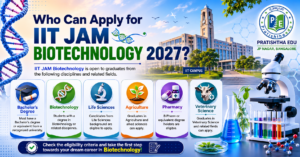
Candidates who have completed or are currently pursuing a bachelor’s degree in science or a related discipline from a recognized university are eligible to appear for the IIT JAM Biotechnology examination.
Students from the following academic backgrounds generally apply for the BT paper:
- Biotechnology
- Life Sciences
- Biochemistry
- Microbiology
- Genetics
- Botany
- Zoology
- Biomedical Science
- Pharmacy
- Agriculture
- Veterinary Science
- Food Technology
- Biological Sciences
- Other equivalent science disciplines
Final-year undergraduate students are also eligible to apply, provided they complete their qualifying degree within the timeline specified during the admission process.
After confirming their eligibility, candidates should regularly check the IIT JAM Biotechnology Important Dates 2027 to stay updated on the application process, admit card release, examination schedule, result declaration, and counselling events.
Age Limit
There is no age limit for appearing in the IIT JAM Biotechnology examination. Candidates of any age who meet the required educational qualifications can apply.
Nationality
The examination is open to:
- Indian Citizens
- Foreign Nationals (subject to the admission rules of participating institutes)
Candidates should check the admission policies of individual institutes regarding eligibility for foreign applicants.
Minimum Marks Requirement
Currently, there is no minimum percentage requirement for appearing in the IIT JAM examination itself. However, participating institutes may prescribe specific academic requirements during the admission process. Therefore, candidates are advised to verify the admission eligibility criteria of the institute where they intend to seek admission.
Who Can Apply?
The following candidates are generally eligible to apply:
- Graduates in Biotechnology and Life Sciences
- Final-year undergraduate students
- Candidates from Biological Science disciplines
- Pharmacy graduates
- Agriculture graduates
- Veterinary Science graduates
- Candidates with equivalent science degrees recognized by the participating institutes
Applicants should carefully read the official admission brochure before submitting their application.
IIT JAM Biotechnology 2027 Important Dates
The official schedule for IIT JAM Biotechnology 2027 will be announced by the conducting IIT. Candidates should regularly check the official website to avoid missing any important deadlines.
| Event | Expected Timeline* |
| Notification Release | September 2026 |
| Online Application Begins | September 2026 |
| Last Date to Apply | October 2026 |
| Application Correction Window | November 2026 |
| Admit Card Release | January 2027 |
| IIT JAM Biotechnology Exam Date | February 2027 |
| Answer Key Release | February 2027 |
| Result Declaration | March 2027 |
| Admission Portal Opens | April 2027 |
| Admission Process | April–June 2027 |
Candidates are advised to regularly visit the Official IIT JAM Website for the latest notifications, application forms, admit cards, results, and admission-related announcements.
IIT JAM Biotechnology Exam Pattern 2027
Understanding the IIT JAM Biotechnology Exam Pattern 2027 is one of the most important steps in preparing for the examination. It helps candidates understand the question paper structure, marking scheme, question types, and time allocation, enabling them to develop an effective preparation strategy.
The IIT JAM Biotechnology 2027 examination is conducted in Computer-Based Test (CBT) mode and consists of three different types of questions. The examination is designed to evaluate candidates’ conceptual understanding, analytical thinking, problem-solving ability, and application of biotechnology concepts.
IIT JAM Biotechnology Exam Pattern 2027
| Particular | Details |
| Examination Mode | Computer-Based Test (CBT) |
| Duration | 3 Hours (180 Minutes) |
| Medium | English |
| Total Questions | 60 |
| Total Marks | 100 |
| Sections | Section A, Section B & Section C |
| Question Types | MCQ, MSQ & NAT |
| Negative Marking | Applicable only for Section A (MCQs) |
| Exam Level | National Level |
| Conducting Body | Conducting IIT |

Question Types
The IIT JAM Biotechnology examination consists of three different types of questions that assess conceptual clarity, analytical ability, and numerical problem-solving skills.
Section A – Multiple Choice Questions (MCQs)
Section A consists of Multiple Choice Questions (MCQs), where each question has four answer options with only one correct answer. Negative marking is applicable in this section. One-third mark is deducted for every incorrect answer in 1-mark questions, while two-thirds mark is deducted for every incorrect answer in 2-mark questions.
Section B – Multiple Select Questions (MSQs)
Section B contains Multiple Select Questions (MSQs), where one or more options may be correct. Candidates must select all the correct options to receive full marks. There is no negative marking for MSQ questions.
Section C – Numerical Answer Type (NAT)
Section C includes Numerical Answer Type (NAT) questions. Candidates are required to enter the numerical answer using the virtual keyboard provided on the computer screen. There is no negative marking for NAT questions.
Marking Scheme
The IIT JAM Biotechnology examination follows a structured marking scheme to evaluate candidates fairly. While MCQ questions carry negative marking for incorrect responses, MSQ and NAT questions do not have any negative marking. Candidates should therefore answer MCQ questions carefully and avoid unnecessary guesswork.
Time Management Strategy
The total duration of the examination is 180 minutes, during which candidates must attempt all three sections. Effective time management plays a crucial role in achieving a good score. It is advisable to begin with questions that are easier and more familiar before moving on to lengthy or calculation-based questions.
A clear understanding of the IIT JAM Biotechnology Exam Pattern 2027 helps candidates prepare more effectively, improve accuracy, and perform confidently on the examination day.
After understanding the exam pattern, candidates should thoroughly study the IIT JAM Biotechnology 2027 syllabus to prepare each topic systematically and improve their overall performance in the examination.
IIT JAM Biotechnology Syllabus 2027
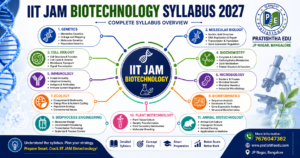
The IIT JAM Biotechnology 2027 is designed to evaluate a candidate’s conceptual understanding of core biological sciences and their ability to apply scientific knowledge to solve analytical and research-oriented problems. The syllabus covers a wide range of topics from undergraduate biotechnology and life science courses, making it essential for candidates to develop strong fundamentals before moving on to advanced concepts.
A well-planned preparation strategy begins with a thorough understanding of the syllabus. Instead of studying randomly, candidates should focus on completing each subject systematically while giving extra attention to high-weightage topics that are frequently asked in previous years.
Below is the detailed topic-wise syllabus for the IIT JAM Biotechnology examination.
Biochemistry
Biochemistry forms one of the most important sections of the IIT JAM Biotechnology syllabus. Questions from this section test the understanding of biomolecules, metabolism, enzymes, and various biochemical pathways.
Topics include:
- Structure and properties of carbohydrates
- Amino acids and proteins
- Protein structure and folding
- Lipids and fatty acids
- Nucleic acids
- Enzyme kinetics
- Enzyme inhibition
- Vitamins and coenzymes
- Bioenergetics
- Glycolysis
- Citric Acid Cycle (TCA Cycle)
- Oxidative phosphorylation
- Photosynthesis
- Carbohydrate metabolism
- Lipid metabolism
- Amino acid metabolism
Cell Biology
Cell Biology focuses on the structure and function of prokaryotic and eukaryotic cells along with various cellular processes.
Topics include:
- Prokaryotic and eukaryotic cells
- Cell membrane
- Membrane transport
- Cell wall
- Cytoplasm
- Cell organelles
- Nucleus
- Ribosomes
- Endoplasmic reticulum
- Golgi apparatus
- Lysosomes
- Mitochondria
- Chloroplast
- Cell cycle
- Mitosis
- Meiosis
- Cell signaling
- Cell communication
- Apoptosis
Genetics
Genetics is one of the highest-scoring sections in the Biotechnology paper and frequently contributes multiple questions in the examination.
Topics include:
- Mendelian genetics
- Chromosome theory
- Gene interaction
- Linkage and crossing over
- Sex-linked inheritance
- Population genetics
- Mutation
- DNA replication
- DNA repair
- Genetic mapping
- Chromosomal abnormalities
- Quantitative genetics
- Cytogenetics
Molecular Biology
Molecular Biology evaluates candidates’ understanding of gene expression and molecular mechanisms.
Topics include:
- DNA structure
- RNA structure
- DNA replication
- Transcription
- RNA processing
- Genetic code
- Translation
- Gene regulation
- Operon concept
- Recombinant DNA basics
- DNA sequencing
- PCR
- Molecular cloning
- Epigenetics
Microbiology
Microbiology is another important section that covers microorganisms and their applications.
Topics include:
- Classification of microorganisms
- Bacteria
- Viruses
- Fungi
- Algae
- Growth curve
- Microbial nutrition
- Sterilization
- Culture techniques
- Microbial genetics
- Industrial microbiology
- Medical microbiology
- Environmental microbiology
Immunology
Questions from Immunology generally focus on immune responses and immune system components.
Topics include:
- Innate immunity
- Adaptive immunity
- Antigens
- Antibodies
- Immunoglobulins
- Major Histocompatibility Complex (MHC)
- Complement system
- Cytokines
- Vaccines
- Hypersensitivity
- Autoimmune diseases
- Immunological techniques
- ELISA
- Western Blot
Plant Biotechnology
Plant Biotechnology includes concepts related to plant tissue culture, genetic engineering, and crop improvement.
Topics include:
- Plant tissue culture
- Totipotency
- Micropropagation
- Plant transformation
- Transgenic plants
- Plant breeding
- Plant genetic engineering
- Somatic hybridization
- Cryopreservation
- Plant secondary metabolites
Animal Biotechnology
This section focuses on biotechnology applications in animals and biomedical sciences.
Topics include:
- Animal cell culture
- Stem cells
- Hybridoma technology
- Monoclonal antibodies
- Animal cloning
- Transgenic animals
- Embryo transfer technology
- Gene therapy
- Assisted reproductive technologies
Recombinant DNA Technology
Recombinant DNA Technology is one of the most important topics for the IIT JAM Biotechnology examination.
Topics include:
- Restriction enzymes
- DNA ligase
- Cloning vectors
- Plasmids
- Cosmids
- BACs and YACs
- Gene cloning
- Transformation
- DNA libraries
- Expression vectors
- Molecular markers
- Genome editing basics
- CRISPR overview
Bioprocess Engineering
Bioprocess Engineering deals with industrial biotechnology and fermentation technology.
Topics include:
- Fermentation
- Bioreactors
- Microbial growth kinetics
- Batch fermentation
- Continuous fermentation
- Downstream processing
- Bioprocess optimization
- Scale-up techniques
- Industrial enzyme production
Bioinformatics
Bioinformatics has become an increasingly important area in biotechnology due to advances in computational biology.
Topics include:
- Biological databases
- Sequence alignment
- BLAST
- Genome databases
- Protein databases
- Multiple sequence alignment
- Phylogenetic analysis
- Protein structure prediction
- Computational biology basics
Ecology
Ecology covers interactions between living organisms and their environment.
Topics include:
- Ecosystem
- Food chain
- Food web
- Ecological succession
- Population ecology
- Community ecology
- Biodiversity
- Conservation biology
- Environmental pollution
- Biogeochemical cycles
Evolution
Evolution explains the origin and diversification of life.
Topics include:
- Darwin’s theory
- Natural selection
- Speciation
- Evolutionary genetics
- Hardy-Weinberg principle
- Genetic drift
- Adaptive evolution
- Molecular evolution
Analytical Techniques
Analytical techniques are widely used in biotechnology research and are frequently asked in the examination.
Topics include:
- Chromatography
- Gel electrophoresis
- Spectrophotometry
- Centrifugation
- Microscopy
- X-ray diffraction
- Mass spectrometry
- Radioisotope techniques
- PCR techniques
- DNA sequencing methods
- Flow cytometry
- ELISA
- Western Blot
- Northern Blot
- Southern Blot
A thorough understanding of each topic in the IIT JAM Biotechnology syllabus is essential for securing a good rank. Candidates should complete the syllabus in a structured manner, revise regularly, and solve previous years’ question papers to identify important topics and improve conceptual clarity. Strong fundamentals, consistent revision, and regular mock test practice are the keys to success in the IIT JAM Biotechnology 2027 examination.
Candidates should aim to complete the IIT JAM Biotechnology 2027 syllabus at least one month before the examination to leave sufficient time for revision and mock test practice.
IIT JAM Biotechnology Subject-Wise Weightage
Understanding the subject-wise weightage helps candidates prioritize their preparation and focus on topics that have consistently contributed more questions in previous years. While the exact distribution may vary every year, certain subjects regularly carry higher weightage in the IIT JAM Biotechnology examination.
The table below provides an approximate analysis based on previous years’ question paper trends.
| Subject | Expected Questions | Difficulty Level | Importance |
| Biochemistry | 8–10 | Moderate | Very High |
| Molecular Biology | 7–9 | Moderate | Very High |
| Genetics | 6–8 | Moderate | Very High |
| Cell Biology | 5–7 | Easy to Moderate | Very High |
| Microbiology | 4–6 | Moderate | High |
| Immunology | 3–5 | Moderate | High |
| Recombinant DNA Technology | 3–5 | Moderate | High |
| Bioinformatics | 2–4 | Moderate | Moderate |
| Bioprocess Engineering | 2–4 | Moderate | Moderate |
| Plant Biotechnology | 2–3 | Easy | Moderate |
| Animal Biotechnology | 2–3 | Easy | Moderate |
| Ecology | 1–3 | Easy | Low |
| Evolution | 1–2 | Easy | Low |
| Analytical Techniques | 3–5 | Moderate | High |
Although some subjects carry relatively higher weightage, candidates should develop a balanced understanding of every topic included in the IIT JAM Biotechnology 2027 syllabus. However, spending extra time on Biochemistry, Molecular Biology, Genetics, Cell Biology, and Microbiology can significantly improve the overall score.
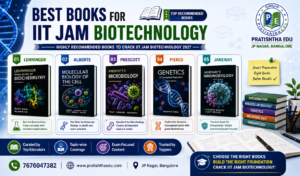
Best Books for IIT JAM Biotechnology Preparation
Selecting the right study material is one of the most important aspects of IIT JAM Biotechnology preparation. Instead of referring to multiple books for the same subject, candidates should focus on a limited number of high-quality reference books and revise them thoroughly.
The following books are widely recommended by toppers, faculty members, and subject experts.
| Book | Author | Why Recommended |
| Molecular Biology of the Cell | Bruce Alberts | Best book for Cell Biology concepts |
| Lehninger Principles of Biochemistry | Nelson & Cox | Comprehensive coverage of Biochemistry |
| Molecular Biology of the Gene | James D. Watson | Excellent for Molecular Biology |
| Genetics: A Conceptual Approach | Benjamin A. Pierce | Strong conceptual understanding of Genetics |
| Prescott’s Microbiology | Joanne Willey | One of the best books for Microbiology |
| Janeway’s Immunobiology | Kenneth Murphy | Standard reference for Immunology |
| Principles of Gene Manipulation | Sandy Primrose | Covers Recombinant DNA Technology in detail |
| Bioprocess Engineering Principles | Pauline M. Doran | Best resource for Bioprocess Engineering |
| Essential Bioinformatics | Jin Xiong | Beginner-friendly Bioinformatics book |
| Plant Biotechnology | H.S. Chawla | Covers Plant Biotechnology fundamentals |
| Animal Biotechnology | M.M. Ranga | Useful for Animal Biotechnology concepts |
Additional Study Resources
Along with standard textbooks, candidates should include the following resources in their preparation:
- Previous Year IIT JAM Biotechnology Question Papers
- Official IIT JAM Mock Tests
- Subject-wise Practice Questions
- Online Test Series
- Short Notes for Revision
- Formula and Concept Sheets
- NCERT Biology (Class XI & XII) for basic concepts
How to Choose the Right Books
While preparing for IIT JAM Biotechnology, avoid collecting too many books. Instead, follow these guidelines:
- Build strong fundamentals from one standard book for each subject.
- Make concise notes while studying.
- Revise important topics multiple times.
- Solve chapter-wise practice questions after completing each topic.
- Attempt previous years’ question papers regularly.
- Analyze mistakes and improve weak areas.
A focused study plan with quality resources is far more effective than studying from numerous books without proper revision.
Along with these standard books, candidates should regularly solve previous year question papers and attempt mock tests to improve conceptual understanding and examination performance.
The next step after completing the syllabus and selecting the right study material is to develop a smart preparation strategy. A structured timetable, regular revision, mock tests, and consistent practice play a crucial role in achieving a high score in the IIT JAM Biotechnology examination.
IIT JAM Biotechnology Preparation Strategy 2027
Cracking the IIT JAM Biotechnology 2027 examination requires a well-planned preparation strategy, consistent revision, and regular practice. Since the syllabus is vast and covers multiple disciplines of biological sciences, candidates should focus on building strong conceptual knowledge before attempting advanced-level questions.
Instead of studying randomly, divide your preparation into different phases and allocate sufficient time for learning, revision, and mock tests. Following a structured study plan not only improves time management but also increases confidence before the examination.
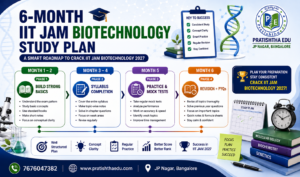
6-Month Preparation Plan
A six-month preparation plan is ideal for candidates starting their preparation from scratch. This duration provides enough time to complete the syllabus, revise important topics, and practice previous years’ question papers.
Month 1–2: Build Strong Fundamentals
During the first two months, focus on understanding the basic concepts of high-weightage subjects.
Complete the following subjects first:
- Biochemistry
- Cell Biology
- Molecular Biology
- Genetics
Study standard textbooks, prepare handwritten notes, and solve topic-wise questions after completing each chapter.
Month 3–4: Complete the Remaining Syllabus
After building a strong foundation, move on to the remaining subjects.
Focus on:
- Microbiology
- Immunology
- Plant Biotechnology
- Animal Biotechnology
- Recombinant DNA Technology
- Bioprocess Engineering
- Bioinformatics
- Ecology
- Evolution
- Analytical Techniques
Revise previously completed topics every weekend to retain concepts effectively.
Month 5: Practice and Revision
Dedicate the fifth month to strengthening your preparation.
During this phase:
- Revise all subjects.
- Solve previous years’ question papers.
- Attempt chapter-wise mock tests.
- Identify weak areas and improve them.
- Practice numerical and conceptual questions regularly.
Month 6: Full-Length Mock Tests
The final month should focus entirely on revision and examination practice.
Try to:
- Attempt 2–3 full-length mock tests every week.
- Analyze every test carefully.
- Improve accuracy and speed.
- Revise short notes daily.
- Avoid starting any completely new topic during the final weeks.
3-Month Preparation Plan
Candidates who have already completed most of the syllabus can prepare effectively within three months by following a disciplined study schedule.
First Month
- Complete the remaining syllabus.
- Revise important concepts daily.
- Solve topic-wise questions.
- Make concise revision notes.
Second Month
- Solve previous years’ question papers.
- Attempt sectional mock tests.
- Improve weak subjects.
- Revise formulas, diagrams, and biological pathways.
Third Month
- Attempt full-length mock tests regularly.
- Analyze mistakes after every test.
- Revise short notes.
- Practice time management.
- Focus on accuracy rather than attempting every question.
Last Month Strategy
The final month before the examination plays a crucial role in determining your performance. Instead of learning new concepts, concentrate on strengthening what you have already studied.
During the last month:
- Revise all subjects at least twice.
- Solve previous years’ papers again.
- Attempt one full-length mock test every three to four days.
- Practice important diagrams and biological pathways.
- Revise enzyme classifications, metabolic pathways, and genetics concepts.
- Strengthen weak topics without neglecting strong subjects.
- Maintain a healthy sleep schedule and avoid unnecessary stress.
Revision Strategy
Regular revision is essential because biotechnology includes numerous biological processes, scientific terms, and conceptual topics that are difficult to retain without repeated practice.
Follow these revision techniques:
- Revise every topic within 24 hours after studying it.
- Schedule weekly revision sessions.
- Prepare short notes for quick revision.
- Create flowcharts for complex pathways.
- Use tables to compare important concepts.
- Revise important formulas and definitions regularly.
- Practice diagrams related to Cell Biology and Molecular Biology.
- Focus on conceptual clarity instead of memorization.
Consistent revision improves long-term retention and helps reduce mistakes during the examination.
Mock Test Strategy
Mock tests are one of the most effective ways to evaluate your preparation level. They help improve speed, accuracy, and confidence while familiarizing you with the actual examination pattern.
For effective mock test practice:
- Start attempting mock tests after completing at least 70% of the syllabus.
- Solve one sectional test every week.
- Increase the frequency of full-length mock tests as the examination approaches.
- Analyze every incorrect answer carefully.
- Identify repeated mistakes and work on them.
- Practice solving questions within the allotted time.
- Develop a strategy for selecting questions during the actual examination.
Avoid attempting mock tests only for scores. The primary objective should be identifying weak areas and improving overall performance.
Common Mistakes to Avoid During Preparation
Many candidates lose valuable marks due to avoidable mistakes. Being aware of these errors can significantly improve your preparation.
Avoid the following:
- Ignoring the official syllabus.
- Studying from too many books.
- Skipping revision.
- Neglecting previous years’ question papers.
- Avoiding mock tests.
- Memorizing concepts without understanding them.
- Ignoring weaker subjects.
- Poor time management.
- Starting new topics during the final week.
- Not analyzing mistakes after mock tests.
Expert Tips to Crack IIT JAM Biotechnology 2027
Following a few smart strategies can make your preparation more effective.
- Complete the syllabus before starting intensive revision.
- Prioritize conceptual understanding over rote learning.
- Solve previous years’ question papers regularly.
- Practice numerical and application-based questions.
- Make concise handwritten notes for every subject.
- Revise important topics multiple times.
- Attempt mock tests under real exam conditions.
- Maintain consistency throughout your preparation.
- Stay updated with the latest IIT JAM notification and exam guidelines.
- Stay confident and maintain a positive mindset during your preparation.
A disciplined study plan, quality study material, regular revision, and consistent practice are the four pillars of success in the IIT JAM Biotechnology examination. Candidates who follow a structured preparation strategy and continuously evaluate their performance through mock tests are more likely to secure a high rank and achieve admission to their preferred institute.
Consistency is more important than studying for long hours. Following a realistic study schedule and revising regularly can significantly improve performance in IIT JAM Biotechnology 2027.
IIT JAM Biotechnology Previous Year Cut Off
The IIT JAM Biotechnology cut-off varies every year depending on factors such as the difficulty level of the examination, the number of candidates appearing, seat availability, and overall performance. Candidates should remember that the cut-off changes annually, so it should only be used as a reference while setting preparation goals.
A higher score generally increases the chances of securing admission to top IITs and preferred postgraduate programs.
| Year | General | OBC-NCL/EWS | SC | ST |
| 2026* | To Be Announced | To Be Announced | To Be Announced | To Be Announced |
| 2025 | Update as per Official Result | Update as per Official Result | Update as per Official Result | Update as per Official Result |
| 2024 | Update as per Official Result | Update as per Official Result | Update as per Official Result | Update as per Official Result |
| 2023 | Update as per Official Result | Update as per Official Result | Update as per Official Result | Update as per Official Result |
*The 2026 cut-off will be released after the declaration of the IIT JAM 2026 results.
While preparing for the examination, candidates should focus on achieving the highest possible score rather than targeting only the previous year’s cut-off.
IIT JAM Biotechnology Previous Year Question Papers
Previous year question papers are among the most valuable resources for IIT JAM Biotechnology preparation. They help candidates understand the examination pattern, identify frequently asked topics, and improve both speed and accuracy.
Regular practice with previous papers also builds confidence and familiarizes candidates with the level of difficulty expected in the actual examination.
Benefits of Solving Previous Year Papers
- Understand the latest exam pattern.
- Identify high-weightage topics.
- Improve conceptual clarity.
- Enhance speed and accuracy.
- Learn effective time management.
- Recognize frequently asked question types.
- Evaluate preparation level.
- Build confidence before the examination.
How to Solve Previous Year Papers Effectively
To maximize the benefits of previous year papers, candidates should follow a structured approach.
- Complete the syllabus before attempting full papers.
- Solve papers in a timed environment.
- Avoid referring to books while solving.
- Analyze every incorrect answer.
- Revise weak topics immediately.
- Maintain a notebook of frequently made mistakes.
- Repeat important papers before the final examination.
Common Mistakes While Solving Previous Papers
Many candidates fail to utilize previous papers effectively because they:
- Solve papers without completing the syllabus.
- Ignore detailed solution analysis.
- Focus only on scores.
- Skip difficult questions.
- Do not revise mistakes.
- Attempt papers without following the actual exam duration.
Practicing previous year papers consistently can significantly improve overall performance and help candidates perform better in the final examination.
Candidates should solve at least the last five to ten years of IIT JAM Biotechnology previous year question papers before appearing for the examination.
Career Opportunities After IIT JAM Biotechnology
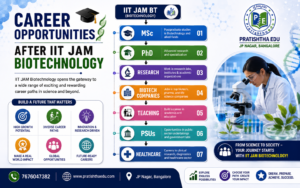
Qualifying IIT JAM Biotechnology opens the door to numerous academic, research, and industry-based career opportunities. After completing a postgraduate degree from a reputed institute, candidates can choose careers in research organizations, biotechnology companies, pharmaceutical industries, healthcare, agriculture, environmental science, and higher education.
The growing biotechnology sector offers excellent opportunities both in India and abroad.
M.Sc. Biotechnology
The most common option after qualifying IIT JAM Biotechnology is pursuing an M.Sc. in Biotechnology or related life science disciplines from IITs and participating institutes.
An M.Sc. degree provides advanced knowledge in:
- Molecular Biology
- Genetics
- Microbiology
- Immunology
- Bioinformatics
- Bioprocess Engineering
- Biomedical Sciences
Students also gain practical laboratory experience through research projects and internships.
Ph.D. and Research
Candidates interested in scientific research can pursue a Ph.D. after completing their master’s degree.
Research areas include:
- Genetic Engineering
- Cancer Biology
- Stem Cell Research
- Drug Discovery
- Agricultural Biotechnology
- Environmental Biotechnology
- Molecular Medicine
- Computational Biology
Research careers are available in universities, IITs, IISc, CSIR laboratories, ICMR institutes, DBT-funded research centers, and international universities.
Biotechnology Industry
The biotechnology industry offers diverse job opportunities for qualified professionals.
Popular roles include:
- Research Associate
- Biotechnologist
- Quality Control Analyst
- Quality Assurance Executive
- Clinical Research Associate
- Laboratory Scientist
- Production Executive
- Validation Officer
- Scientific Officer
- Technical Consultant
These positions are available in pharmaceutical companies, biotechnology firms, healthcare organizations, food processing industries, and vaccine manufacturers.
Government Sector Opportunities
Government organizations regularly recruit biotechnology professionals for research and technical positions.
Some leading organizations include:
- CSIR Laboratories
- DBT Institutes
- DRDO
- ICMR
- ICAR
- BARC
- ISRO (Life Science Projects)
- State Biotechnology Departments
- Public Sector Research Organizations
Candidates may also qualify for Junior Research Fellowships (JRF), Senior Research Fellowships (SRF), and project-based research positions.
Higher Education and Teaching
Candidates interested in academics can build rewarding careers in teaching and education.
Career options include:
- Assistant Professor (after meeting eligibility requirements)
- Lecturer
- Research Mentor
- Academic Content Developer
- Laboratory Instructor
- Scientific Trainer
Teaching careers are available in universities, engineering colleges, biotechnology institutes, and research organizations.
Emerging Career Fields
The biotechnology industry continues to expand rapidly, creating excellent career opportunities in healthcare, pharmaceuticals, agriculture, environmental science, food technology, and biomedical research.
With rapid advancements in biotechnology, several new career domains are gaining popularity.
These include:
- Bioinformatics
- Artificial Intelligence in Healthcare
- Precision Medicine
- Genomics
- Proteomics
- Clinical Data Science
- Vaccine Development
- Synthetic Biology
- Agricultural Biotechnology
- Environmental Sustainability Research
Professionals with expertise in these emerging fields are expected to have excellent career prospects in the coming years.
Why Choose Pratishtha Edu for IIT JAM Biotechnology Coaching?
Preparing for IIT JAM Biotechnology requires expert guidance, structured learning, and continuous practice. At Pratishtha Edu, students receive comprehensive coaching designed to strengthen conceptual understanding and improve examination performance.
Our experienced faculty members focus on building strong fundamentals while providing personalized mentorship throughout the preparation journey.
Students at Pratishtha Edu benefit from:
- Experienced and qualified faculty
- Comprehensive and updated study material
- Online and Offline classroom programs
- Topic-wise concept-based teaching
- Regular mock tests and performance analysis
- Previous years’ question paper discussions
- Doubt-clearing sessions
- Personalized mentoring and study plans
- Exam-oriented revision classes
- Small batch sizes for individual attention
Whether you are beginning your preparation or aiming to improve your rank, our structured coaching program helps you prepare confidently for the IIT JAM Biotechnology examination through systematic learning, regular practice, and continuous academic support.
At Pratishtha Edu, our goal is to help every IIT JAM Biotechnology aspirant build strong conceptual knowledge through expert classroom teaching, regular assessments, and personalized mentoring. Whether you prefer online or offline learning, our coaching programs are designed to help you prepare confidently for IIT JAM Biotechnology 2027.
Frequently Asked Questions (FAQs)
1. What is IIT JAM Biotechnology?
IIT JAM Biotechnology (BT) is a national-level postgraduate entrance examination conducted under the Joint Admission Test for Masters (JAM). It is held for admission to M.Sc., Joint M.Sc.-Ph.D., Dual Degree, and other postgraduate programs offered by IITs and participating institutes.
2. Who can apply for IIT JAM Biotechnology 2027?
Candidates who have completed or are pursuing a bachelor’s degree in Biotechnology, Life Sciences, Biochemistry, Microbiology, Genetics, Botany, Zoology, Pharmacy, Agriculture, Veterinary Science, or related disciplines from a recognized university are generally eligible to apply.
3. Is there any age limit for IIT JAM Biotechnology?
No. There is no age limit for appearing in the IIT JAM Biotechnology examination.
4. What is the mode of the IIT JAM Biotechnology examination?
The examination is conducted in Computer-Based Test (CBT) mode.
5. What is the duration of the IIT JAM Biotechnology exam?
The total duration of the examination is 3 hours (180 minutes).
6. What are the types of questions asked in IIT JAM Biotechnology?
The question paper consists of three types of questions:
- Multiple Choice Questions (MCQs)
- Multiple Select Questions (MSQs)
- Numerical Answer Type (NAT)
7. Is there negative marking in IIT JAM Biotechnology?
Yes. Negative marking is applicable only for MCQ questions in Section A. There is no negative marking for MSQ and NAT questions.
8. Which subjects are included in the IIT JAM Biotechnology syllabus?
The syllabus includes:
- Biochemistry
- Cell Biology
- Molecular Biology
- Genetics
- Microbiology
- Immunology
- Plant Biotechnology
- Animal Biotechnology
- Recombinant DNA Technology
- Bioinformatics
- Bioprocess Engineering
- Ecology
- Evolution
- Analytical Techniques
9. How many months are required to prepare for IIT JAM Biotechnology?
Most candidates require 6 to 8 months of consistent preparation. However, students with strong fundamentals can also prepare effectively within 3 to 4 months through disciplined study and regular practice.
10. Which books are best for IIT JAM Biotechnology preparation?
Some of the most recommended books include:
- Lehninger Principles of Biochemistry
- Molecular Biology of the Cell by Bruce Alberts
- Molecular Biology of the Gene by James D. Watson
- Genetics: A Conceptual Approach by Benjamin Pierce
- Prescott’s Microbiology
- Janeway’s Immunobiology
11. Are previous year question papers important?
Yes. Solving previous year papers helps candidates understand the exam pattern, identify important topics, improve accuracy, and develop effective time management skills.
12. Can final-year students apply for IIT JAM Biotechnology?
Yes. Final-year undergraduate students are eligible to apply, provided they satisfy the eligibility requirements during the admission process.
13. What is the difficulty level of IIT JAM Biotechnology?
The examination is generally considered moderate to difficult because it focuses on conceptual understanding, application-based questions, and analytical thinking.
14. What courses can I pursue after qualifying for IIT JAM Biotechnology?
Qualified candidates may apply for:
- M.Sc. Biotechnology
- Joint M.Sc.-Ph.D. Programs
- M.Sc.-Ph.D. Dual Degree Programs
- Interdisciplinary Life Science Programs
- Other postgraduate science courses offered by participating institutes
15. What career opportunities are available after IIT JAM Biotechnology?
Graduates can build careers in:
- Biotechnology Companies
- Pharmaceutical Industries
- Research Laboratories
- Healthcare Organizations
- Government Research Institutes
- Higher Education and Teaching
- Bioinformatics
- Clinical Research
- Environmental Biotechnology
16. Is coaching necessary to crack IIT JAM Biotechnology?
Coaching is not mandatory, but expert guidance, a structured study plan, regular mock tests, and continuous doubt-solving can make preparation more effective and improve the chances of securing a good rank.
17. How should I start preparing for IIT JAM Biotechnology?
Begin by understanding the latest syllabus and exam pattern. Complete the syllabus subject-wise, prepare concise notes, solve previous year papers, take regular mock tests, and revise consistently.
18. What is a good score in IIT JAM Biotechnology?
A good score depends on the difficulty level of the examination, the number of candidates, and the yearly cut-off. Scoring well above the expected cut-off generally improves the chances of securing admission to top IITs and preferred programs.
19. How many times can I appear for IIT JAM Biotechnology?
There is no restriction on the number of attempts, provided the candidate satisfies the eligibility criteria prescribed for the examination.
20. Where can I find the latest updates about IIT JAM Biotechnology 2027?
Candidates should regularly visit the official IIT JAM website to stay updated about notifications, application dates, admit cards, answer keys, results, counselling schedules, and admission announcements.
Final Thoughts
The IIT JAM Biotechnology 2027 examination is an excellent opportunity for students aspiring to pursue postgraduate education in biotechnology and related life science disciplines from India’s premier institutes. With a well-structured preparation strategy, a thorough understanding of the syllabus, regular revision, and consistent practice through mock tests and previous year question papers, candidates can significantly improve their chances of securing a high rank.
Instead of focusing only on completing the syllabus, concentrate on building strong conceptual clarity, improving problem-solving skills, and practicing questions under exam-like conditions. A disciplined approach, combined with quality study material and effective time management, can make a remarkable difference in your performance.
If you are preparing for IIT JAM Biotechnology 2027 and looking for expert guidance, comprehensive study material, regular mock tests, and personalized mentorship, Pratishtha Edu is here to help you achieve your dream of studying at a premier IIT.
Leave a Reply