
Class 12 is an important academic year for Science students because it brings together conceptual learning, regular practice, board examination preparation, and decisions about future studies. Physics, Chemistry, Mathematics, and Biology require more than simply reading chapters before an examination. Students need to understand concepts, practise questions regularly, and revise important topics throughout the academic year. This is where a well-planned 12th Science Foundation can make the preparation process more structured and manageable.
For many students, Class 12 is also the stage when academic pressure begins to increase. The syllabus can appear lengthy, difficult chapters may take more time to understand, and students may also have to balance their studies with entrance exam preparation. Without a proper study strategy, it can become difficult to maintain consistency across all subjects.
A Class 12 Science Foundation focuses on developing strong fundamentals instead of relying only on last-minute preparation. The objective is to help students understand the basic principles behind each topic, learn how to apply formulas and concepts, practise different types of questions, and identify their weak areas through regular revision and assessment.
A structured 12th Science Foundation Course can be particularly useful for students who want consistent academic guidance during Class 12. Depending on the programme, foundation learning may include concept-based teaching, subject-wise practice, doubt-solving support, revision sessions, study material and regular tests.
The importance of a strong foundation also extends beyond Class 12 board examinations. Students planning higher education or competitive examinations may benefit from developing clear concepts and problem-solving skills at this stage. However, board and competitive examinations have different requirements, so students should understand their individual goals and prepare accordingly.
This guide explains everything students and parents should know about 12th Science Foundation, including its importance, subjects, preparation strategy, benefits, factors to consider before choosing a foundation course, and how structured academic guidance can support Class 12 Science preparation.
Whether you are beginning Class 12, looking for a Science Foundation Course, or planning a systematic approach to your studies, building strong fundamentals from the beginning can help you approach the academic year with greater confidence and consistency.
In the upcoming sections, we will explore how a Class 12 Science Foundation Course works, what students should study, how to prepare effectively, and what to look for when choosing the right academic support.
What Is a 12th Science Foundation Course?
A 12th Science Foundation Course is a structured academic programme designed to help Class 12 Science students build strong concepts, improve their understanding of important subjects, and prepare consistently for their academic examinations. Instead of depending only on last-minute revision, foundation-based learning encourages students to study topics step by step, practise regularly, and revise concepts throughout the academic year.
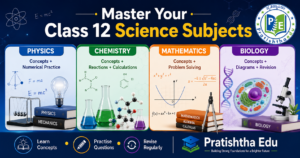
Class 12 Science includes subjects that require different types of learning. Physics requires conceptual understanding along with numerical practice, Chemistry involves concepts, reactions and calculations, while Mathematics requires logical thinking and continuous problem-solving. Students who study these subjects regularly can gradually develop confidence and improve their ability to approach unfamiliar questions.
What Does a Class 12 Science Foundation Course Focus On?
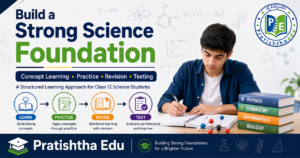
A well-structured Class 12 Science Foundation Course generally focuses on understanding concepts before moving towards extensive question practice. The purpose is not simply to complete chapters but to make sure students understand the fundamental ideas within each topic.
Depending on the programme, foundation learning may include:
- Concept-based teaching
- Chapter-wise academic guidance
- Numerical and problem-solving practice
- Regular revision
- Doubt-solving support
- Practice assignments
- Subject-wise tests
- Previous-year question practice
- Performance analysis
- Examination-oriented preparation
The exact facilities and teaching methodology can vary between institutions, so students should carefully check the course structure before enrolling.
Why Is Foundation Learning Important in Class 12?
Many Class 12 topics are connected to concepts that students have already studied in earlier classes. If the fundamentals are unclear, advanced topics can become difficult to understand.
For example, a student may know a Physics formula but still struggle to solve a numerical problem because they do not understand when or how the formula should be applied. Similarly, memorising a Chemistry reaction without understanding the underlying concept may make revision more difficult. In Mathematics, reading solved examples without solving questions independently may not be enough to develop problem-solving ability.
Foundation learning addresses these difficulties by giving students opportunities to understand concepts and apply them through practice.
This is also why students who have completed a 11th Science Foundation programme or followed a strong Class 11 academic routine may find it easier to connect previous concepts with Class 12 topics. However, students can still strengthen their fundamentals during Class 12 with a consistent study approach. Study Material
Who Should Consider a 12th Science Foundation Course?
A foundation course can be useful for different types of students.
Students who have difficulty understanding Science concepts may benefit from structured explanations and additional practice. Students who understand concepts but struggle with consistency may benefit from a fixed academic routine and regular assessments. Similarly, students preparing for board examinations while also considering future competitive examinations may find structured guidance useful for managing their preparation.
However, joining a course alone does not guarantee academic success. Students still need to attend classes regularly, complete assignments, practise questions independently, and revise what they have learned.
How Is Foundation Learning Different From Last-Minute Preparation?
Last-minute preparation often focuses on completing as much of the syllabus as possible within a short period. This may leave limited time for practice, revision, and correcting mistakes.
A foundation-based approach follows a different process:
Learn → Understand → Practise → Test → Analyse → Revise
This cycle allows students to identify their weak areas before examinations and work on them gradually.
Regular preparation also gives students more opportunities to solve previous-year questions and understand the pattern of questions they may encounter in their examinations.
What Should Students Expect From a Good Foundation Programme?
Before selecting a Science Foundation Course, students and parents should understand what the programme actually provides. A good academic programme should have a clear syllabus, appropriate teaching methodology, regular practice and a mechanism for resolving student doubts.
Students should also check whether the programme provides useful study resources, revision support and periodic assessments. The objective should be to create a consistent learning system rather than simply increasing the number of study hours.
For additional academic resources, students can also explore a dedicated Study Material section where relevant notes, practice resources and preparation material can be organised according to their academic requirements.
Ultimately, the purpose of a 12th Science Foundation is to help students develop a strong academic base that supports their Class 12 studies. With conceptual clarity, regular practice and consistent revision, students can approach difficult topics more systematically and prepare themselves for the next stage of their academic journey.
Why Is a Strong 12th Science Foundation Important?
Class 12 Science is not only about completing the syllabus before the examination. Students need to understand concepts, apply them to questions, revise regularly, and improve their performance over time. A strong 12th Science Foundation helps create this learning process by giving students a structured way to approach their subjects.
Physics, Chemistry and Mathematics or Biology contain topics that require different learning methods. Some chapters may be concept-heavy, while others require extensive numerical or question practice. If students postpone difficult topics until the end of the academic year, they may have less time to understand and revise them properly.
A consistent foundation approach can help students build better study habits and gradually become more comfortable with challenging concepts.
Builds Strong Conceptual Understanding
Conceptual clarity is one of the most important parts of Science education. Students should understand the principles behind a topic rather than relying only on memorisation.
For example, in Physics, knowing a formula is not enough if a student cannot identify where it should be applied. In Chemistry, understanding the relationship between concepts can make reactions and numerical problems easier to approach. In Mathematics, students need to understand the logic behind a method before they can confidently solve different types of questions.
A Class 12 Science Foundation approach allows students to learn these concepts step by step and practise their application.
Helps With Regular Board Exam Preparation
Class 12 board examinations cover a wide syllabus, and students need to prepare for different question formats. Regular preparation allows them to complete chapters on time and reserve sufficient time for revision.
Instead of studying a chapter only once, students can follow a cycle of:
Concept Learning → Question Practice → Revision → Test → Mistake Analysis
This process can help students identify their weak areas before the final examination.
Board preparation should also include textbook-based learning, written practice, previous-year questions and sample-paper practice according to the requirements of the student’s board.
Supports Future Competitive Exam Preparation
Many Science students also consider competitive examinations as part of their future academic plans. Students interested in engineering, medicine, or other competitive pathways may eventually prepare for examinations such as JEE or NEET.
A strong foundation can support this preparation because competitive examinations generally require students to understand concepts and apply them to different types of problems.
However, students should remember that board examinations and competitive examinations can have different patterns, syllabi, question styles, and preparation requirements. A 12th Science Foundation Course can help strengthen academic fundamentals, but dedicated competitive-exam preparation may still be required.
Students who later begin focused entrance preparation can explore resources related to JEE Preparation or NEET Preparation according to their career goals.
Improves Problem-Solving Skills
Science education involves more than remembering information. Students often need to analyse a question, identify the relevant concept, and decide which method should be used.
Regular problem-solving practice can gradually improve this ability.
For example, instead of solving only one familiar type of numerical problem, students should practise questions with different levels of difficulty. They should also review incorrect solutions and understand why a particular approach did not work.
This habit can be useful for both board-level questions and future academic examinations.
Makes Revision More Manageable
Students who study consistently throughout the year generally have more opportunities to revise their syllabus. Revision becomes especially important in Class 12 because students need to remember concepts, formulas, reactions, definitions, and problem-solving methods.
A structured Science Foundation Course can help students divide the syllabus into manageable portions and revise topics at regular intervals.
Instead of waiting until the final month, students can follow:
First Revision → Practice → Second Revision → Test → Final Revision
This approach can make preparation more organised.
Helps Identify Weak Areas Early
Every student has different strengths and weaknesses. One student may find Physics numericals difficult, while another may need additional practice in Chemistry or Mathematics.
Regular assessments can help identify these areas early.
After completing a test, students should ask:
- Which questions did I answer incorrectly?
- Was the mistake conceptual or due to calculation?
- Did I misunderstand the question?
- Did I run out of time?
- Which topics require another revision?
- What can I do differently in the next test?
This type of analysis can be more useful than focusing only on the marks obtained.
Benefits of Following a Structured Class 12 Science Preparation Strategy
A structured preparation strategy can provide several academic benefits when students follow it consistently.
1. Better Time Management
Students can divide their time between different subjects instead of giving excessive attention to one subject while ignoring another.
2. Consistent Practice
Regular question practice can help students become more comfortable with different question formats and difficulty levels.
3. Better Revision Planning
A planned revision schedule reduces the chances of leaving important chapters until the last moment.
4. Improved Confidence
Understanding concepts and solving questions independently can gradually improve a student’s confidence.
5. Better Exam Readiness
Regular tests, previous-year questions, and revision can help students become familiar with examination requirements.
Why Class 12 Preparation Should Begin Early
One of the biggest advantages of beginning Class 12 Science Preparation early is the availability of time. Students can learn a concept, practise it, identify mistakes, and revisit it without the pressure of an approaching examination.
Early preparation does not mean studying for extremely long hours every day. It means creating a sustainable routine and following it consistently.
A simple routine could include:
Learn the concept → Complete practice questions → Revise previous topics → Analyse mistakes
Students should also maintain short revision notes for formulas, important reactions, definitions and frequently repeated concepts. These notes can become useful during later revision.
Foundation Learning and Long-Term Academic Growth
The value of foundation learning is not limited to one examination. Students who develop habits such as conceptual learning, regular practice, self-assessment and revision can carry these habits into higher education.
For students planning their academic journey beyond Class 12, understanding available educational resources and support systems can also be helpful. Exploring the About Us information of an educational institution can help students and parents understand its academic approach, programmes and learning environment before making a decision.
A strong 12th Science Foundation should therefore be viewed as a process of developing better academic habits rather than simply completing a course. When students combine structured guidance with independent practice and regular revision, they can approach Class 12 Science with greater clarity, consistency and confidence.
Subjects Covered in a 12th Science Foundation
A strong 12th Science Foundation should not focus only on completing the syllabus. The objective should be to develop a clear understanding of the major subjects, practise questions regularly and build the academic skills required for Class 12 examinations.
The exact subjects depend on the student’s chosen stream, such as PCM, PCB or another Science combination. However, Physics and Chemistry are common to many Science streams, while Mathematics or Biology depends on the student’s academic choice.
Each subject requires a different preparation approach. Understanding these differences can help students create a more effective Class 12 Science Preparation strategy.
Physics Foundation for Class 12
Physics is a combination of conceptual understanding, mathematical application, and problem-solving. Students often find the subject difficult when they try to memorise formulas without understanding the principles behind them.
A good Class 12 Physics Foundation should therefore begin with conceptual clarity. Students should understand the meaning of important laws, principles, quantities and formulas before moving towards advanced numerical problems.
Important areas of Physics preparation include:
- Understanding fundamental concepts
- Learning formulas and their applications
- Solving numerical problems
- Practising conceptual questions
- Understanding important derivations
- Revising diagrams and important explanations
- Solving previous-year questions
- Taking timed practice tests
Students should also learn how different concepts are connected. A topic that appears difficult initially can become easier when its basic principles are understood properly.
How to Practise Physics Effectively
After learning a concept, students should first solve basic questions and then gradually move towards moderate and challenging problems.
While solving numerical questions, students should follow a systematic process:
Understand the question → Identify the given information → Select the relevant concept or formula → Solve step by step → Check the final answer
Students should also maintain a list of formulas and common mistakes for quick revision.
Regular practice is particularly important because simply reading Physics notes does not develop numerical problem-solving ability.
Chemistry Foundation for Class 12
Chemistry requires a combination of conceptual understanding, memory, logical thinking and numerical practice. Different areas of Chemistry may require different preparation methods, so students should avoid using the same strategy for every chapter.
A structured Class 12 Chemistry Foundation can help students divide the subject into manageable sections and revise them regularly.
Chemistry preparation generally involves areas such as:
- Physical Chemistry
- Organic Chemistry
- Inorganic Chemistry
- Chemical equations
- Important reactions
- Numerical problems
- Concept-based questions
- Regular revision
Physical Chemistry
Physical Chemistry often requires numerical practice along with conceptual understanding. Students should understand the formulas, units, and relationships between different quantities before attempting complex questions.
Regular numerical practice can help students improve both speed and accuracy.
Organic Chemistry
Organic Chemistry requires students to understand reactions, concepts, and relationships between different compounds. Instead of trying to memorise every reaction separately, students should try to understand reaction patterns and the concepts involved.
Creating organised reaction notes can also make revision easier.
Inorganic Chemistry
Inorganic Chemistry involves concepts as well as important facts, properties and reactions. Regular revision is important because students may need to recall several details during examinations.
Students should use their prescribed textbooks and reliable study resources as the primary basis of their preparation.
Mathematics Foundation for Class 12
For students studying Mathematics, consistent practice is one of the most important parts of preparation. Mathematics cannot be mastered simply by reading solved examples.
A strong Class 12 Mathematics Foundation should focus on understanding concepts and applying them independently.
Important preparation areas include:
- Concept clarity
- Formula understanding
- Step-by-step problem-solving
- Regular practice
- Previous-year questions
- Application-based questions
- Time-bound tests
- Mistake analysis
How to Improve Mathematics Problem-Solving
Students should first understand the concept and then solve questions without immediately looking at the solution.
If a question is difficult, students can attempt it independently before referring to the solution. After understanding the solution, they should try solving the same problem again without assistance.
This process helps develop independent problem-solving skills.
Students should also maintain a separate list of:
- Frequently used formulas
- Difficult question types
- Common calculation mistakes
- Topics requiring additional revision
Regular revision of these points can make preparation more efficient.
Biology Foundation for Class 12
Students following the PCB stream need a strong foundation in Biology along with Physics and Chemistry. Biology contains a large amount of information, so students need a systematic approach to reading, understanding, and revising different topics.
A Class 12 Biology Foundation should focus on conceptual understanding as well as accurate recall of important information.
Students can improve Biology preparation by:
- Reading the prescribed textbook carefully
- Understanding diagrams and processes
- Creating short revision notes
- Revising important terminology
- Practising objective and descriptive questions
- Solving previous-year questions
- Revising chapters at regular intervals
Students should avoid relying entirely on memorisation. Understanding biological processes and relationships between concepts can make revision more meaningful.
How to Balance Multiple Science Subjects
One of the biggest challenges in Class 12 Science is maintaining consistency across several subjects.
Students may naturally prefer one subject and spend more time on it. However, ignoring a difficult subject for several weeks can create a larger problem later.
A simple approach is to divide preparation into three levels:
Daily:
Concept learning + question practice
Weekly:
Revision + subject-wise test
Monthly:
Full-topic revision + performance analysis
For example, students can dedicate specific study sessions to Physics, Chemistry and Mathematics or Biology while keeping some time for revision of previously completed topics.
The exact schedule should depend on school timings, coaching classes, individual learning speed and examination requirements.
Importance of Combining Concepts With Practice
Understanding a chapter is only the first step. Students should also check whether they can apply that knowledge independently.
A useful learning cycle is:
Learn → Practise → Test → Analyse → Revise
Suppose a student completes a Physics chapter. After studying the concepts, the student should solve questions based on that chapter. A short test can then reveal whether the concepts have been understood correctly.
If mistakes are found, the student should return to the relevant concept, understand the reason for the mistake and practise similar questions again.
The same approach can be applied to Chemistry, Mathematics and Biology.
Using Study Material Effectively
Students often collect multiple books, notes and online resources without using them consistently. More resources do not necessarily mean better preparation.
The Study Material used for Class 12 Science should be organised and relevant to the student’s syllabus. Students should first understand their prescribed curriculum and then use additional resources for practice and clarification.
A useful study-resource system can include:
- Main textbook or prescribed curriculum
- Class notes
- Practice questions
- Previous-year questions
- Revision notes
- Mock tests
Students should avoid constantly switching between resources. Consistency is more important than quantity.
Connecting Class 11 and Class 12 Science Concepts
Class 12 does not exist separately from Class 11. Several concepts developed during Class 11 can support understanding in Class 12.
This is why students who have followed a strong 11th Science Foundation may already have experience with concept-based learning and regular practice.
However, students who feel that their Class 11 fundamentals are weak should not panic. They can identify the specific concepts that are required for their Class 12 chapters and revise those areas alongside their current syllabus.
The goal should be to strengthen the required fundamentals without unnecessarily delaying Class 12 preparation.
Building a Subject-Wise Preparation Routine
A practical 12th Science Foundation Course should encourage students to create a routine that includes all major subjects.
For example:
Physics: Concept learning + numerical practice
Chemistry: Concepts + reactions + numerical practice + revision
Mathematics: Concept understanding + problem-solving
Biology: Concept reading + diagrams + regular revision
Students should adjust this routine according to their individual strengths, weaknesses, and academic stream.
The most important factor is consistency. Studying a subject for a short but focused period every day is generally more sustainable than avoiding it for several days and attempting to cover everything at once.
A well-planned subject-wise approach can make Class 12 Science Preparation more organised and help students gradually build the confidence required for board examinations and future academic goals.
How to Prepare Effectively for Class 12 Science
A strong 12th Science Foundation becomes useful when students follow a consistent preparation strategy. Simply attending classes or collecting study material is not enough. Students need to understand concepts, practise questions, revise regularly and evaluate their progress.
Class 12 Science preparation should be planned according to the student’s subjects, school schedule, academic goals and individual strengths and weaknesses. A realistic routine that can be followed consistently is usually more useful than an extremely demanding timetable that becomes difficult to maintain.
The following strategies can help students make their Class 12 Science Preparation more organised.
1. Understand the Syllabus Before Starting
Before beginning serious preparation, students should understand the complete syllabus of their subjects.
Go through the prescribed syllabus and divide it into:
- Easy chapters
- Chapters that require more practice
- Conceptually difficult chapters
- Topics that need regular revision
This gives students a clear picture of what needs to be completed and prevents them from depending entirely on last-minute preparation.
Students should also keep track of changes in the official syllabus or examination pattern through reliable sources rather than relying on outdated information.
2. Set Realistic Academic Goals
Students should create both short-term and long-term goals.
A long-term goal could be completing the complete syllabus before a particular month, while a short-term goal could be completing one chapter or a specific set of questions during the week.
For example:
Monthly Goal: Complete selected chapters.
Weekly Goal: Finish concepts and practice questions from a particular topic.
Daily Goal: Study concepts, solve questions, and revise previously covered material.
Goals should be realistic. If a student creates an impossible schedule, failing to follow it can reduce motivation.
3. Follow a Consistent Study Routine
Consistency is one of the most important parts of Class 12 preparation.
Students do not necessarily need to study for extremely long hours every day. Instead, they should maintain focused study sessions and avoid long gaps between preparation days.
A simple routine can include:
Concept Learning → Practice → Revision → Self-Test
Students can adjust the duration of each activity according to their school and coaching schedule.
4. Give Proper Attention to Every Subject
Students often spend more time on subjects they enjoy and postpone difficult subjects. This can create problems later.
For a balanced 12th Science Foundation Course, students should regularly study each major subject.
For example:
Physics: Conceptual learning + numerical practice
Chemistry: Concepts + reactions + calculations + revision
Mathematics: Concept understanding + question practice
Biology: Concept reading + diagrams + revision
Students following PCM and PCB combinations should plan their schedules accordingly.
5. Focus on Concepts Before Memorisation
Memorisation can be useful in Science, but students should first understand the concept wherever possible.
For example, instead of memorising a Physics formula without understanding it, students should know what each quantity represents and when the formula can be applied.
Similarly, in Chemistry, understanding reaction patterns can make revision more effective. In Biology, understanding relationships between processes can make large topics easier to remember.
Conceptual learning creates a stronger academic base and can also support future higher-level studies.
6. Practise Questions After Learning Each Topic
Students should not wait until the entire syllabus is completed before beginning question practice.
After learning a topic, solve relevant questions immediately.
A useful progression is:
Basic Questions → Moderate Questions → Application-Based Questions → Previous-Year Questions
This helps students understand whether they can actually apply what they have learned.
For numerical subjects, students should also practise calculations regularly. For theoretical subjects, they should practise writing answers clearly and accurately.
7. Maintain a Mistake Notebook
A mistake notebook can become one of the most useful revision resources during Class 12.
Whenever a student makes a serious mistake, they can record:
- The question
- The incorrect approach
- The correct concept
- The reason for the mistake
- A similar question if required
Mistakes may happen because of:
- Conceptual confusion
- Formula errors
- Calculation mistakes
- Misreading the question
- Lack of practice
- Time pressure
Reviewing these mistakes before tests can help students avoid repeating the same errors.
8. Revise Topics Regularly
Studying a chapter once does not guarantee that the information will remain fresh until the examination.
Students should revise important concepts at regular intervals.
A simple revision cycle could be:
First Revision: Shortly after completing the chapter
Second Revision: After completing related topics
Third Revision: During monthly revision
Final Revision: Before the examination
Short revision sessions can be particularly useful for formulas, reactions, definitions, diagrams, and important concepts.
9. Solve Previous-Year Questions
Previous-year questions can help students understand how concepts are applied in actual examinations.
Students should not only solve these questions but also analyse them.
After solving a paper, ask:
- Which topics appeared repeatedly?
- Which questions were difficult?
- Where did I lose marks?
- Did I manage my time properly?
- Which chapters need more revision?
This analysis can make previous-year papers much more useful.
10. Take Regular Tests
Regular testing helps students measure their preparation.
Tests can be:
- Chapter-wise
- Subject-wise
- Monthly
- Full-syllabus
- Time-bound
The purpose of a test should not be limited to obtaining a high score. Students should use test results to identify weaknesses and improve their preparation.
A student who scores less in one test but carefully analyses the mistakes can make better progress than a student who repeatedly takes tests without reviewing errors.
11. Use Study Material Strategically
Students should avoid collecting too many books, notes and online resources.
A practical Study Material system should include the prescribed textbook, class notes, relevant practice questions, previous-year papers and revision resources.
Additional material should be used only when it adds value.
Before using any resource, students should ask:
Does this resource help me understand the concept or practise questions better?
If the answer is yes, it can be included in the study routine. Otherwise, it may only increase the amount of material students have to manage.
12. Create a Dedicated Study Environment
A focused environment can help students maintain concentration.
Students should keep unnecessary distractions away during study sessions and organise their books, notes, and practice material beforehand.
For students who prefer a dedicated environment for self-study, a Pratishtha Library can be considered as an additional study-space option, depending on their location and requirements.
The objective is to create an environment where students can study consistently without unnecessary interruptions.
13. Balance School, Foundation Classes and Self-Study
Students attending a 12th Science Foundation Course should remember that classroom learning is only one part of preparation.
A balanced routine can include:
School Learning
↓
Foundation/Coaching Classes
↓
Independent Practice
↓
Revision
↓
Tests and Analysis
Students should revise classroom concepts on the same day or as soon as possible. This helps reinforce what they have learned and allows doubts to be identified early.
14. Prepare According to Individual Weaknesses
Every student does not need the same timetable.
A student who is strong in Mathematics but weak in Chemistry should allocate additional revision and practice time to Chemistry.
Similarly, a student who understands concepts but struggles with numerical questions should increase problem-solving practice.
Students should regularly review their performance and adjust their timetable instead of following a fixed schedule throughout the year.
15. Prepare for Boards and Future Competitive Exams Separately
Students interested in competitive examinations should understand that board preparation and competitive preparation are related but not identical.
A strong academic foundation can support both, but students may need different types of practice.
Board preparation generally requires:
- Detailed syllabus coverage
- Written-answer practice
- Textbook-based understanding
- Sample papers
- Presentation practice
Competitive preparation may additionally require:
- Objective question practice
- Higher problem-solving speed
- Time-bound tests
- Examination-specific strategies
Students planning to pursue engineering or medical entrance examinations can later explore dedicated JEE Preparation or NEET Preparation resources according to their goals.
16. Keep Track of Progress
Students should maintain a simple progress tracker.
It can include:
| Area | Status |
| Chapter completed | ✓ |
| Practice completed | ✓ |
| Revision completed | ✓ |
| Test attempted | ✓ |
| Mistakes analysed | ✓ |
This makes preparation more measurable and helps students understand what has actually been completed.
A Simple Daily Strategy for Class 12 Science
Students can use a flexible daily structure such as:
Session 1 – Concept Learning
Study a new topic and understand the important concepts.
Session 2 – Question Practice
Solve questions based on the topic studied.
Session 3 – Revision
Revise formulas, reactions, definitions, diagrams, or previously completed concepts.
Session 4 – Self-Assessment
Solve a few questions without referring to notes.
The exact duration depends on the student’s schedule and learning capacity.
Final Preparation Principle
The most important principle of Class 12 Science Preparation is consistency.
Students do not need to complete everything in one day. They need to make progress every day.
A simple cycle can guide the entire academic year:
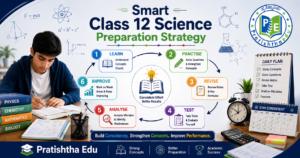
Understand → Practise → Revise → Test → Analyse → Improve
Following this process can help students develop stronger concepts, better problem-solving skills and greater confidence as they move through Class 12.
A well-structured 12th Science Foundation can provide academic direction, but the student’s own regular practice, discipline and willingness to learn remain equally important. When guidance and self-study work together, Class 12 preparation becomes more systematic and easier to manage.
How to Choose the Right 12th Science Foundation Course
Choosing the right 12th Science Foundation Course is an important decision because the quality of academic guidance can influence how consistently a student follows the Class 12 syllabus. With many coaching institutes, online programmes and private learning options available, students and parents should compare courses carefully instead of choosing one only because of advertisements, discounts or promises of high marks.
The right foundation programme should match the student’s academic requirements, learning style, subjects and future goals. It should provide a structured learning environment where students can understand concepts, practise questions, revise regularly and receive appropriate academic support.
Before enrolling in a Science Foundation Course, consider the following factors.
1. Check the Teaching Methodology
Teaching methodology should be one of the first things students consider.
A good programme should focus on explaining concepts clearly rather than simply completing chapters. Students should understand the reasoning behind formulas, reactions, processes and problem-solving methods.
A useful teaching approach can follow:
Concept Explanation → Examples → Guided Practice → Independent Practice → Assessment
Students should also consider whether the teaching pace is suitable for them. If the pace is too fast, students may struggle to understand concepts. If it is too slow, they may not get enough time for revision and practice.
2. Look for Concept-Based Learning
Science subjects require strong fundamentals. Therefore, students should look for a course that gives sufficient importance to conceptual learning.
For example, a Physics class should not focus only on memorising formulas. Students should understand how and when those formulas are applied.
Similarly, Chemistry students should understand concepts and reaction patterns, while Mathematics students should learn the logic behind different problem-solving methods.
Concept-based learning can make it easier for students to handle questions that are presented in unfamiliar ways.
3. Evaluate Faculty and Academic Guidance
Teachers play an important role in a student’s academic journey.
Before joining a course, students can consider:
- Faculty experience
- Subject expertise
- Teaching clarity
- Doubt-solving approach
- Interaction with students
- Availability of academic guidance
Students should feel comfortable asking questions when they do not understand a concept.
Parents can also ask how teachers monitor student progress and what support is available when a student falls behind the planned syllabus.
4. Check the Subjects and Syllabus Coverage
Before enrolling, students should confirm exactly which subjects are covered.
For example, a student following PCM may require:
Physics + Chemistry + Mathematics
A student following PCB may require:
Physics + Chemistry + Biology
The course should also clearly explain which Class 12 topics are included and how the syllabus will be completed.
Students should compare the course curriculum with their school or board syllabus to ensure that the academic requirements are properly covered.
5. Look for Regular Tests and Assessments
A course that provides regular assessments can help students understand their progress.
Tests can be conducted:
- After individual chapters
- At the end of units
- Subject-wise
- Monthly
- During revision
- As full-syllabus examinations
However, the usefulness of testing depends on what happens after the test.
Students should receive opportunities to analyse:
- Incorrect answers
- Weak concepts
- Calculation mistakes
- Time-management issues
- Frequently repeated errors
A test should therefore be treated as a learning tool, not simply as a method of assigning marks.
6. Check Doubt-Solving Support
Doubts are a natural part of Science learning.
Students may understand most of a chapter but still struggle with a particular numerical, reaction, derivation or application-based question.
A good 12th Science Foundation programme should provide a clear mechanism for students to ask questions and receive appropriate explanations.
Before joining, students can ask:
- How are doubts handled?
- Can students ask questions after class?
- Is there a dedicated doubt-solving session?
- How quickly are academic doubts addressed?
Clear doubt-solving support can prevent small misunderstandings from becoming larger problems later.
7. Evaluate the Study Material
Study material should complement classroom teaching rather than create additional confusion.
Students should look for resources that include:
- Chapter-wise notes
- Important concepts
- Practice questions
- Numerical problems
- Revision material
- Previous-year questions
- Mock tests
The material should be relevant to the student’s syllabus and updated when required.
Students can also explore the available Study Material resources to understand whether the learning content matches their academic requirements.
8. Consider Online vs Offline Learning
Both online and offline learning can be useful, but the better option depends on the student’s learning style.
Offline Learning
Offline classes may provide:
- Direct interaction with teachers
- Classroom discussion
- Immediate doubt clarification
- A structured learning environment
- Interaction with other students
Online Learning
Online classes may provide:
- Flexible learning schedules
- Access from different locations
- Digital resources
- Convenient revision options
Students should choose the mode in which they can remain consistent.
An online course may not be effective if a student frequently misses classes, while an offline course may not be suitable if travel time significantly affects the student’s study schedule.
9. Consider the Learning Environment
The environment in which students study can affect their ability to remain focused.
A good academic environment should encourage:
- Regular study
- Discipline
- Question-solving
- Revision
- Healthy academic competition
- Focused learning
Students who need additional self-study time may also consider a dedicated study facility such as Pratishtha Library, particularly if they prefer studying outside their home environment.
The important point is to choose a study environment where the student can maintain concentration and follow a consistent routine.
10. Check the Course Schedule
Students should understand how the course schedule fits with their school timetable.
Before enrolling, check:
- Class timings
- Number of classes per week
- Duration of each class
- Revision schedule
- Test schedule
- Holidays or breaks
- Course completion timeline
A course should leave sufficient time for independent study and revision.
Students should avoid selecting a programme that fills their entire day with classes but leaves little time for practising questions independently.
11. Compare Fees With What the Course Provides
Course fees are an important consideration, but students should not compare programmes based only on price.
Instead, compare what is included:
- Number of classes
- Subjects
- Faculty support
- Study material
- Tests
- Doubt-solving
- Revision sessions
- Online/offline access
- Additional academic support
A lower-priced course may not necessarily provide better value, while a more expensive programme may not automatically be better.
The focus should be on the overall academic value provided.
12. Understand the Student Support System
Academic support becomes particularly important when students face difficulties during preparation.
Ask whether the programme provides support for:
- Missed classes
- Difficult topics
- Revision
- Test analysis
- Academic planning
- Doubt-solving
A student should know where to seek help when they are unable to understand a topic or are falling behind their preparation schedule.
13. Check Whether the Course Matches Your Academic Goal
Not every student has the same goal.
Some students may primarily focus on Class 12 board examinations. Others may simultaneously prepare for future competitive examinations or plan for higher education.
Therefore, students should first identify their goal and then select an appropriate course.
For students planning future entrance-exam preparation, a strong foundation can be useful, but they should also understand the specific requirements of examinations such as JEE or NEET.
Dedicated JEE Preparation and NEET Preparation programmes can involve additional practice, mock tests, and examination-specific strategies beyond regular Class 12 preparation.
14. Look for a Balanced Approach
The best Class 12 Science Foundation Course should maintain a balance between:
Concepts + Practice + Revision + Testing
If a course focuses only on lectures, students may not get enough practice.
If it focuses only on tests, students may not receive sufficient conceptual support.
If it focuses only on completing the syllabus, students may not have enough time for revision.
A balanced programme should provide students with opportunities to learn, practise, evaluate and improve.
15. Check the Organisation’s Academic Information
Before making a final decision, students and parents should review the institution’s official information, programmes and academic approach.
The About Us page can provide useful background about the organisation and its educational focus.
Students should also review the specific 12th Science Foundation Course information rather than assuming that every programme offered by an institution follows the same structure.
This helps students make an informed decision based on actual course details.
Questions Students Should Ask Before Enrolling
Before joining any 12th Science Foundation Course, students or parents can ask:
- Which subjects are included?
- What is the complete syllabus?
- How are concepts taught?
- How frequently are tests conducted?
- Is doubt-solving support available?
- What study material is provided?
- Are revision sessions included?
- Is the programme online, offline or both?
- What are the class timings?
- How is student progress monitored?
- What additional academic support is available?
- Does the programme fit the student’s board and future academic goals?
Getting clear answers to these questions can make the selection process easier.
Final Checklist for Choosing a Foundation Course
Before enrolling, students can use this simple checklist:
- Suitable teaching methodology
- Experienced and supportive faculty
- Complete syllabus coverage
- Concept-based learning
- Regular practice
- Periodic tests
- Doubt-solving support
- Relevant study material
- Revision support
- Suitable class schedule
- Appropriate learning environment
- Course matches academic goals
Ultimately, the right 12th Science Foundation Course is not necessarily the one with the biggest advertisement or the longest list of promises. It is the programme that provides a suitable learning structure and helps the student remain consistent with concepts, practice, revision and assessment.
Students and parents should compare available options carefully, understand what is actually included, and choose a programme that supports the student’s individual academic requirements. With the right guidance and regular self-study, a structured Class 12 Science Foundation can become a valuable part of the student’s preparation journey.
Benefits of Joining a 12th Science Foundation Course
A structured 12th Science Foundation Course can provide students with an organised academic routine during an important stage of their education. While self-study remains an essential part of Class 12 preparation, some students benefit from additional guidance, regular assessments and a structured learning environment.
The purpose of foundation learning should not be to make students completely dependent on coaching. Instead, it should help students develop the concepts, study habits and problem-solving skills that allow them to become more confident and independent learners.
1. Structured Academic Learning
One of the main benefits of a foundation programme is having a planned academic structure.
Instead of deciding every day what to study, students can follow a defined sequence of topics. This can make it easier to track syllabus completion and ensure that important chapters are not ignored.
A structured approach may include:
Concept Learning → Practice → Revision → Testing → Improvement
Following this cycle consistently can help students maintain better control over their preparation.
2. Better Conceptual Clarity
Science subjects require students to understand concepts rather than simply memorise information.
Regular academic guidance can give students opportunities to ask questions, understand difficult topics and practise applying concepts to different situations.
This can be particularly useful for topics that students find difficult to understand independently.
A strong Class 12 Science Foundation should therefore focus on explaining the fundamental ideas behind a topic before moving towards advanced questions.
3. Regular Practice and Revision
Students often understand a topic when it is first taught but struggle to remember or apply it after several weeks.
Regular practice and revision can help reinforce previously learned concepts.
A structured programme may encourage students to revise:
- Recently completed chapters
- Important formulas
- Chemistry reactions
- Mathematical methods
- Physics numerical concepts
- Important definitions and diagrams
Regular revision also reduces the need to learn the entire syllabus again immediately before examinations.
4. Regular Tests and Performance Analysis
Tests provide students with an opportunity to measure their preparation.
However, the real value of a test comes from analysing the result.
Students can identify:
- Topics they understand well
- Topics requiring revision
- Common mistakes
- Areas where they lose marks
- Time-management problems
- Question types they find difficult
This information can then be used to improve the study plan.
A good 12th Science Foundation Course should encourage students to learn from their mistakes rather than focus only on their marks.
5. Doubt-Solving Support
Students can encounter doubts while studying almost every Science subject.
A small misunderstanding in one chapter can sometimes make a later topic more difficult. Timely clarification can help students resolve these problems before they become larger gaps in understanding.
Doubt-solving support can be especially helpful for:
- Physics numerical problems
- Chemistry reactions and calculations
- Mathematics problem-solving
- Biology concepts and diagrams
Students should still develop the habit of attempting questions independently before asking for help. This encourages problem-solving ability and independent thinking.
6. Better Time Management
Class 12 students often need to balance school, homework, examinations, foundation classes, self-study and revision.
A structured academic programme can help students organise these responsibilities.
Instead of spending too much time on one subject, students can divide their study schedule according to their syllabus and individual requirements.
A simple approach can be:
Daily: New concepts + practice
Weekly: Revision + subject test
Monthly: Progress review + weak-topic revision
The exact routine should be adjusted according to the student’s school schedule and learning capacity.
7. Support for Board Examination Preparation
A strong foundation can support board preparation by encouraging students to study the syllabus consistently.
Students can gradually work on:
- Conceptual understanding
- Textbook-based learning
- Written answers
- Numerical practice
- Previous-year questions
- Sample papers
- Revision
Students should always follow the requirements of their specific board and prescribed syllabus.
8. Foundation for Future Academic Goals
Class 12 is also a transition point toward higher education. Students may choose engineering, medicine, pure sciences, commerce-related fields or other professional and academic pathways after school.
A strong academic foundation can help students develop transferable skills such as:
- Logical thinking
- Problem-solving
- Time management
- Consistent study habits
- Self-assessment
- Conceptual understanding
Students planning competitive examinations can build upon these fundamentals with dedicated examination-specific preparation later.
Why Choose Pratishtha Edu for 12th Science Foundation?
Students and parents looking for a 12th Science Foundation in Bangalore should compare different programmes based on teaching quality, academic support, learning environment and the student’s individual requirements.
Pratishtha Edu can be considered by students looking for structured academic guidance for their Science preparation. The focus should be on helping students understand concepts, maintain regular practice, and develop a consistent preparation routine.
Before choosing any academic programme, students should understand exactly what the course offers and whether it matches their academic requirements.
Concept-Based Academic Support
A strong foundation begins with concepts.
Students should be encouraged to understand the principles behind Physics, Chemistry, Mathematics or Biology instead of relying only on memorisation.
Concept-based learning can also make it easier for students to approach questions that require application rather than direct recall.
Regular Practice and Assessment
Learning becomes more effective when students have opportunities to practise what they have studied.
Regular assignments, practice questions and assessments can help students check their understanding and identify areas requiring additional attention.
The objective should be continuous improvement rather than focusing only on one examination or one test score.
Academic Guidance for Class 12 Students
Class 12 students often have multiple academic responsibilities at the same time. Structured guidance can help them organise their preparation and avoid leaving important topics until the end.
Students can use academic guidance along with their own self-study to develop a preparation routine that suits their individual requirements.
Study Resources and Learning Support
Good study resources can complement classroom learning by providing additional opportunities for practice and revision.
Students should select resources that are relevant to their syllabus instead of using too many unrelated materials.
The Study Material resources available through an educational platform can be useful when they are organised according to the student’s preparation needs.
Students should always verify that the material they use is relevant to their current syllabus and examination requirements.
A Focused Environment for Self-Study
Classroom learning is only one part of preparation. Students also need sufficient time and a suitable environment for independent study.
Some students prefer studying at home, while others find it easier to concentrate in a dedicated study environment.
For students who need a focused place for self-study, revision and question practice, Pratishtha Library can be considered as an additional academic study-space option.
A dedicated study environment can help students maintain a routine and reduce distractions during independent preparation.
How Students Can Make the Most of a Foundation Course
Joining a 12th Science Foundation Course is only the beginning. Students need to actively participate in the learning process to gain maximum benefit.
Attend Classes Regularly
Missing classes frequently can create gaps in understanding. Students should try to maintain regular attendance and revise missed topics as soon as possible.
Ask Questions
Students should not hesitate to ask questions when a concept is unclear. Clearing doubts early can prevent confusion in later chapters.
Complete Practice Work
Assignments and practice questions should be attempted independently. Looking at solutions immediately may save time, but it does not provide the same learning benefit as solving a question yourself.
Review Test Results
After each test, students should analyse mistakes and identify topics requiring additional practice.
Continue Self-Study
Foundation classes should support self-study, not replace it.
Students should allocate sufficient time for:
- Revision
- Homework
- Question practice
- Previous-year questions
- Self-assessment
This combination can make the overall preparation more effective
What Makes a Foundation Course Useful?
A foundation course becomes valuable when several elements work together.
Good Teaching
↓
Conceptual Understanding
↓
Regular Practice
↓
Doubt Resolution
↓
Testing
↓
Mistake Analysis
↓
Revision
↓
Improvement
This process is more meaningful than simply attending classes and completing chapters.
The student’s participation is equally important. Regular attendance, independent practice, revision, and willingness to correct mistakes determine how effectively the available academic support is used.
Know More About Pratishtha Edu
Before enrolling in any academic programme, students and parents should understand the organisation, its educational approach and the programmes available.
The About Us section can help students learn more about the institution and its academic focus.
Students should also review the specific 12th Science Foundation Course information for details about subjects, learning format, academic support and other programme-related information.
This helps students make an informed decision rather than choosing a course based only on general claims.
A Balanced Approach to Class 12 Science
The goal of a 12th Science Foundation should be to create a balance between guided learning and independent study.
Students can use classroom or coaching support for:
- Concept explanation
- Difficult topics
- Doubt-solving
- Structured practice
- Regular assessments
They can use self-study for:
- Revision
- Independent question solving
- Previous-year questions
- Mistake analysis
- Additional practice
This combination can help students become more independent while still receiving academic guidance when needed.
For students who want to strengthen their academic foundation before moving toward higher studies or competitive examinations, a structured approach during Class 12 can provide a useful starting point.
Ultimately, the success of any Science Foundation Course depends on how effectively students use the available resources and follow their preparation routine. With conceptual learning, regular practice, timely revision, and consistent self-study, students can build a stronger foundation for their Class 12 academic journey and future educational goals.
Frequently Asked Questions About 12th Science Foundation
Students and parents often have several questions before starting Class 12 Science preparation or choosing a foundation programme. The following answers cover some of the common questions related to 12th Science Foundation, Class 12 preparation and foundation-based learning.
What is a 12th Science Foundation Course?
A 12th Science Foundation Course is a structured academic programme designed to help Class 12 Science students strengthen their concepts, practise questions, revise important topics and prepare consistently for their examinations. The exact subjects, teaching methods and support provided depend on the individual course.
Why is a strong Class 12 Science Foundation important?
A strong foundation can help students understand concepts more clearly, improve problem-solving skills and develop consistent study habits. It can also provide a better base for board examination preparation and future academic or competitive-exam preparation.
Which subjects are covered in 12th Science?
The subjects depend on the student’s chosen Science stream. Students following PCM generally study Physics, Chemistry and Mathematics, while PCB students generally study Physics, Chemistry and Biology. Some students may also have additional subjects depending on their school and board.
Students should always check their specific school or board syllabus before creating a preparation plan.
Is a 12th Science Foundation Course useful for board exams?
Yes, a structured foundation approach can support board examination preparation by encouraging regular syllabus coverage, concept learning, question practice, revision and periodic testing.
However, students should also follow the prescribed board syllabus, examination pattern and assessment requirements.
Can a 12th Science Foundation help with JEE or NEET preparation?
A strong foundation can support future competitive-exam preparation by improving conceptual understanding and problem-solving ability. However, JEE and NEET have their own examination requirements, question patterns, and preparation strategies.
Students who plan to appear for these examinations may need dedicated JEE Preparation or NEET Preparation in addition to their regular Class 12 studies.
How should I start my Class 12 Science Preparation?
Students should begin by understanding the complete syllabus and creating a realistic study schedule. They should then focus on concepts, practise questions regularly, revise completed topics, and take periodic tests.
A simple preparation cycle is:
Learn → Practise → Revise → Test → Analyse → Improve
Following this process consistently can make preparation more organised.
Is it necessary to join a 12th Science Foundation Course?
Not every student necessarily needs coaching. Some students are comfortable with self-study and can manage their syllabus independently.
However, students who need structured academic guidance, regular assessments, doubt-solving support, or a focused learning environment may find a Science Foundation Course useful.
The decision should depend on the student’s academic requirements, learning style and preparation goals.
What should I check before choosing a Science Foundation Course?
Students and parents should compare:
- Subjects covered
- Syllabus
- Teaching methodology
- Faculty support
- Doubt-solving system
- Study material
- Test schedule
- Revision support
- Class timings
- Online or offline learning options
- Academic environment
- Overall course value
The goal should be to choose a programme that fits the student’s actual needs.
How can students balance board preparation and competitive exams?
Students should first understand that board examinations and competitive examinations can have different requirements.
A balanced approach can include strong conceptual learning for both, followed by examination-specific practice.
Students should maintain their school and board preparation while gradually developing the problem-solving skills required for their target competitive examination.
Is 11th Science knowledge important for Class 12?
Yes. Several Class 12 topics build upon concepts introduced earlier. Students with gaps in their Class 11 fundamentals may find some Class 12 topics more challenging.
Students who have followed an 11th Science Foundation approach can use those fundamentals as a starting point. However, students who feel their Class 11 concepts are weak can identify the specific prerequisite topics they need and revise them alongside their Class 12 syllabus.
Where can students find additional study resources?
Students should primarily follow their prescribed syllabus and textbooks and then use reliable supplementary resources for practice and revision.
Organised Study Material can help students access notes, practice questions, revision resources and other academic content in a systematic manner.
Students should avoid using too many resources at the same time because excessive material can make preparation more confusing.
Is a dedicated study environment useful for Class 12 students?
A focused study environment can be useful for students who find it difficult to concentrate at home or need a dedicated place for self-study.
Students can choose the environment that works best for them. Those who prefer a dedicated study space may consider facilities such as Pratishtha Library for focused study and revision, depending on their requirements.
Final Thoughts on 12th Science Foundation
Class 12 Science is an important stage where students need to balance conceptual learning, regular practice, revision, and examination preparation. The syllabus may initially appear challenging, but a structured approach can make the preparation process more manageable.
A strong 12th Science Foundation is not simply about completing chapters. It is about developing a deeper understanding of concepts and learning how to apply them to different types of questions.
Students should focus on four major areas:
Concepts
Understand the fundamentals of Physics, Chemistry, Mathematics or Biology before moving towards advanced questions.
Practice
Solve questions regularly and gradually increase the level of difficulty.
Revision
Revisit important concepts, formulas, reactions, diagrams and difficult topics throughout the academic year.
Assessment
Take regular tests, analyse mistakes, and use the results to improve future preparation.
This process can be represented as:
Understand → Practise → Revise → Test → Improve
Students should also remember that academic success does not depend on coaching alone. A 12th Science Foundation Course can provide structure and guidance, but regular self-study, discipline, attendance and consistent practice remain essential.
For students planning future competitive examinations, a strong Class 12 academic foundation can provide useful preparation habits and conceptual understanding. However, students should eventually follow examination-specific strategies for their chosen entrance examinations.
Build a Strong Foundation for Your Class 12 Science Journey

Choosing the right academic support is an individual decision. Students and parents should compare available options, understand the course structure, and select a programme that matches their academic requirements and future goals.
If you are looking for a 12th Science Foundation in Bangalore, explore the available course details carefully and consider factors such as teaching methodology, faculty guidance, practice, tests, study material, and learning environment.
Pratishtha Edu provides academic and competitive-exam-oriented learning support for students at different stages of their educational journey. Students interested in a 12th Science Foundation Course can explore the programme details and understand how structured academic guidance can fit into their Class 12 preparation.
Along with classroom or guided learning, students can make use of organised Study Material, regular self-study, and a focused environment such as Pratishtha Library according to their individual requirements.
For students and parents who want to learn more about the organisation, its educational approach and available programmes, the About Us section can provide additional information.
The goal is simple: build strong concepts, develop consistent study habits and prepare for the next stage with confidence.
Start Building Your Science Foundation Today
Class 12 is not just another academic year. It is an opportunity to strengthen your concepts, improve your problem-solving skills, and prepare yourself for future academic goals.
Start early, study consistently, practise regularly, and keep improving.
A strong foundation today can make tomorrow’s academic challenges easier to approach.
Leave a Reply