Preparing for the Graduate Aptitude Test in Engineering (GATE) requires a clear understanding of technical subjects, consistent practice, and a well-organized study plan. For engineering students and graduates, GATE can open pathways to postgraduate education at participating institutions and certain recruitment opportunities, depending on the eligibility and selection requirements of individual organizations.
Students looking for GATE Engineering Coaching in Bangalore may belong to different engineering branches, and each branch requires a preparation strategy suited to its technical subjects. Mechanical Engineering, Civil Engineering, Computer Science, and Electronics & Communication Engineering have different syllabi, concepts, and problem-solving requirements.
Before choosing a coaching programme, students should identify their GATE paper, review the official syllabus, and assess their current understanding of the core subjects. A balanced preparation plan should include concept learning, numerical practice, previous-year questions, mock tests, and regular revision.
Why Choose the Right GATE Engineering Preparation Strategy?
A well-planned strategy helps students divide a large syllabus into manageable study targets. Instead of trying to cover every subject at once, candidates can prioritize topics, practise questions regularly, and review their progress throughout preparation.
When comparing coaching options, consider the teaching approach, subject coverage, faculty experience, doubt-solving support, practice resources and revision arrangements. These factors can help you determine whether a programme suits your learning requirements.
Candidates should also check the official GATE 2027 website for the applicable syllabus, examination pattern, eligibility requirements, and official updates.
GATE Mechanical Coaching in Bangalore
GATE Mechanical Coaching in Bangalore is a relevant search for students and graduates preparing for the Mechanical Engineering paper. Preparation involves developing a sound understanding of subjects such as Engineering Mathematics, Engineering Mechanics, Thermodynamics, Fluid Mechanics, Manufacturing, and other areas specified in the official syllabus.
Students should combine conceptual learning with numerical problem-solving and regular revision. Reviewing previous-year questions can also help candidates understand how technical concepts are applied in examination questions.
When evaluating a Mechanical Engineering coaching programme, check whether the teaching plan covers the required subjects and provides opportunities for practice and doubt clarification.
GATE Civil Coaching in Bangalore
Students searching for GATE Civil Coaching in Bangalore should look for preparation support aligned with the Civil Engineering syllabus. Relevant subject areas may include Structural Engineering, Geotechnical Engineering, Environmental Engineering, Transportation Engineering, Hydrology and other topics listed in the official syllabus.
Civil Engineering preparation requires both conceptual understanding and the ability to solve technical problems accurately. Candidates can improve their preparation by organizing subjects into weekly targets, practising numerical questions and revisiting topics they find difficult.
Before selecting a course, compare its syllabus coverage, study resources, test practice and revision support.
GATE Computer Science (CS) Coaching in Bangalore
GATE Computer Science Coaching in Bangalore is suitable as a search topic for students preparing for the Computer Science and Information Technology paper. Key areas include Programming and Data Structures, Algorithms, Computer Organization, Operating Systems, Databases, Computer Networks and other subjects included in the official syllabus.
A practical preparation strategy should balance theory with coding-related concepts, algorithmic problem-solving and numerical practice wherever applicable. Previous-year questions can help students identify knowledge gaps and improve their approach to different question types.
Students should also check whether a coaching programme provides structured subject coverage, regular assessments and support for resolving difficult concepts.
GATE ECE Coaching in Bangalore
Students exploring GATE ECE Coaching in Bangalore need a preparation plan focused on Electronics and Communication Engineering. Depending on the official syllabus, important subject areas include Electronic Devices, Analog and Digital Circuits, Signals and Systems, Communications, Control Systems and related technical topics.
A strong preparation routine should include understanding circuit concepts, practising numerical problems, revising important formulas and analysing mistakes made during practice tests.
When comparing ECE coaching options, candidates should review the actual syllabus coverage, teaching format, practice opportunities and availability of academic support.
How to Select GATE Engineering Coaching in Bangalore
Choosing a coaching programme should involve more than comparing advertisements. Students should evaluate whether the course meets their subject-specific requirements and fits their preparation schedule.
Consider these points before enrolling:
Syllabus coverage: Confirm that the programme covers the relevant GATE paper.
Teaching methodology: Look for clear explanations and a concept-focused approach.
Practice and assessment: Ask about previous-year questions, practice assignments and mock tests.
Doubt-solving support: Understand how students can clarify difficult topics.
Revision planning: Check how revision and progress evaluation are handled.
Course format: Compare online or offline options, schedules and batch sizes.
At Pratishtha Edu, interested students can enquire about current GATE Engineering course availability, including Mechanical, Civil, Computer Science and ECE preparation. Confirm the available branches, teaching arrangements and course inclusions directly with the institute before enrolling.
A suitable preparation plan combines structured learning with independent study, consistent practice and revision. Choosing the right approach for your engineering branch can help you prepare in a more organized and focused manner.
Understanding the GATE 2027 Exam Pattern
Before starting preparation, candidates should understand the examination pattern and the syllabus for their selected GATE paper. Knowing the question format, marking scheme and subject requirements can help students organize their study schedule and choose suitable practice resources.
GATE includes different test papers covering engineering, technology, science and related disciplines. Candidates preparing for Mechanical Engineering, Civil Engineering, Computer Science or Electronics and Communication Engineering should consult the official information for their specific paper.
The examination pattern and syllabus should always be verified using the official GATE 2027 website, as candidates need accurate information about the applicable rules and requirements.
Important Areas to Understand Before Preparation
Students should review the following details before creating a timetable:
Examination structure: Understand the sections and question types applicable to your selected paper.
Marking scheme: Check the marks allocated to different questions and the applicable negative-marking rules.
Syllabus coverage: Identify the subjects and topics included in your paper.
Preparation priorities: Assess your existing knowledge and identify topics that require additional practice.
Official updates: Check the latest instructions, dates and examination information published by the organizing institute.
A clear understanding of these details can help candidates avoid preparation based on outdated information.
GATE Mechanical Engineering Syllabus
Students looking for GATE Mechanical Coaching in Bangalore should begin by reviewing the official Mechanical Engineering syllabus and dividing it into manageable subject groups.
Depending on the official syllabus, important areas include:
Engineering Mathematics
Engineering Mechanics
Strength of Materials
Theory of Machines and Vibrations
Machine Design
Fluid Mechanics
Thermodynamics
Heat Transfer
Manufacturing and Production Engineering
Industrial Engineering and related topics
How to Organize Mechanical Engineering Subjects
Start with the subjects you understand reasonably well and gradually allocate more time to difficult topics. Create a formula notebook, solve numerical questions after studying each concept and revisit mistakes during revision.
Students should also practise previous-year questions to understand how different concepts are applied. The aim is to develop both conceptual clarity and problem-solving ability rather than relying only on memorization.
GATE Civil Engineering Syllabus
For students searching for GATE Civil Coaching in Bangalore, syllabus planning should cover the major areas of Civil Engineering and the topics specified in the official examination syllabus.
Important subject groups may include:
Engineering Mathematics
Structural Engineering
Geotechnical Engineering
Environmental Engineering
Water Resources Engineering
Transportation Engineering
Geomatics Engineering
Engineering Mechanics and related fundamentals
How to Prepare for the Civil Engineering Syllabus
Organize the syllabus into subject-wise checklists and set realistic weekly targets. Study theoretical concepts alongside numerical problems so that you can apply formulas correctly and understand the principles behind them.
For subjects involving structural analysis, soil mechanics, fluid flow or transportation calculations, regular problem-solving is particularly useful. Keep track of topics that repeatedly cause errors and include them in your revision schedule.
GATE Computer Science Engineering Syllabus
Candidates searching for GATE Computer Science Coaching in Bangalore should build a preparation plan around the official Computer Science and Information Technology syllabus.
Major subject areas include:
Engineering Mathematics
Digital Logic
Computer Organization and Architecture
Programming and Data Structures
Algorithms
Theory of Computation
Compiler Design
Operating Systems
Databases
Computer Networks
How to Organize Computer Science Preparation
Build your understanding of fundamental concepts before moving to more complex problems. Practise data structures and algorithms regularly, revise definitions and important properties, and work through questions involving operating systems, databases, networks and other core subjects.
Use previous-year questions to assess your understanding and identify weak areas. When reviewing incorrect answers, focus on why the solution works instead of simply memorizing the final result.
GATE Electronics and Communication Engineering Syllabus
Students interested in GATE ECE Coaching in Bangalore should plan their preparation around the Electronics and Communication Engineering syllabus.
Important subject groups may include:
Engineering Mathematics
Electric Circuits
Signals and Systems
Electronic Devices
Analog Circuits
Digital Circuits
Control Systems
Communications
Electromagnetics
How to Prepare for ECE Subjects
Develop a strong understanding of circuit behaviour, signals, electronic devices and communication principles. Practise numerical problems regularly and maintain concise notes of important formulas, assumptions and concepts.
For circuit-based subjects, work through problems step by step and check your calculations. For theory-heavy areas, revise definitions and fundamental principles regularly. Mock tests and previous-year questions can help you identify topics that need further attention.
How to Prioritize the GATE Syllabus Across Engineering Branches

Although the preparation process has common elements, students should not use the same subject timetable for every engineering branch. Mechanical, Civil, Computer Science and ECE have different technical requirements.
A practical approach is to:
- Download the official syllabus for your chosen paper.
- Divide the syllabus into subjects and smaller topics.
- Mark topics you already understand and topics that need more attention.
- Allocate study time according to your available hours and learning needs.
- Practise questions after completing each topic.
- Schedule regular revision and evaluate your progress using mock tests.
Students comparing GATE Engineering Coaching in Bangalore options should also check whether the teaching plan aligns with the syllabus for their selected branch.
At Pratishtha Edu, candidates can enquire about current GATE course availability and confirm the subjects, teaching format, practice resources, and academic support offered for their engineering branch.
Understanding the syllabus is the foundation of an effective preparation strategy. Once you know what to study, the next step is to decide how to study it, how much time to allocate to each subject and how to maintain consistent progress.
How to Prepare for GATE Engineering 2027
Preparing for GATE requires more than completing the syllabus. Students need to understand core concepts, practise questions consistently, revise important topics and evaluate their progress throughout preparation.
The best strategy depends on your chosen engineering paper, current subject knowledge and the time available before the examination. Instead of following an unrealistic timetable, create a routine that you can maintain alongside your college studies or other responsibilities.
Students exploring GATE Engineering Coaching in Bangalore should also consider how structured classes, independent study and regular practice can work together to support their preparation.
GATE Mechanical Coaching in Bangalore: Preparation Strategy
Students searching for GATE Mechanical Coaching in Bangalore should focus on building a strong foundation in core Mechanical Engineering subjects and developing accuracy in numerical problem-solving.
1. Strengthen Your Fundamental Concepts
Start by understanding the basic principles behind important subjects such as Thermodynamics, Fluid Mechanics, Strength of Materials, Engineering Mechanics and Manufacturing. Before moving to advanced questions, make sure you understand the relevant concepts, assumptions and formulas.
2. Practise Numerical Problems Regularly
Mechanical Engineering involves applying concepts to numerical questions. After completing a topic, solve practice problems of different difficulty levels. Review incorrect answers and identify whether the mistake came from conceptual confusion, formula selection or calculation.
3. Maintain Formula and Concept Notes
Prepare concise notes containing important formulas, definitions and conditions under which a formula can be applied. Use these notes during weekly revision rather than repeatedly studying entire chapters from the beginning.
4. Review Previous-Year Questions
Solve previous-year questions after covering the relevant topics. This helps you understand how concepts are tested and shows which areas require additional practice.
GATE Civil Coaching in Bangalore: Preparation Strategy
For candidates looking for GATE Civil Coaching in Bangalore, preparation should combine conceptual learning, numerical practice and systematic revision of Civil Engineering subjects.
1. Divide the Syllabus into Subject Groups
Organize subjects such as Structural Engineering, Geotechnical Engineering, Environmental Engineering, Transportation Engineering and Water Resources Engineering according to the official syllabus.
Set manageable targets for each subject instead of trying to cover several difficult topics simultaneously.
2. Understand Concepts Before Memorizing Formulas
Civil Engineering questions often require candidates to understand the principles behind calculations. Focus on why a particular method or formula applies to a problem and identify the assumptions involved.
3. Practise Step-by-Step Solutions
Work through numerical problems carefully. Write down the given information, select the appropriate method, perform calculations and check the final answer. This process can help reduce avoidable mistakes.
4. Revise Difficult Topics Consistently
Keep a record of topics that take longer to understand or where you frequently make errors. Schedule additional practice for these areas and revisit them during weekly revision.
GATE Computer Science Coaching in Bangalore: Preparation Strategy
Students searching for GATE Computer Science Coaching in Bangalore should focus on logical reasoning, conceptual understanding and regular problem-solving across the core Computer Science syllabus.
1. Build Strong Foundations in Core Subjects
Begin with fundamental concepts in Programming and Data Structures, Algorithms, Digital Logic, Computer Organization, Operating Systems, Databases and Computer Networks. Follow the official syllabus to ensure that your preparation remains relevant.
2. Practise Algorithms and Data Structures
Study how common data structures work and practise tracing algorithms. Understand the logic behind time and space complexity rather than memorizing complexity values without context.
3. Strengthen Conceptual Understanding
For subjects such as Operating Systems, Computer Networks and Databases, focus on definitions, system behaviour, relationships between concepts and problem-solving applications.
4. Analyse Incorrect Answers
When you get a question wrong, identify the exact reason. You may need to revisit a concept, improve your problem-solving approach or practise a particular question type. Maintain a record of these mistakes and review it regularly.
GATE ECE Coaching in Bangalore: Preparation Strategy
Candidates considering GATE ECE Coaching in Bangalore should develop a structured routine for understanding electronic circuits, signals, communication concepts and other areas of the Electronics and Communication Engineering syllabus.
1. Understand the Fundamentals of Electronics
Build a clear understanding of Electronic Devices, Analog Circuits and Digital Circuits. Practise problems that require you to apply concepts to different circuit conditions.
2. Give Regular Attention to Signals and Systems
Study the fundamental concepts in Signals and Systems and practise relevant mathematical problems. Review important properties and learn how to apply them in different question formats.
3. Practise Numerical Questions
Subjects such as Electric Circuits, Control Systems and Communications may involve numerical problem-solving. Work through questions systematically and check your calculations to understand where mistakes occur.
4. Connect Theory with Applications
Avoid studying every topic as an isolated set of formulas. Understand the relationships between concepts and practise questions that require you to apply more than one principle.
How to Balance Study, Practice and Revision
Regardless of the engineering branch you choose, your preparation should include three regular activities: learning new concepts, solving questions and revising previously studied material.
A practical routine can include:
Concept learning: Study a specific topic and make concise notes.
Question practice: Solve problems related to the topic you have studied.
Revision: Review formulas, definitions and difficult concepts from previous sessions.
Progress review: Record mistakes and plan the next study session accordingly.
Adjust the time spent on each activity according to your current understanding and available preparation hours.
Should You Consider GATE Coaching in Bangalore?
Some students prefer self-study, while others benefit from structured classes and additional academic guidance. Before enrolling in a programme, compare its syllabus coverage, teaching methods, practice resources, doubt-solving arrangements and revision support.
Students interested in GATE Engineering Coaching in Bangalore can enquire with Pratishtha Edu about the current availability of Mechanical, Civil, Computer Science and ECE preparation. Confirm the actual course structure and available support before making an admission decision.
Coaching can help organize your preparation, but consistent independent study, practice and revision remain important throughout the process.
How to Create a Practical GATE 2027 Study Plan
A well-organized study plan helps engineering students manage the GATE syllabus without losing sight of revision and question practice. Instead of studying for long hours without a clear goal, divide your preparation into smaller tasks and track your progress each week.
Your timetable should reflect your current academic commitments, understanding of technical subjects and available preparation time. Students who are balancing college classes with GATE preparation may need a different routine from graduates preparing full-time.
Candidates exploring GATE Engineering Coaching in Bangalore should look for a preparation approach that combines structured learning with independent study, practice and revision.
A Sample Daily Timetable for GATE Preparation
The following timetable is an example for students who can dedicate approximately four hours a day to GATE preparation. Adjust it according to your schedule and the difficulty of the subjects you are studying.
| Study Activity | Suggested Time | Main Objective |
| Concept learning | 90 minutes | Understand a new topic |
| Question practice | 60 minutes | Apply concepts to problems |
| Revision | 30 minutes | Review previously studied topics |
| Previous-year questions | 30 minutes | Practise examination-style questions |
| Error analysis and planning | 30 minutes | Identify mistakes and plan the next session |
This is a flexible example, not a compulsory timetable. Students with less available time can divide these activities across the week, while those preparing full-time may allocate additional sessions.
GATE Mechanical Coaching in Bangalore: Study Timetable
Students searching for GATE Mechanical Coaching in Bangalore should plan their timetable around the official Mechanical Engineering syllabus and their current level of understanding.
How to Organize Mechanical Engineering Preparation
Concept learning: Study topics such as Thermodynamics, Fluid Mechanics, Strength of Materials and other relevant syllabus areas.
Numerical practice: Solve problems after completing each concept.
Formula revision: Maintain concise notes containing important formulas and their applications.
Weekly assessment: Review completed topics and practise related previous-year questions.
Give additional time to subjects that require repeated practice. Avoid moving through the syllabus too quickly without checking whether you can solve questions independently.
GATE Civil Coaching in Bangalore: Study Timetable
For students interested in GATE Civil Coaching in Bangalore, the timetable should balance conceptual understanding and numerical practice across the relevant Civil Engineering subjects.
How to Organize Civil Engineering Preparation
Subject planning: Divide the syllabus into areas such as Structural Engineering, Geotechnical Engineering, Environmental Engineering and Transportation Engineering.
Problem-solving: Practise calculations and review the methods used to reach each answer.
Concept revision: Revisit definitions, assumptions and important principles.
Weekly review: Check which topics have been completed and identify those that need more practice.
Keep your timetable flexible enough to revisit difficult subjects instead of treating every topic as equally easy.
GATE Computer Science Coaching in Bangalore: Study Timetable
Candidates searching for GATE Computer Science Coaching in Bangalore should build a routine that includes conceptual study, logical problem-solving and regular question practice.
How to Organize Computer Science Preparation
Core subject study: Cover Programming and Data Structures, Algorithms, Operating Systems, Databases, Computer Networks and other syllabus topics.
Problem practice: Work through algorithmic questions and problems involving core Computer Science concepts.
Concept revision: Review definitions, properties, important relationships and common problem-solving methods.
Error analysis: Identify whether incorrect answers result from conceptual gaps, calculation errors or misunderstanding the question.
Use weekly targets to monitor progress, but make sure your plan follows the official syllabus for the selected paper.
GATE ECE Coaching in Bangalore: Study Timetable
Students looking for GATE ECE Coaching in Bangalore should balance theoretical learning and numerical practice across Electronics and Communication Engineering subjects.
How to Organize ECE Preparation
Concept learning: Study relevant topics in Electronic Devices, Analog Circuits, Digital Circuits, Signals and Systems, Communications and other syllabus areas.
Numerical practice: Solve circuit-based and mathematical questions regularly.
Formula revision: Keep concise notes for important equations, properties and concepts.
Weekly assessment: Review difficult questions and revisit topics where mistakes occur frequently.
A consistent routine can help you build familiarity with technical concepts and improve your ability to apply them in examination-style problems.
How to Plan Your Weekly GATE Preparation
A weekly plan can make it easier to balance new topics with revision and practice. The following is a sample structure that you can adapt to your chosen engineering branch.
| Day | Suggested Focus |
| Monday | Study a new topic and understand the fundamentals |
| Tuesday | Continue the topic and solve practice questions |
| Wednesday | Study another topic from the syllabus |
| Thursday | Practise numerical or concept-based problems |
| Friday | Review previous topics and solve related questions |
| Saturday | Attempt a timed practice set or subject test |
| Sunday | Analyse mistakes, revise weak areas and plan the next week |
You can rearrange the days based on college classes, work commitments and subject difficulty. The important thing is to maintain a regular cycle of learning, practice and review.
How to Track Your GATE Preparation Progress
A timetable is useful only when it helps you understand whether your preparation is progressing. At the end of each week, review the topics studied, questions attempted and mistakes identified.
Keep a simple record of:
Topics completed from the official syllabus.
Questions solved and concepts that need more practice.
Mistakes that repeatedly occur.
Revision sessions completed.
Results from practice tests and mock tests.
Use this information to update your next week’s plan. If a topic remains difficult, allocate additional time instead of moving forward simply to meet a deadline.
Students considering GATE Engineering Coaching in Bangalore can also ask prospective institutes how they organize subject coverage, practice sessions, revision and progress evaluation.
Pratishtha Edu students should confirm the current GATE course availability and the actual learning support offered before choosing a programme.
A realistic timetable, consistent effort and regular assessment can make preparation more organized. In the next section, we will discuss useful study resources, standard books, previous-year questions and mock tests for GATE Mechanical, Civil, Computer Science and ECE.
How to Choose the Right Study Resources for GATE 2027
Choosing suitable study resources is an important part of GATE preparation. Students often collect too many books, notes and online materials, making it difficult to follow a consistent study routine. A better approach is to select a limited set of reliable resources that matches the official syllabus and use them regularly.
Begin with the official GATE syllabus for your chosen paper. Use standard textbooks to understand concepts, concise notes for revision and practice questions to check your understanding. Previous-year question papers and mock tests can help you evaluate how well you apply what you have learned.
Students exploring GATE Engineering Coaching in Bangalore should also check which study materials, practice resources and assessments are actually included in a coaching programme before enrolling.
GATE Mechanical Coaching in Bangalore: Books and Practice Resources
Students searching for GATE Mechanical Coaching in Bangalore should choose resources that explain engineering principles clearly and provide enough numerical practice.
Useful Mechanical Engineering Study Resources
Engineering Mathematics: Use a standard textbook or reliable course material that covers the mathematics topics in the official syllabus.
Thermodynamics and Fluid Mechanics: Choose resources with clear explanations, worked examples and numerical problems.
Strength of Materials and Engineering Mechanics: Practise problems involving fundamental principles, equations and their applications.
Manufacturing and Machine Design: Review the relevant concepts and solve questions based on the prescribed syllabus.
Previous-year questions: Attempt questions after completing the related topic and analyse your mistakes.
Avoid switching between multiple resources for the same subject unless you need an alternative explanation. Consistency is more useful than collecting a large number of books.
GATE Civil Coaching in Bangalore: Books and Practice Resources
Candidates considering GATE Civil Coaching in Bangalore should select study materials that cover their required Civil Engineering subjects and provide sufficient opportunities for numerical and conceptual practice.
Useful Civil Engineering Study Resources
Structural Engineering: Use resources that explain structural analysis and related concepts through worked examples.
Geotechnical Engineering: Practise problems involving soil properties and the relevant principles included in the syllabus.
Environmental Engineering: Review fundamental concepts, important relationships and numerical applications.
Transportation Engineering: Study core principles and practise questions related to the prescribed topics.
Water Resources Engineering: Focus on conceptual understanding and numerical problem-solving where applicable.
Keep concise subject notes for revision. When solving previous-year questions, record the methods used and revisit topics where you repeatedly make mistakes.
GATE Computer Science Coaching in Bangalore: Books and Practice Resources
Students searching for GATE Computer Science Coaching in Bangalore should prioritize resources that combine conceptual explanations with questions requiring logical thinking and systematic problem-solving.
Useful Computer Science Study Resources
Programming and Data Structures: Practise fundamental data structures, program logic and related questions.
Algorithms: Study algorithm design, complexity analysis and problem-solving techniques.
Operating Systems: Review processes, scheduling, memory management and other syllabus-related concepts.
Database Management Systems: Practise database concepts, relational models and query-related problems.
Computer Networks: Understand networking principles and solve questions based on the prescribed topics.
Digital Logic and Computer Organization: Strengthen your understanding of digital systems and computer architecture.
For Computer Science, focus on understanding why an answer is correct. When practising algorithms or technical problems, work through the logic step by step rather than relying only on memorized solutions.
GATE ECE Coaching in Bangalore: Books and Practice Resources
Candidates interested in GATE ECE Coaching in Bangalore should choose study resources that provide clear explanations of electronics, circuits, signals and communication concepts.
Useful ECE Study Resources
Electronic Devices: Understand the operating principles and characteristics of relevant electronic components.
Analog Circuits: Practise circuit analysis and questions based on amplifier and circuit concepts included in the syllabus.
Digital Circuits: Review logic design, Boolean concepts and digital-system fundamentals.
Signals and Systems: Strengthen your understanding of signal properties and the mathematical methods used to analyse them.
Communications: Study the relevant communication principles and practise associated numerical questions.
Control Systems and Electric Circuits: Review fundamental relationships and solve problems systematically.
Maintain concise formula notes and revisit questions that require several steps to solve. This can help you identify gaps in understanding before attempting a full-length mock test.
Why Are GATE Previous-Year Questions Important?
Previous-year questions are useful because they let students practise actual examination questions and understand how concepts have been assessed in earlier papers. They can also reveal topics that need further study.
Use previous-year questions throughout preparation rather than waiting until the entire syllabus is finished.
How to Practise Previous-Year Questions Effectively
- Complete the basic concepts of a topic before attempting its questions.
- Solve questions independently before checking the solutions.
- Review the reasoning behind both correct and incorrect answers.
- Record difficult questions and revisit them during revision.
- Track your accuracy and identify topics that need more practice.
Do not assume that future examinations will repeat the same questions. Use previous-year papers to strengthen understanding and develop problem-solving skills.
How to Use Mock Tests for GATE 2027 Preparation
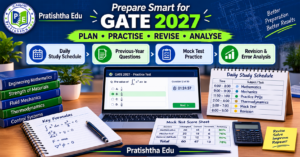
Mock tests help candidates practise under timed conditions and evaluate their readiness. They can be useful for identifying knowledge gaps, time-management problems and recurring errors.
Start with topic-wise tests after completing individual subjects. As your preparation progresses, introduce longer tests that cover multiple syllabus areas.
After every test, spend time reviewing the results. Identify questions answered incorrectly, questions that took too long and topics that you could not attempt confidently. Use this analysis to plan your next revision sessions.
Common Mistakes to Avoid During Mock Tests
Taking tests without reviewing the results.
Repeating the same mistakes without revisiting the concepts.
Focusing only on scores instead of identifying weak areas.
Attempting too many tests without enough time for learning and revision.
Comparing your results with others instead of tracking your own progress.
The purpose of a mock test is not just to obtain a score; it is to identify what needs improvement before the actual examination.
How GATE Coaching Can Support Your Practice
When comparing GATE Engineering Coaching in Bangalore options, check whether the programme provides relevant practice questions, previous-year papers, mock tests, doubt-solving support and opportunities to review mistakes.
Students can enquire with Pratishtha Edu about current GATE course availability, the learning resources offered and the assessment arrangements for their chosen engineering branch. Confirm the course details before making an admission decision.
A combination of reliable study resources, regular question practice, mock tests and careful error analysis can make preparation more systematic.
Common GATE 2027 Preparation Mistakes and How to Avoid Them
Preparing for GATE requires more than studying for long hours. Students need a clear strategy, regular practice, proper revision and an honest assessment of their progress. Many aspirants understand the concepts but struggle to achieve their expected scores because of avoidable preparation mistakes.
Whether you are preparing for Mechanical, Civil, Computer Science or Electronics and Communication Engineering, identifying these mistakes early can help you use your study time more effectively.
1. Starting GATE Preparation Without a Clear Study Plan
One of the most common mistakes is beginning preparation without understanding the syllabus, exam pattern or subject priorities. Students may spend too much time on interesting topics while leaving important subjects incomplete.
How to avoid this mistake:
Download the official syllabus for your chosen GATE paper.
Divide the syllabus into manageable topics.
Set weekly and monthly preparation targets.
Allocate time for concepts, numerical practice, revision and mock tests.
Review your progress every week and adjust your plan when necessary.
A realistic timetable that you can follow consistently is more useful than an ambitious schedule that becomes difficult to maintain.
2. Ignoring Previous-Year Questions
Reading textbooks and watching lectures can help build understanding, but they do not always prepare students for the way questions are asked in GATE. Previous-year questions help aspirants understand question patterns, difficulty levels and the application of concepts.
How to avoid this mistake:
Start solving topic-wise previous-year questions after studying each concept. Initially, focus on understanding the solution rather than completing questions quickly. Later, practise mixed-topic questions under time limits.
Maintain a separate record of incorrect answers and questions that take too much time. Revisit these questions during revision.
3. Collecting Too Many Books and Study Materials
Using multiple books, coaching notes, online videos and question banks simultaneously can create confusion. Students may repeatedly study the same topics without completing the syllabus.
How to avoid this mistake:
Select one primary learning resource for each subject.
Use additional resources only when a concept is unclear.
Keep your notes concise and easy to revise.
Avoid changing resources frequently without a clear reason.
Focus on completing and practising the material you have selected.
The goal is not to collect the largest number of resources. It is to understand concepts and apply them correctly.
4. Avoiding Mock Tests Until the Final Months
Some students postpone mock tests because they feel they must finish the entire syllabus first. This can leave them with very little time to improve speed, accuracy and time management.
How to avoid this mistake:
Begin with topic-wise tests after completing individual subjects. As your preparation progresses, introduce sectional tests and full-length mock tests.
After every test, analyse:
Questions answered incorrectly.
Questions left unanswered despite knowing the concept.
Topics that consume too much time.
Calculation errors and misreading of questions.
Areas that need further revision.
Mock tests are most useful when you learn from the results instead of simply checking your score.
5. Neglecting Revision and Formula Practice
Studying a topic once does not guarantee that you will remember it during the examination. Long gaps between revision sessions can make it harder to recall formulas, definitions, methods and important concepts.
How to avoid this mistake:
Create short revision notes while studying each subject. Revisit difficult topics at regular intervals and solve a few related questions during revision. Maintain a formula sheet, concept summary or error notebook wherever it is useful for your paper.
Reserve weekly time for revision instead of using every study session to learn something new.
6. GATE Mechanical Coaching in Bangalore: Mistakes Mechanical Engineering Aspirants Should Avoid
Mechanical Engineering aspirants sometimes spend excessive time studying theory while getting insufficient practice with numerical problems. Another common issue is treating subjects such as thermodynamics, strength of materials, fluid mechanics and machine design as isolated topics without understanding their underlying concepts.
How to improve preparation:
Strengthen fundamentals before attempting advanced numerical questions.
Practise calculations and unit conversions carefully.
Review assumptions and formulas before applying them.
Solve previous-year questions topic by topic.
Track recurring errors in numerical problem-solving.
Mechanical aspirants should aim for a balance between conceptual understanding, numerical accuracy and regular revision.
7. GATE Civil Coaching in Bangalore: Mistakes Civil Engineering Aspirants Should Avoid
Civil Engineering students may struggle when they try to memorise formulas without understanding where and how to apply them. Another challenge is giving disproportionate attention to a few familiar subjects while postponing other syllabus areas.
How to improve preparation:
Understand the principles behind important formulas.
Practise numerical problems with consistent units and correct assumptions.
Revise technical subjects systematically.
Include Engineering Mathematics and General Aptitude in the study plan.
Use previous-year questions to identify topics that require more practice.
Civil aspirants should regularly review both conceptual topics and calculation-based questions.
8. GATE Computer Science (CS) Coaching in Bangalore: Mistakes CS Aspirants Should Avoid
Computer Science aspirants sometimes focus heavily on programming while neglecting theoretical subjects. Others memorise algorithms without understanding their logic, complexity or application.
How to improve preparation:
Build strong fundamentals in data structures and algorithms.
Practise questions involving time and space complexity.
Study core subjects such as operating systems, databases, computer networks and theory of computation according to the official syllabus.
Solve logic-based questions rather than relying only on memorisation.
Revise mathematical concepts and practise timed questions regularly.
For Computer Science, consistent problem-solving and a clear understanding of core concepts are essential parts of preparation.
9. GATE ECE Coaching in Bangalore: Mistakes Electronics and Communication Aspirants Should Avoid
Electronics and Communication Engineering aspirants may find it difficult to connect mathematical concepts with circuit analysis and signal-based problems. Studying individual formulas without practising their applications can also reduce problem-solving confidence.
How to improve preparation:
Strengthen the mathematical foundations needed for technical subjects.
Practise circuit-based and numerical questions regularly.
Understand the principles behind signals, systems and communication concepts.
Review incorrect answers and identify gaps in understanding.
Follow the official syllabus when deciding which topics to prioritise.
ECE aspirants should combine conceptual learning with regular numerical practice and revision.
10. Studying for Long Hours Without Measuring Progress
Long study hours do not automatically translate into better preparation. If students do not measure their progress, they may continue repeating familiar topics while ignoring weaker areas.
How to avoid this mistake:
Use a weekly progress tracker that records topics completed, questions solved, test performance and mistakes corrected. At the end of each week, identify the three areas that need the most attention in the following week.
Track improvement in accuracy and understanding, not just the number of hours spent studying.
11. Ignoring General Aptitude and Engineering Mathematics
Depending on the chosen GATE paper, General Aptitude and Engineering Mathematics can form important parts of the examination. Leaving them until the final stage may increase pressure and reduce opportunities for practice.
How to avoid this mistake:
Include these subjects in your timetable from the beginning, following the syllabus applicable to your paper. Practise questions regularly and revise important methods instead of attempting to learn everything at the last minute.
12. How the Right GATE Preparation Support Can Help
A structured preparation approach can help students organise their syllabus, maintain a study routine and identify areas that need improvement. Depending on the student’s requirements, support may include concept clarification, practice questions, doubt-solving sessions, revision planning and mock-test analysis.
Students looking for GATE Engineering Coaching in Bangalore should compare teaching methods, subject coverage, practice opportunities, feedback and the suitability of the study schedule before choosing an institute. Aspirants considering Pratishtha Edu should confirm the current availability of their specific GATE branch, faculty details and course features before enrolling.
Conclusion
Avoiding common preparation mistakes can make GATE preparation more organised and productive. Follow the official syllabus, practise previous-year questions, revise consistently and analyse your mistakes after every test. Most importantly, choose a study plan that suits your current level and follow it with discipline.
A steady improvement in conceptual clarity, accuracy and time management can help you approach the GATE examination with greater confidence.
How to Choose the Right GATE Coaching in Bangalore
Choosing the right coaching institute can be an important decision for students preparing for the Graduate Aptitude Test in Engineering (GATE). With different study options available, aspirants should compare teaching methods, subject coverage, practice opportunities and the kind of academic support they need.
However, coaching alone does not guarantee a good GATE score. Students also need consistent self-study, regular revision and a clear understanding of the official syllabus. The right learning environment should help you follow a structured preparation plan and identify areas that need improvement.
1. Check Whether the Coaching Covers Your GATE Branch
Before enrolling, confirm that the institute offers preparation for your chosen engineering discipline. GATE papers have different syllabi, technical subjects and problem-solving requirements, so branch-specific preparation is important.
For example, students searching for GATE Mechanical Coaching in Bangalore should look for preparation relevant to mechanical engineering subjects. Civil Engineering aspirants should check the coverage of civil engineering topics, while Computer Science and ECE students should verify the subjects and practice support relevant to their respective papers.
Always ask for the current syllabus coverage, batch details and course schedule before making a decision.
2. Evaluate the Teaching Method
A good learning approach should help students understand concepts rather than rely entirely on memorisation. During your evaluation, find out how topics are explained, how numerical problems are solved and how doubts are addressed.
Consider asking these questions:
Are concepts explained step by step?
Are practical examples and numerical questions included?
Is there an opportunity to ask subject-related doubts?
Are difficult topics revisited when students need additional help?
Does the teaching pace suit your current preparation level?
If possible, attend a demo class before enrolling. It can help you understand whether the teaching style matches your learning needs.
3. GATE Mechanical Coaching in Bangalore: What Mechanical Aspirants Should Check
Mechanical Engineering students should evaluate the course structure against the official GATE syllabus. Subjects may include thermodynamics, fluid mechanics, strength of materials, manufacturing, machine design and other relevant areas.
Before joining, check whether the preparation plan includes:
Concept-based teaching for technical subjects.
Numerical problem-solving practice.
Previous-year GATE questions.
Formula revision and topic-wise tests.
Regular assessment of weak areas.
Students should also consider how the study plan balances technical subjects, Engineering Mathematics and General Aptitude.
4. GATE Civil Coaching in Bangalore: What Civil Aspirants Should Check
Civil Engineering aspirants should confirm that the course plan addresses the subjects relevant to their GATE paper. Depending on the official syllabus, these may include structural engineering, geotechnical engineering, environmental engineering, transportation engineering, water resources and other civil engineering areas.
When comparing coaching options, check for:
A clear subject-wise preparation schedule.
Practice with numerical and conceptual questions.
Previous-year question discussions.
Regular revision sessions.
Guidance on time management and test analysis.
A structured approach can help students balance multiple subjects without leaving important syllabus areas until the end.
5. GATE Computer Science (CS) Coaching in Bangalore: What CS Aspirants Should Check
Computer Science students should look for a preparation plan that develops both theoretical understanding and problem-solving ability. Reading concepts is important, but students also need to apply them to GATE-style questions.
Check whether the course plan covers the relevant subjects in the official syllabus, such as data structures and algorithms, operating systems, databases, computer networks, computer organisation and theory of computation.
Useful preparation support may include:
Logical problem-solving practice.
Algorithm and complexity-based questions.
Topic-wise assessments.
Previous-year question analysis.
Revision of mathematical foundations.
Choose a learning approach that helps you understand why an answer is correct rather than simply memorising solutions.
6. GATE ECE Coaching in Bangalore: What ECE Aspirants Should Check
Electronics and Communication Engineering students should confirm the coverage of technical subjects specified in the official syllabus. These may include electronic devices, analog and digital circuits, signals and systems, communications and related topics.
Before selecting an institute, check whether its preparation plan includes:
Conceptual explanations of technical topics.
Circuit-based and numerical problem-solving.
Regular practice questions.
Revision of important formulas and principles.
Assessments to identify weak concepts.
Students should also verify that the course schedule provides enough time for practice alongside theory.
7. Ask About Previous-Year Questions and Mock Tests
Previous-year questions help students understand how concepts are tested, while mock tests help them practise under time constraints.
Before joining a GATE coaching programme, ask how students practise questions and evaluate their performance. Find out whether the learning plan includes topic-wise tests, sectional tests or full-length mock tests, and whether solutions or performance feedback are provided.
A useful test routine should help you identify repeated mistakes, improve accuracy and manage examination time more effectively.
8. Compare Fees, Batch Timings and Course Duration
Course fees are important, but the lowest price should not be the only deciding factor. Compare what is actually included in the programme and whether it fits your academic schedule.
Check the following details before enrolling:
Total course fees and any additional charges.
Batch timings and class frequency.
Course duration and syllabus completion plan.
Availability of study materials.
Doubt-solving arrangements.
Test schedule and revision support.
Current availability of online or offline classes, if required.
Ask for the current fee structure and course details directly from the institute rather than relying on old advertisements or outdated online information.
9. Consider Your Current Preparation Level
Every GATE aspirant has different strengths, weaknesses and time constraints. A student starting from the basics may need more time for conceptual learning, while a student who has already completed much of the syllabus may need intensive revision and test practice.
Before choosing a coaching programme, assess your current preparation level. Identify the subjects you find difficult, the time you can study each day and the areas where you need guidance.
Your preparation plan should reflect these factors instead of following a timetable simply because it works for someone else.
10. Explore GATE Engineering Preparation at Pratishtha Edu
Students searching for GATE Engineering Coaching in Bangalore can consider Pratishtha Edu as one of the institutes to contact while comparing their preparation options.
Before enrolling, discuss your chosen GATE paper, current preparation level and academic requirements with the institute. Ask about the relevant branch, faculty, syllabus coverage, teaching schedule, study resources and assessment support. Confirm the current availability of the specific programme you need.
You can visit the official website at https://www.pratishthaedu.com/ to explore the institute’s information and contact the team for updated course details.
Making these checks in advance can help you decide whether the available programme is suitable for your goals.
11. Final Checklist Before Joining GATE Coaching
Before making your final decision, make sure you have checked:
Whether the institute covers your chosen GATE paper.
Whether the syllabus and course schedule are clearly explained.
Whether the teaching method suits your learning needs.
Whether previous-year questions and practice tests are included.
Whether you can get help with difficult concepts.
Whether the fees and timings fit your requirements.
Whether the current course details have been confirmed directly.
Conclusion
Selecting GATE coaching requires careful comparison rather than relying only on advertisements or promises. Look for a suitable teaching method, relevant subject coverage, consistent question practice and a preparation schedule that matches your needs.
Whether you are exploring GATE Mechanical Coaching in Bangalore, GATE Civil Coaching in Bangalore, GATE Computer Science (CS) Coaching in Bangalore or GATE ECE Coaching in Bangalore, verify the course details before enrolling.
Combine the right learning support with self-study, regular revision and mock-test analysis to build a more organised approach to GATE preparation.
GATE 2027 Final Revision Strategy, Exam-Day Tips and FAQs
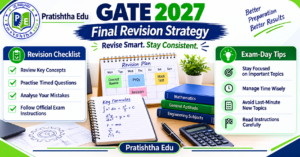
As the GATE examination approaches, preparation should gradually shift from learning new concepts to revising important topics, solving practice questions and improving time management. A focused revision plan can help students identify weak areas and approach the examination with greater confidence.
Whether you are preparing for Mechanical, Civil, Computer Science or Electronics and Communication Engineering, your final preparation should be based on the official syllabus, your practice-test performance and the topics that need additional attention.
1. Create a Practical GATE 2027 Revision Plan
A revision plan should cover completed subjects, important formulas, previous-year questions and mistakes identified during practice. Avoid creating an unrealistic timetable that leaves insufficient time for rest and review.
Follow these steps to organise your revision:
Divide completed subjects into small revision blocks.
Review concise notes and important concepts.
Solve selected previous-year questions.
Revisit topics where you repeatedly make mistakes.
Practise timed tests according to your preparation level.
Track progress and adjust your schedule every week.
Keep your revision plan flexible enough to accommodate difficult topics without neglecting the rest of the syllabus.
2. Revise According to Your GATE Engineering Branch
Different GATE papers require different technical preparation. Your revision schedule should reflect the subjects in the official syllabus for your selected paper.
GATE Mechanical Coaching in Bangalore: Final Revision Tips
Mechanical Engineering aspirants should revise important concepts and formulas from the subjects included in their paper. Practise numerical questions and pay attention to units, assumptions and calculation accuracy.
During revision:
Review formulas and their applications.
Solve selected previous-year questions.
Revisit numerical problems answered incorrectly.
Practise time-bound questions.
Balance technical subjects with Engineering Mathematics and General Aptitude according to the official syllabus.
Avoid spending the entire revision period rereading textbooks without solving questions.
GATE Civil Coaching in Bangalore: Final Revision Tips
Civil Engineering aspirants should revise concepts, formulas and numerical methods across the subjects covered in the official syllabus.
Focus on:
Revising technical concepts through concise notes.
Practising calculation-based questions.
Reviewing mistakes from previous tests.
Strengthening topics that remain difficult.
Maintaining regular practice in Engineering Mathematics and General Aptitude.
Use your test results to decide where additional revision will be most useful.
GATE Computer Science (CS) Coaching in Bangalore: Final Revision Tips
Computer Science aspirants should combine conceptual revision with logical and analytical problem-solving. Memorising definitions alone may not be sufficient when a question requires applying a concept to a new situation.
Your revision routine can include:
Reviewing core subject concepts and key definitions.
Practising algorithms and complexity-related problems.
Revising mathematical and logical foundations.
Solving previous-year questions under time limits.
Analysing incorrect answers to identify conceptual gaps.
Give extra attention to subjects where you repeatedly struggle to select the correct method.
GATE ECE Coaching in Bangalore: Final Revision Tips
Electronics and Communication Engineering aspirants should revise technical concepts alongside circuit-based and numerical problems.
Prioritise:
Reviewing formulas and underlying principles.
Practising numerical questions from relevant subjects.
Revising difficult concepts in signals, circuits and communications where applicable to the syllabus.
Analysing mistakes from mock tests.
Maintaining regular practice in Engineering Mathematics and General Aptitude.
Use the official syllabus to ensure that your revision covers the appropriate topics for your selected paper.
3. Use Mock Tests to Improve Time Management
Mock tests can help you understand how effectively you apply concepts under time pressure. They can also reveal whether you spend too long on particular questions.
After each test, review your performance instead of focusing only on your total score.
Check:
Which questions you answered incorrectly.
Which questions took longer than expected.
Whether you misunderstood any question.
Whether calculation errors affected your answers.
Which subjects need further revision.
Practise choosing questions strategically. If a question is taking too much time, consider moving to another question and returning later if time permits.
4. Prepare a Short Revision Notebook
A concise revision notebook can make the final preparation period more organised. It should contain information that genuinely helps you recall concepts quickly.
Depending on your paper, include:
Important formulas and their conditions.
Short explanations of difficult concepts.
Frequently repeated calculation errors.
Methods for solving challenging question types.
Concepts that require one final review.
Avoid rewriting entire chapters. The purpose of this notebook is to support quick revision, not replace your main study material.
5. Avoid Common Mistakes During Final Revision
Students sometimes make their preparation more stressful by changing resources, studying unfamiliar topics at the last minute or attempting too many tests without analysing the results.
Avoid these mistakes:
Do not change your entire preparation strategy without a clear reason.
Do not ignore topics you have already studied.
Do not rely only on memorised answers.
Do not skip sleep to increase study hours.
Do not compare every mock-test score with another student’s performance.
Do not assume that one difficult practice test predicts your actual result.
Focus on consistent revision, correcting errors and maintaining a manageable routine.
6. GATE 2027 Exam-Day Preparation Tips
On examination day, your goal should be to follow the official instructions and use your preparation effectively.
Before the examination:
Check the official examination schedule and reporting instructions.
Read the latest admit-card instructions carefully.
Confirm the permitted identification documents and other requirements.
Plan your travel to avoid unnecessary last-minute stress.
Carry only the items permitted by the official instructions.
Get sufficient rest before the examination.
During the examination:
Read each question carefully.
Manage time across the available sections.
Avoid spending too long on one difficult question.
Check calculations and units when time permits.
Follow the examination interface instructions for marking and reviewing answers.
Pay attention to the marking scheme and negative-marking rules applicable to each question type.
Always verify the latest instructions on the official GATE website because examination dates, procedures and requirements can change.
7. How to Stay Consistent Until GATE 2027
Motivation may fluctuate during a long preparation period, so building a repeatable routine is important. Set daily targets that are achievable alongside your academic or professional responsibilities.
You can maintain consistency by:
Setting three clear study priorities each day.
Scheduling revision instead of postponing it.
Taking short breaks during long study sessions.
Reviewing weekly progress.
Asking for help when a concept remains unclear.
Making gradual improvements rather than expecting immediate results.
A consistent preparation routine helps you identify gaps early and use your available time more effectively.
8. Frequently Asked Questions About GATE 2027 Preparation
How should I start preparing for GATE 2027?
Start by identifying your GATE paper and reviewing its official syllabus. Understand the examination pattern, assess your current knowledge and create a realistic timetable. Begin with foundational concepts, then gradually include previous-year questions, revision and mock tests.
Which subjects should I study first for GATE?
The starting point depends on your engineering discipline, existing knowledge and the official syllabus. Begin with foundational subjects that support your understanding of other topics, while maintaining regular practice in Engineering Mathematics and General Aptitude where applicable.
Is coaching necessary to prepare for GATE?
Coaching is not compulsory for every student. Some aspirants prepare independently using textbooks, official resources and practice tests. Others benefit from structured teaching, doubt-solving and guided preparation. Choose the approach that best fits your learning needs, available time and budget.
How important are previous-year questions for GATE preparation?
Previous-year questions are useful for understanding question styles, applying concepts and identifying weak areas. They should be combined with concept learning, regular revision and mock tests rather than treated as a substitute for the syllabus.
When should I start taking GATE mock tests?
You can begin topic-wise tests after completing individual topics. Introduce sectional and full-length tests as your preparation progresses. Analyse each test to identify errors and improve your strategy.
How can I choose GATE Engineering Coaching in Bangalore?
Compare the institute’s branch coverage, teaching approach, syllabus plan, practice opportunities, assessment support, batch schedule and fees. Confirm current course availability and details directly with the institute before enrolling.
Does Pratishtha Edu offer coaching for every GATE engineering branch?
Course availability may change. Students interested in Pratishtha Edu should contact the institute directly to confirm whether preparation is currently available for Mechanical, Civil, Computer Science or Electronics and Communication Engineering, along with the relevant batch details and course structure.
Where can I check official GATE 2027 information?
Visit the official GATE 2027 website for examination announcements, syllabus information, dates and instructions. Always rely on the latest official notices for final decisions.
Conclusion: Build a Stronger GATE 2027 Preparation Strategy
Preparing for GATE requires a combination of conceptual understanding, regular problem-solving, revision and effective time management. A clear study plan can help you organise your preparation and identify areas that need additional attention.
Whether you are exploring GATE Mechanical Coaching in Bangalore, GATE Civil Coaching in Bangalore, GATE Computer Science (CS) Coaching in Bangalore or GATE ECE Coaching in Bangalore, begin by understanding the official syllabus and choosing a preparation approach that suits your needs.
Students considering coaching can explore Pratishtha Edu and confirm the current availability of their preferred GATE branch, teaching schedule and academic support before making a decision.
Stay consistent, learn from your mistakes and focus on steady improvement throughout your preparation. A well-planned approach can help you enter the examination with better preparation and greater confidence.
Leave a Reply