
Looking for 11th Science Coaching in Bangalore? Class 11 is an important stage for students studying Physics, Chemistry, Mathematics and Biology. Building strong subject fundamentals, following a practical study plan and choosing the right academic support can help students prepare for school examinations and explore future JEE or NEET preparation. This guide explains PCM and PCMB subjects, study strategies and important factors students and parents should consider before choosing a science coaching programme.
For students planning to pursue engineering, medicine or other science-related careers, building strong fundamentals early can make future preparation more organised. Parents, meanwhile, need to consider the teaching approach, academic support, study schedule and overall suitability of a course before making a decision.
If you are exploring 11th Science Foundation Coaching in Bangalore, this guide explains how to strengthen subject fundamentals, choose between JEE and NEET preparation pathways, organise a realistic study routine and evaluate a coaching programme that matches your goals.
The objective is not simply to study more hours. It is to understand concepts clearly, practise consistently, and develop independent learning habits that support school examinations as well as future entrance-exam preparation.
Students and parents looking for structured guidance can explore our Class 11 Science coaching in Bangalore to learn more about the available coaching options.
Why Class 11 Is Important for JEE and NEET Aspirants
Class 11 introduces students to a more detailed approach to science. Concepts often require deeper understanding, logical thinking, and regular problem-solving rather than memorisation alone.
A student who develops good study habits during this year can establish a useful foundation for Class 12 and subsequent entrance-exam preparation.
Build Conceptual Clarity from the Beginning
Physics requires students to understand principles and apply mathematical reasoning. Chemistry combines conceptual learning, reactions, calculations, and the interpretation of scientific processes. Mathematics develops logical thinking and problem-solving skills, while Biology requires careful understanding of terminology, structures, and processes.
Students should avoid moving to advanced questions before understanding the underlying concepts. Revisiting a difficult topic, asking questions and solving basic problems can help identify gaps early.
Connect School Learning with Future Goals
Students preparing for engineering entrance examinations may need additional practice with numerical problems and application-based questions. Medical aspirants may require a consistent approach to Biology alongside Physics and Chemistry.
A structured foundation programme can help students connect classroom learning with regular practice and revision. However, the course structure should match the student’s individual goals and prescribed curriculum.
Develop Consistent Study Habits
Class 11 is also an opportunity to develop habits that remain useful throughout a student’s academic journey:
Revising topics regularly instead of waiting until examinations.
Maintaining subject-wise notes.
Practising questions after understanding a concept.
Recording mistakes and reviewing them.
Seeking clarification when a topic remains difficult.
These habits can be more valuable than following an unrealistic timetable that is difficult to maintain.
Explore further: Students and parents can review the Class 11 Science Foundation Course at Pratishtha Edu to learn about the programme and enquire about current course details.
For a broader overview of the subject, course selection and preparation basics, read our guide: 11th Science Foundation Coaching in Bangalore: Complete Guide for Students & Parents.
Which Subjects Should Students Focus on in Class 11 Science?
Class 11 Science introduces students to concepts that require understanding, logical reasoning and regular practice. Students who build a clear understanding of the fundamentals can approach school examinations and future entrance-exam preparation with greater confidence.
The right study approach depends on whether a student has chosen PCM (Physics, Chemistry and Mathematics) or PCMB (Physics, Chemistry, Mathematics and Biology). Both combinations require consistency, but students should organise their time according to their subjects and future academic goals.
Physics: Understand Concepts Before Memorising Formulas
Physics can feel challenging when students try to memorise formulas without understanding the principles behind them. A better approach is to learn the concept first and then apply it to numerical problems.
Students should focus on:
Understanding physical quantities, units and measurements.
Learning the principles behind important formulas.
Practising numerical questions step by step.
Drawing diagrams to understand physical situations.
Reviewing incorrect answers to identify conceptual gaps.
For example, when studying motion, students should understand displacement, velocity, and acceleration before moving on to more complex problems. Connecting these concepts to practical situations can also make learning easier.
Study tip: After completing a topic, solve a few basic questions without looking at the solution. Gradually increase the difficulty as your understanding improves.
Chemistry: Combine Conceptual Learning with Regular Revision
Chemistry includes different types of topics, and each may require a slightly different learning method. Students need to understand concepts, practise calculations and revise important reactions and terminology.
An effective preparation routine includes:
Building a strong understanding of atomic structure and chemical principles.
Practising numerical questions carefully.
Understanding chemical bonding and periodic trends.
Revising important reactions and definitions.
Preparing concise notes for quick revision.
Students should avoid memorising every answer without understanding the underlying concepts. When they understand why a chemical process occurs, it becomes easier to apply that knowledge to unfamiliar questions.
Study tip: Keep a separate revision notebook for important formulas, reactions, definitions and questions that you frequently get wrong.
Mathematics: Develop Problem-Solving Skills Through Practice
For students choosing PCM, Mathematics requires regular practice and a systematic approach to solving problems. Understanding a method is only the first step; students also need to apply it independently.
Focus on:
Understanding definitions and mathematical rules.
Working through examples before attempting similar questions.
Practising algebra, trigonometry and other prescribed topics.
Showing each calculation step clearly.
Revisiting questions that take too long to solve.
Students should not become discouraged when they cannot solve a difficult question immediately. Reviewing the relevant concept and attempting the problem again can help develop confidence and improve accuracy.
Study tip: Maintain a list of difficult questions and revisit them during weekly revision rather than repeatedly solving only the questions you already know.
Biology: Strengthen Understanding and Retention
Students choosing PCMB or preparing for medical entrance examinations need a consistent approach to Biology. The subject involves terminology, biological processes, diagrams, and relationships between different concepts.
Students can improve their preparation by:
Reading prescribed textbook chapters carefully.
Understanding biological processes rather than memorising isolated facts.
Using labelled diagrams and flowcharts where appropriate.
Revising terminology and key concepts regularly.
Testing recall by explaining a topic without referring to notes.
For example, when learning about a biological process, students can organise the stages into a flowchart and explain how each stage connects to the next.
Study tip: Short, frequent revision sessions can help students retain information more effectively than leaving the entire syllabus for the final weeks.
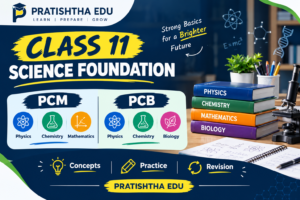
How Should PCM and PCMB Students Manage Their Subjects?
PCM students should allocate sufficient time to numerical practice and conceptual revision across Physics, Chemistry and Mathematics. PCMB students need to balance those subjects with Biology revision and textbook-based learning.
A practical approach is to identify the most difficult topics each week, schedule focused practice sessions and review progress at the end of the week.
Students should also follow their school’s prescribed syllabus and use additional study material only when it supports their learning goals.
Students can also use NCERT textbooks to review prescribed topics, understand fundamental concepts and practise subject-related questions. Regular textbook study, combined with independent practice and revision, can help students identify gaps in their understanding before moving on to more challenging problems.
For students considering 11th Science Foundation Coaching in Bangalore, it is worth checking whether a programme offers appropriate subject coverage, regular assessments, revision support and opportunities to clarify doubts.
Explore the course: Class 11 Science Foundation Course at Pratishtha Edu to enquire about current programme details and available academic support.
JEE vs NEET Foundation: Which Preparation Path Is Right for You?
Choosing between JEE and NEET preparation is an important decision for students entering Class 11 Science. Both pathways require a clear understanding of scientific concepts, regular practice and consistent revision, but they focus on different academic and career goals.
Before selecting a foundation course, students should understand the subjects involved, the type of questions they may encounter and the career options they want to explore. Parents can support this decision by discussing the student’s interests, strengths and long-term plans rather than relying only on marks or peer pressure.

JEE Foundation Coaching for Engineering Aspirants
The Joint Entrance Examination (JEE) is a major entrance-examination pathway for students interested in engineering and related technical fields. Preparation generally requires strong foundations in Physics, Chemistry and Mathematics.
Students preparing for JEE should focus on understanding concepts and applying them to a variety of problems.
Important areas of preparation include:
Physics: Understanding principles, interpreting diagrams and solving numerical problems.
Chemistry: Building conceptual clarity, practising calculations and revising important chemical concepts.
Mathematics: Developing logical reasoning, calculation accuracy and systematic problem-solving skills.
Regular practice: Attempting questions of increasing difficulty after learning each topic.
Performance review: Identifying recurring mistakes and revising weak areas.
Students should gradually build their problem-solving ability instead of attempting difficult questions before understanding the basics.
A suitable JEE foundation programme should align with the student’s current academic level and the relevant examination requirements. Students should confirm the actual course syllabus and coverage before enrolling.
Students can check the official JEE Main website for examination notifications, information bulletins and other updates relevant to their preparation. Always refer to the latest official information when planning for an entrance examination.
NEET Foundation Coaching for Medical Aspirants
The National Eligibility cum Entrance Test (NEET-UG) is relevant to students pursuing undergraduate medical education through the applicable admission process. Preparation involves Physics, Chemistry and Biology.
Students need to develop conceptual understanding while also maintaining regular revision and question-practice habits.
Key preparation areas include:
Physics: Understanding concepts and practising numerical questions.
Chemistry: Revising important concepts, reactions and calculations.
Biology: Studying prescribed textbook material, understanding biological processes and revising terminology.
Question practice: Solving relevant questions after completing each topic.
Revision planning: Returning to earlier topics regularly to improve retention.
Medical aspirants should avoid leaving Biology revision until the end of the academic year. A balanced weekly routine can help them maintain progress across all three subjects.
Before beginning focused preparation, students should check the latest official syllabus and examination information on the NEET official website.
Can Students Prepare for School Exams and Entrance Examinations Together?
Yes, students can work towards school examinations and entrance-exam preparation together when their study plan is organised realistically.
School learning helps students understand the prescribed curriculum, while additional entrance-exam practice can help them apply concepts to different question formats.
A balanced approach may include:
- Understanding the topic taught at school.
- Reviewing notes and clarifying doubts.
- Practising questions related to that topic.
- Attempting additional entrance-exam questions when the fundamentals are clear.
- Revising the topic and reviewing mistakes later.
The amount of additional practice should depend on the student’s academic progress, available time and intended examination pathway.
What If a Student Has Not Decided Between Engineering and Medicine?
Not every student entering Class 11 has a fixed career plan. Some students enjoy Mathematics and logical problem-solving, while others are more interested in Biology and life sciences. Some are still exploring their options.
In such cases, students should first understand their school subject combinations, academic interests and future eligibility requirements. Discussions with teachers, parents and academic counsellors can help them make a more informed decision.
Students should not select a preparation pathway simply because their friends have chosen it. Their own interests, willingness to study the relevant subjects and long-term goals deserve equal consideration.
How Should Parents Choose a Suitable Foundation Course?
Parents comparing foundation programmes should ask whether the course is designed for school academics, JEE preparation, NEET preparation or a combination of these objectives.
Before admission, clarify:
Which subjects are included in the programme?
Does the teaching approach match the student’s current level?
Are regular tests and revision sessions available?
How can students ask questions or resolve doubts?
What are the course duration, timings and total fees?
Does the programme fit around the student’s school schedule?
These questions help families compare options based on actual course details rather than promotional claims alone.
For families exploring 11th Science Foundation Coaching in Bangalore, the most appropriate programme is one that supports the student’s academic needs and intended direction without creating an unmanageable workload.
Explore your options: Visit the Class 11 Science Foundation Course at Pratishtha Edu to enquire about current course details and available learning options.
The right preparation pathway begins with clear goals, strong fundamentals and a study routine that students can follow consistently.
How to Create a Practical Class 11 Science Study Plan
A well-organised study plan helps students manage school lessons, homework, revision and entrance-exam preparation without feeling overwhelmed. In Class 11, the goal should be to understand concepts thoroughly and practise regularly rather than trying to complete too many topics in a short period.
Students preparing for JEE, NEET or school examinations can benefit from a routine that includes focused study sessions, short breaks, revision and regular assessment. The best timetable is one that fits the student’s school hours, learning needs and personal commitments.

Create a Daily Study Timetable That You Can Follow
A daily timetable does not need to be complicated. Students can begin by identifying their available study hours after school and dividing that time between homework, concept revision and question practice.
For example, a student with sufficient time after school might use the following flexible routine:
| Study activity | Suggested duration |
| Review school lessons and complete homework | 45 minutes |
| Physics concept revision and practice | 45 minutes |
| Chemistry study and questions | 45 minutes |
| Mathematics or Biology practice | 45 minutes |
| Review mistakes and plan the next day | 15 minutes |
This is an illustrative schedule, not a compulsory timetable. Students should adjust it according to their school workload, coaching classes, upcoming tests and individual learning pace. PCMB students may rotate Mathematics and Biology sessions across different days.
The objective is to maintain steady progress while leaving enough time for meals, sleep, relaxation and other responsibilities.
Use Weekly Planning to Cover Every Subject
Weekly planning makes it easier to distribute attention across subjects and identify difficult topics before they become larger problems.
At the beginning of each week, list the chapters being taught at school, pending assignments and topics that need additional practice.
A simple weekly approach could include:
Monday to Thursday: Learn current topics, complete homework and practise related questions.
Friday: Review important concepts and attempt a short subject-wise test.
Saturday: Work on weak topics and revisit incorrect answers.
Sunday: Revise the week’s learning and prepare a realistic plan for the following week.
Students can change this structure to fit their school and coaching schedules. The important point is to avoid postponing revision until the end of the month.
Practise Active Recall and Spaced Revision
Reading notes repeatedly can feel productive, but it does not always reveal whether a concept has been understood.
Active recall encourages students to retrieve information from memory without immediately checking their notes. For example, after studying a Physics principle, a student can close the textbook and explain the concept in their own words.
Spaced revision involves revisiting a topic at intervals instead of studying it only once. Students might review a chapter the following day, return to it later in the week and test their understanding again after a longer interval.
These techniques can be applied to formulas, chemical concepts, mathematical methods and Biology terminology.
Make a Mistake Notebook for Difficult Questions
Mistakes are an important part of learning. Instead of simply checking the correct answer and moving on, students should understand why their original approach did not work.
A mistake notebook can include:
The question or concept that caused difficulty.
The incorrect step or misunderstanding.
The correct method and explanation.
A reminder of what to check next time.
The date for reviewing the question again.
For numerical subjects, this can help students identify calculation errors and gaps in conceptual understanding. For Biology and other theory-based topics, it can highlight forgotten facts, confusing terminology or incomplete explanations.
Reviewing this notebook regularly helps revise more targeted.
Use Weekly Tests to Measure Progress
Tests help students check whether they can apply what they have learned independently. They can also reveal topics that need more attention.
After each test, students should review more than the final score. They should identify whether mistakes occurred because of incomplete understanding, insufficient practice, calculation errors or difficulty managing time.
A useful test-review routine is to:
- Check every incorrect answer.
- Revisit the relevant concept or worked example.
- Solve a similar question independently.
- Record recurring mistakes.
- Include weak topics in the next revision session.
Students should use test results to guide their learning rather than becoming discouraged by one difficult assessment.
Balance School Preparation and Entrance-Exam Practice
Students often worry that preparing for school examinations and entrance tests will require two completely separate study plans. In many cases, they can build on the same foundational concepts while adapting their practice to different question styles.
First, understand the topic covered at school. Next, complete assigned work and revise the essential concepts. Once the fundamentals are clear, practise additional questions appropriate to the intended entrance examination.
Students should check the applicable syllabus and avoid spending excessive time on advanced questions when basic concepts still need attention.
How Can Foundation Coaching Support a Study Routine?
A structured academic programme may provide scheduled lessons, practice questions, assessments and opportunities to clarify doubts. These features can help students organise their preparation, especially when they find it difficult to plan their studies independently.
However, the value of a course depends on its actual teaching approach, subject coverage and suitability for the student. Regular independent revision remains important even when a student attends coaching classes.
Students and parents considering 11th Science Foundation Coaching in Bangalore should ask about class timings, revision arrangements, test frequency and doubt-solving support before making a decision.
Explore the course: Visit the Class 11 Science Foundation Course at Pratishtha Edu to enquire about current programme details and available learning options.
A practical study plan, consistent revision and careful review of mistakes can help students develop stronger academic habits throughout Class 11.
How to Choose the Right 11th Science Coaching in Bangalore
Selecting the right coaching programme is an important decision for Class 11 students and their parents. A suitable learning environment can help students understand difficult concepts, practise regularly and manage their academic responsibilities more effectively.
However, not every coaching programme is suitable for every student. Before enrolling, families should compare the teaching approach, subject coverage, batch timings, assessment methods and overall course structure.
When searching for Science Coaching in Bangalore, focus on the quality of academic support and how well the programme matches the student’s school curriculum and future goals.

Check the Faculty and Teaching Approach
Teachers play an important role in helping students understand complex scientific concepts. Physics and Mathematics may require detailed problem-solving demonstrations, while Chemistry and Biology often benefit from a combination of conceptual explanations, examples and regular revision.
Before choosing a course, consider the following questions:
Do teachers explain concepts clearly, step by step?
Can students ask questions when they face difficulties?
Are examples and practice questions included in lessons?
Does the teaching pace suit the student’s current understanding?
Is additional academic guidance available when needed?
If a demo class is available, attending one can help students and parents understand the teaching style before making a decision.
Understand the Batch Size and Individual Attention
Students learn at different speeds. Some understand a concept immediately, while others need additional examples and practice.
A learning environment that allows students to ask questions and receive appropriate feedback can be useful. Parents should ask about the actual batch size, opportunities for doubt-solving and the way teachers support students who need extra help.
Rather than assuming that a smaller batch automatically guarantees better teaching, evaluate how effectively students receive guidance and participate in lessons.
Check the Subjects and Course Coverage
Before joining a programme, confirm which subjects are included and whether the course is intended for school academics, entrance-exam preparation or both.
For PCM students, the programme should address Physics, Chemistry and Mathematics according to their learning goals. PCMB students should also confirm the Biology coverage and the time allocated to each subject.
Parents should ask whether the course follows the student’s applicable board curriculum and how additional entrance-exam practice fits into the schedule.
Look for Regular Tests and Revision Support
Enquire on WhatsApp
Learning a topic during class is only one part of preparation. Students also need opportunities to practise independently and identify areas that require improvement.
Useful academic support may include:
Regular subject-wise assessments.
Practice questions after lessons.
Scheduled revision sessions.
Feedback on test performance.
Doubt-clearing opportunities.
Guidance on improving weak topics.
Ask how assessments are conducted and whether students receive useful feedback. A test should help learners understand their mistakes and decide what to revise next.
Compare Online and Offline Science Coaching
Both online and offline learning can work well when the teaching quality and study routine suit the student.
Online coaching may be suitable for students who need scheduling flexibility, want to reduce travel time or prefer learning from home. Students should check whether the classes are interactive and whether they can ask questions during lessons.
Offline coaching may suit students who prefer a dedicated classroom, face-to-face interaction and a more structured learning environment. Travel time, classroom schedules and opportunities to interact with teachers should also be considered.
| Factor | Online classes | Offline classes |
| Travel | Usually no daily commute | Travel to the centre is required |
| Learning environment | Requires a suitable home study space | Provides a dedicated classroom |
| Teacher interaction | Depends on the live class format | Usually face-to-face |
| Flexibility | May offer more scheduling options | Depends on the centre’s timetable |
| Best consideration | Internet access and self-discipline | Location, timings and classroom suitability |
The best option depends on the student’s learning preferences, schedule and available support. Parents should compare the actual programme features rather than assuming one format is always better.
Compare Course Fees and What Is Included
Fees are an important part of choosing a coaching programme, but the lowest price may not always provide the support a student needs.
Before admission, ask for a clear breakdown of the total cost and confirm what is included.
Check these details:
Total course fee and payment schedule.
Course duration and subjects covered.
Study materials and practice resources.
Tests and revision sessions.
Any additional charges.
Rules for missed classes or course changes, where applicable.
Comparing these details makes it easier to evaluate the overall value of a programme. Always confirm current fees directly with the institute because prices and course inclusions can change.
Make Sure the Timetable Fits Around School
Class 11 students already have school lessons, assignments, practical work and examinations to manage. Coaching should complement these responsibilities rather than create an unmanageable schedule.
Ask about the available batch timings, weekly class frequency and expected independent study time. Students should have enough time to review lessons, complete homework and rest adequately.
A realistic timetable is particularly important for students preparing for JEE or NEET alongside their school curriculum.
Questions to Ask Before Enrolling
Before making a final decision, students and parents can use this checklist:
Which subjects and syllabus areas does the course cover?
What are the faculty’s qualifications and teaching approach?
How large are the batches?
Are demo classes available?
How frequently are tests conducted?
What doubt-solving and revision support is provided?
What is the complete fee structure?
How do the class timings fit around school?
Taking time to compare these details can help families select a programme that meets their needs.
Explore Class 11 Science Coaching at Pratishtha Edu
Students and parents looking for additional academic support can explore the Class 11 Science Foundation programme at Pratishtha Edu.
Before enrolling, discuss the student’s subject combination, academic goals and preferred learning schedule with the institute. Confirm the current course structure, available batches, fees and included facilities directly.
Learn more: Class 11 Science Foundation Course at Pratishtha Edu
For course enquiries, call 7676047382 to ask about current availability and admission details.
Choosing the right coaching programme is about finding academic support that fits the student, encourages consistent learning and helps build confidence in Science subjects.
What Should Parents Check Before Class 11 Science Coaching Admission?
Choosing an academic programme for a Class 11 student involves more than comparing fees or selecting a convenient location. Parents should understand the student’s learning needs, future goals and school commitments before deciding which type of academic support is appropriate.
A suitable programme should help students develop subject knowledge, improve their problem-solving approach and build consistent study habits. It should also fit into a realistic routine that leaves time for independent learning and rest.
For families considering Class 11 Science Coaching in Bangalore, the following points can help make the admission decision more informed.

Understand Your Child’s Academic Strengths and Weak Areas
Every student has a different learning profile. Some students understand scientific concepts quickly but need more practice with numerical questions. Others may require additional explanations, structured revision or help organising their study time.
Before selecting a course, discuss which subjects the student finds difficult and what kind of support would be most useful.
Parents can consider questions such as:
Does the student understand concepts taught at school?
Are numerical problems difficult to solve independently?
Does the student need a more consistent revision routine?
Are there particular topics that require extra attention?
Is the student preparing for JEE, NEET or school examinations only?
Understanding these needs can help families select a course that offers relevant support rather than adding unnecessary academic pressure.
Check Whether the Course Matches the Student’s Goals
Some programmes focus mainly on school academics, while others include additional preparation for entrance examinations. Parents should confirm the intended purpose of the course before enrolling.
Students planning for engineering may need additional Physics, Chemistry and Mathematics practice. Students interested in medical education may require a balanced approach to Physics, Chemistry and Biology.
If a student has not yet chosen a career pathway, parents should discuss subject choices and eligibility requirements with teachers or an appropriate academic counsellor before selecting a specialised programme.
Ask About Academic Progress and Feedback
Parents often want to understand whether their child is progressing as expected. Regular feedback can help families identify difficulties before they affect confidence or examination performance.
Before admission, ask how the institute reviews student progress and communicates academic concerns.
Useful questions include:
Are periodic assessments conducted?
Do students receive feedback on their mistakes?
How are weak topics identified?
Can students seek additional help when needed?
Is there a way for parents to discuss academic progress?
The purpose of assessment should be to guide improvement. A single test score does not always reflect a student’s overall understanding or potential.
Evaluate the Learning Environment
Students need an environment where they can concentrate, participate in lessons and ask questions comfortably.
If offline classes are being considered, parents can ask about classroom arrangements, batch timings, the learning atmosphere and the location. For online classes, check the teaching format, internet requirements and opportunities for interaction with faculty.
If a demo class is available, it can help the student understand whether the teaching style and pace feel appropriate.
Confirm Fees, Duration and Admission Terms
Before paying any course fee, request the latest details in writing.
Confirm the total amount payable, course duration, subjects included, class frequency and any additional charges. Ask about payment schedules, missed classes and applicable course-change or refund policies.
Parents should avoid making decisions based solely on limited-time promotional messages without understanding the complete terms.
A transparent discussion before admission can reduce misunderstandings later.
Help Students Balance Coaching and School
Class 11 can be demanding because students are adjusting to more detailed concepts, regular assignments and potentially new examination goals.
Parents can support students by helping them maintain a manageable schedule rather than expecting them to study continuously.
A balanced routine should include schoolwork, coaching, independent practice, revision, sufficient sleep and breaks.
It is also important to encourage students to communicate when they feel overwhelmed or struggle with a topic. Timely support can help them address difficulties before they become persistent problems.
Encourage Independent Learning and Confidence
Coaching can provide explanations, practice and academic guidance, but students also need to develop the ability to learn independently.
Parents can encourage this by asking students to explain what they learned, review incorrect answers and plan their next revision session.
Instead of comparing a child with classmates, focus on individual progress, improved understanding and consistency. This can help students develop a healthier approach to learning and examinations.
Admission Checklist for Parents
Before finalising a programme, make sure you have checked the following:
The course matches the student’s subject combination and academic goals.
The teaching approach and faculty details are clear.
Batch timings fit around school commitments.
Test frequency and doubt-solving arrangements are explained.
Course fees and additional charges are confirmed.
Course duration and admission terms are understood.
The student is comfortable with the learning format.
Enquire About Class 11 Science Coaching at Pratishtha Edu
Parents and students exploring additional academic support can visit the Class 11 Science Foundation Course page at Pratishtha Edu.
Before enrolling, ask the institute about the current syllabus coverage, available batches, class timings, fees and academic support. These details will help you assess whether the programme fits the student’s needs.
For enquiries, call 7676047382 to discuss current course availability and admission information.
The right decision combines the student’s goals, the quality of academic support and a timetable that can be maintained consistently. With thoughtful planning, parents can help students approach Class 11 Science with greater confidence and a clearer direction.
Frequently Asked Questions About Class 11 Science Foundation Coaching in Bangalore
1. Is Class 11 Science Foundation Coaching useful for JEE and NEET preparation?
Class 11 Science foundation coaching can help students strengthen their understanding of Physics, Chemistry, Mathematics or Biology through structured lessons and regular practice. Its usefulness depends on the course content, teaching approach, and students’ academic goals. Before enrolling, confirm whether the programme supports school academics, JEE preparation, NEET preparation or a combination of these.
2. When should students start preparing for JEE or NEET?
Students can begin building their foundations as they start Class 11. Understanding concepts from the beginning, practising questions regularly and revising completed topics can help create a consistent preparation routine. The intensity of preparation should match the student’s current level and intended examination.
3. Which subjects should students focus on in Class 11 Science?
Students taking PCM generally study Physics, Chemistry and Mathematics, while those taking PCMB also study Biology. The appropriate subject combination depends on school requirements and future academic plans. Students should confirm the relevant eligibility criteria before selecting a particular entrance-exam pathway.
4. How can students manage school studies and entrance-exam preparation together?
Students can start by understanding school lessons, completing assignments and revising the topics covered in class. They can then practise additional questions relevant to their intended examination. A realistic weekly timetable, regular revision and periodic self-assessment can help balance both responsibilities.
5. How should parents choose the right Science coaching in Bangalore?
Parents should compare the teaching approach, faculty, subject coverage, batch timings, tests, doubt-solving support and total fees. They should also consider the student’s learning needs and school schedule. If available, a demo class can help families assess whether the teaching style is suitable.
6. Are online or offline Science coaching classes better for Class 11 students?
Both formats can be effective when they suit the student’s learning preferences and provide appropriate academic support. Online classes may reduce travel time, while offline classes offer a dedicated classroom environment. Compare teaching quality, interaction, timings and convenience before making a decision.
7. How much do Class 11 Science coaching classes cost in Bangalore?
Fees vary depending on the subjects covered, course duration, teaching format and included academic support. Students and parents should request the latest fee structure directly from the institute and confirm whether study materials, assessments and additional support are included.
8. Does foundation coaching help students improve their Physics and Chemistry concepts?
A well-structured programme may help students understand difficult concepts through explanations, worked examples and practice questions. Improvement also depends on independent study, revision and the student’s willingness to review mistakes and clarify doubts.
9. Can students who struggle with Mathematics benefit from foundation coaching?
Students who find Mathematics difficult may benefit from revisiting basic concepts, practising progressively challenging questions and learning to solve problems step by step. Before enrolling, parents should check whether the programme provides support suited to the student’s current level.
10. How can I enquire about Class 11 Science Foundation Coaching at Pratishtha Edu?
Students and parents can visit the Class 11 Science Foundation Course page at Pratishtha Edu or call 7676047382 to ask about current course details, available batches, timings and admission information.
11. What should students look for in a Class 11 Science study plan?
A useful study plan should include schoolwork, subject-wise practice, revision, periodic tests and sufficient rest. Students should adjust the routine to their school timetable, learning pace and academic goals rather than following an unnecessarily demanding schedule.
12. Should students choose JEE or NEET preparation before starting Class 11?
Students should consider their interests, subject preferences and future career goals before choosing a preparation pathway. Those who are uncertain can discuss their options with parents, teachers or an academic counsellor and review the relevant subject and eligibility requirements.
Take the Next Step Towards Stronger Science Fundamentals

Class 11 is the right time to strengthen Physics, Chemistry, Mathematics and Biology concepts before moving towards advanced topics. With regular practice, concept-based learning and a structured study plan, students can build a stronger foundation for school examinations and future entrance exam preparation.
At Pratishtha Edu, students can explore 11th Science Foundation coaching in Bangalore designed to support conceptual understanding, regular practice and academic progress.
Looking for 11th Science Foundation Coaching in Bangalore?
Contact Pratishtha Edu to enquire about course details, class schedules and admission options.
Call: 7676047382
Explore the course: https://pratishthaedu.com/puc-science1.html
Leave a Reply