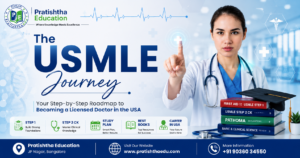
Introduction
Pursuing a medical career in the United States is a dream shared by thousands of medical students and graduates worldwide. Every year, aspiring doctors dedicate months of focused preparation to qualify for residency programs in the USA, where they receive advanced clinical training and gain exposure to one of the world’s most developed healthcare systems. The first and most important step toward achieving this goal is clearing the United States Medical Licensing Examination (USMLE).
The USMLE is much more than a licensing examination. It is designed to assess whether a medical student or graduate has the scientific knowledge, clinical reasoning, and decision-making skills required to provide safe and effective patient care. Because of its comprehensive nature, preparing for the examination requires careful planning, conceptual clarity, consistent revision, and regular practice.
Many students begin their preparation without a proper roadmap. Some spend months collecting books but never complete the syllabus, while others solve hundreds of questions without strengthening their basic concepts. These mistakes often result in unnecessary stress and inconsistent performance. A well-planned preparation strategy can help students avoid these challenges and make their learning journey more organized and productive.
Whether you are an MBBS student planning, a recent graduate preparing for residency applications, or an international medical graduate seeking global career opportunities, understanding each stage of the USMLE is essential. Knowing the eligibility criteria, examination pattern, syllabus, recommended resources, and preparation strategy before you begin can help you study with confidence and avoid common mistakes.
This guide has been created to provide a complete understanding of the USMLE preparation process. Instead of focusing only on theoretical information, it explains practical strategies, planning techniques, and important aspects of preparation that every aspirant should know. By the end of this guide, you will have a clear roadmap to organize your studies, choose the right resources, and prepare effectively for the examination.
What is the USMLE?
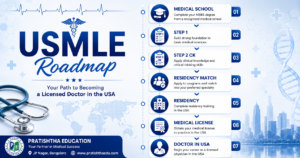
The United States Medical Licensing Examination (USMLE) is a standardized examination that evaluates whether medical students and graduates possess the knowledge and clinical skills required to practice medicine safely in the United States. It serves as an important milestone for candidates who wish to pursue residency training and eventually obtain medical licensure in the USA.
Unlike traditional university examinations that primarily test theoretical knowledge, the USMLE focuses on applying medical concepts to real-life clinical situations. Candidates are expected to analyze patient cases, interpret laboratory findings, identify appropriate diagnoses, and recommend suitable management plans using evidence-based medical practices.
The examination is jointly administered by the National Board of Medical Examiners (NBME) and the Federation of State Medical Boards (FSMB). It is recognized as one of the most respected medical licensing examinations in the world and is an essential part of the pathway toward practicing medicine in the United States.
Preparing for the USMLE requires much more than memorizing facts. Success depends on building strong conceptual understanding, developing clinical reasoning skills, and practicing high-quality questions consistently over several months. Students who approach the examination with a structured preparation plan generally perform better than those who rely on last-minute studying.
Why is the USMLE Important?
The United States offers exceptional opportunities for medical education, research, clinical practice, and professional development. Clearing the USMLE demonstrates that a candidate has achieved an internationally recognized standard of medical competence and is prepared to move forward in the journey toward residency training.
For international medical graduates, the examination opens the door to residency programs across a wide range of medical specialties. These programs provide structured clinical training, exposure to modern healthcare technologies, and opportunities to work alongside experienced physicians in internationally recognized hospitals.
Apart from career opportunities, USMLE preparation itself contributes significantly to professional growth. It strengthens the understanding of both basic and clinical sciences, improves analytical thinking, and develops the ability to solve complex patient cases using logical and evidence-based approaches.
The disciplined preparation required for the USMLE also helps students develop habits that remain valuable throughout their careers. Regular revision, effective time management, continuous self-assessment, and critical thinking are essential skills for every successful physician, regardless of where they eventually practice medicine.
For many students, the USMLE is not simply an examination—it is the foundation for an international medical career built on knowledge, competence, and lifelong learning.
USMLE Exam Overview
Before starting your preparation, it is important to understand the overall structure of the examination. Having a clear understanding of the exam helps you create realistic goals, plan your study schedule effectively, and prepare with greater confidence.
| Particular | Details |
| Full Name | United States Medical Licensing Examination (USMLE) |
| Purpose | Medical licensure and residency pathway in the United States |
| Conducting Organizations | National Board of Medical Examiners (NBME) and Federation of State Medical Boards (FSMB) |
| Examination Mode | Computer-Based Test |
| Language | English |
| Examination Levels | Step 1 and Step 2 Clinical Knowledge (CK) |
| Test Centres | Prometric Test Centres located in different countries |
| Eligible Candidates | Medical students, graduates, and eligible international medical graduates |
| Recommended Preparation Duration | Approximately 9–12 months, depending on the student’s academic background |
Understanding these fundamentals before beginning your preparation helps eliminate confusion and allows you to focus on what matters most—building strong concepts and following a consistent study plan.
Every successful candidate begins with a clear understanding of the examination before moving on to the syllabus and preparation strategy. Taking time to understand the structure of the USMLE is the first step toward building an effective preparation roadmap that can be followed confidently over the coming months.
USMLE Eligibility Criteria
Before starting your preparation, it is important to understand who can apply for the USMLE. The examination is intended for medical students and graduates who wish to pursue medical licensure and residency training in the United States. While the eligibility requirements are straightforward, candidates should always verify the latest guidelines before beginning the registration process.
Medical students enrolled in eligible medical schools and graduates who have completed their medical education can generally apply for the examination after fulfilling the required eligibility criteria. International Medical Graduates (IMGs) should also verify the latest certification and eligibility requirements through the Educational Commission for Foreign Medical Graduates (ECFMG) before beginning the application process.
The table below provides a quick overview of the general eligibility criteria.
| Candidate | Eligibility Status |
| MBBS Students | Eligible as per applicable USMLE requirements during medical education |
| MBBS Graduates | Eligible after completion of medical degree and required documentation |
| International Medical Graduates (IMGs) | Eligible after fulfilling certification requirements |
| Medical School | Must satisfy the applicable eligibility requirements for USMLE registration |
Although eligibility is important, success in the USMLE depends far more on preparation than on academic background. Students who begin early, study consistently, and follow a structured plan usually perform better than those who rely on last-minute preparation.
Understanding the USMLE Examination Structure
The USMLE evaluates whether candidates can apply their medical knowledge in clinical practice. Instead of testing isolated facts, the examination assesses a student’s ability to analyze patient cases, interpret medical information, and make appropriate clinical decisions.
The current examination pathway consists of two major stages that every aspirant should understand before beginning preparation.
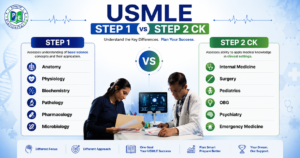
USMLE Step 1
USMLE Step 1 focuses on the scientific foundations of medicine. It assesses whether students understand the basic medical sciences and can apply those concepts while solving clinical problems.
Rather than asking direct theoretical questions, Step 1 integrates multiple subjects into patient-based scenarios. This approach evaluates conceptual understanding instead of simple memorization.
Subjects included in Step 1 include:
- Anatomy
- Physiology
- Biochemistry
- Pathology
- Pharmacology
- Microbiology
- Immunology
- Genetics
- Behavioral Sciences
Developing a strong foundation in these subjects makes future preparation much easier and also supports learning for Step 2 CK.
USMLE Step 2 Clinical Knowledge (CK)
Step 2 Clinical Knowledge evaluates a candidate’s ability to apply medical knowledge during patient care. The examination focuses on diagnosis, treatment planning, disease prevention, and clinical decision-making.
Questions are based on real-life clinical situations where students must interpret symptoms, investigations, and patient history before selecting the most appropriate management approach.
Compared to Step 1, Step 2 CK places greater emphasis on clinical application and patient management.
USMLE Exam Pattern
Understanding the examination pattern helps students prepare more efficiently and develop the time-management skills needed during the actual examination.
| Feature | Step 1 | Step 2 CK |
| Examination Mode | Computer-Based | Computer-Based |
| Question Format | Multiple Choice Questions (MCQs) | Multiple Choice Questions (MCQs) |
| Main Focus | Multiple Choice Questions (MCQs) | Multiple Choice Questions (MCQs) |
| Main Focus | Basic Medical Sciences | Clinical Sciences and Patient Management |
| Clinical Case-Based Questions | Yes | Extensive |
| Language | English | English |
| Skill Assessed | Conceptual Understanding | Clinical Decision-Making |
One of the biggest differences between the USMLE and many university examinations is the style of questioning. Instead of asking candidates to recall facts, the examination requires them to integrate knowledge from different subjects and apply it to clinical situations.
Students who practice high-quality question banks regularly often find it easier to recognize patterns and improve their problem-solving speed.
USMLE Step 1 Syllabus
Step 1 forms the foundation of USMLE preparation. A clear understanding of the basic sciences not only improves Step 1 performance but also makes Step 2 CK preparation more effective.
Anatomy
This section covers gross anatomy, neuroanatomy, embryology, histology, and clinically relevant anatomical concepts. Students should focus on understanding structures along with their functional and clinical significance.
Physiology
Physiology includes the functioning of all major organ systems such as the cardiovascular, respiratory, renal, gastrointestinal, endocrine, reproductive, and nervous systems. Conceptual clarity is essential because physiological principles are frequently integrated into clinical questions.
Biochemistry
Important topics include metabolism, enzymes, molecular biology, nutrition, genetics, DNA replication, protein synthesis, and biochemical disorders. Understanding pathways is more important than memorizing isolated reactions.
Pathology
Pathology is one of the highest-yield subjects in Step 1. Candidates should thoroughly study cellular injury, inflammation, neoplasia, systemic pathology, and organ-specific diseases along with their underlying mechanisms.
Pharmacology
Students should learn drug classifications, mechanisms of action, therapeutic uses, adverse effects, contraindications, and pharmacokinetics. Questions often assess the clinical application of medications rather than simple drug recall.
Microbiology
This subject includes bacteriology, virology, mycology, parasitology, infectious diseases, antimicrobial agents, and laboratory diagnosis of infections. Visual learning techniques and regular revision are particularly helpful for microbiology.
Immunology
Topics include innate immunity, adaptive immunity, hypersensitivity reactions, autoimmune diseases, immunodeficiency disorders, transplantation, and vaccines.
Genetics
Candidates should understand inheritance patterns, chromosomal abnormalities, molecular genetics, genetic disorders, and genetic counseling principles.
Behavioral Sciences
Behavioral sciences cover epidemiology, biostatistics, ethics, psychology, communication skills, public health, and physician-patient relationships. These topics are frequently integrated into clinical scenarios.
USMLE Step 2 CK Syllabus
Step 2 CK evaluates a candidate’s ability to diagnose diseases, manage patients, and make appropriate clinical decisions in various medical situations.
Internal Medicine
Internal Medicine is one of the largest components of Step 2 CK. It includes cardiology, pulmonology, gastroenterology, nephrology, endocrinology, infectious diseases, hematology, oncology, rheumatology, and neurology.
Surgery
Topics include trauma, surgical emergencies, preoperative evaluation, postoperative care, gastrointestinal surgery, vascular surgery, and common surgical conditions.
Pediatrics
Candidates should prepare for growth and development, neonatal care, pediatric infections, congenital disorders, nutrition, immunization schedules, and childhood illnesses.
Obstetrics and Gynecology
Important areas include antenatal care, labor and delivery, high-risk pregnancy, infertility, reproductive endocrinology, gynecological disorders, contraception, and women’s health.
Psychiatry
The syllabus includes mood disorders, anxiety disorders, psychotic disorders, substance use disorders, personality disorders, psychiatric emergencies, and psychopharmacology.
Family Medicine
Students should focus on preventive healthcare, chronic disease management, health screening, lifestyle modification, patient counseling, and primary care principles.
Emergency Medicine
Emergency Medicine covers shock, trauma, poisoning, airway management, cardiac arrest, acute medical emergencies, and initial patient stabilization.
Ethics and Patient Safety
Professionalism, informed consent, patient confidentiality, medical ethics, quality improvement, and patient safety are integrated throughout the examination and play an important role in clinical decision-making.
A thorough understanding of the syllabus allows students to prioritize important topics, prepare systematically, and revise effectively. Instead of studying subjects randomly, dividing the syllabus into smaller sections and revising them regularly helps improve retention and builds confidence throughout the preparation journey.
Best Books for USMLE Preparation
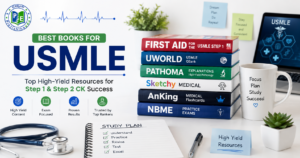
Selecting the right study resources is one of the most important decisions during USMLE preparation. Many students believe that collecting numerous books will increase their chances of success, but this often leads to confusion and incomplete preparation. The most successful candidates usually rely on a limited number of trusted resources and revise them multiple times instead of constantly switching between different books.
A combination of concept-building resources, question banks, and self-assessment tools is generally considered the most effective approach.
| Resource | Why It Is Recommended |
| First Aid for the USMLE Step 1 | High-yield review book covering almost every important topic for revision. |
| UWorld Question Bank | Considered the gold standard for clinical reasoning and question practice. |
| Pathoma | Excellent resource for understanding pathology with clear explanations. |
| Sketchy Medical | Helps simplify Microbiology and Pharmacology using visual memory techniques. |
| AnKing/Anki Flashcards | Useful for active recall and long-term memory retention. |
| NBME Self-Assessments | Measures preparation level and predicts examination readiness. |
While these are among the most recommended resources, students should avoid using too many books simultaneously. Revising a few trusted resources multiple times is generally more beneficial than reading several books only once.
How to Choose the Right Study Resources
Every student has a different learning style, so choosing resources that match your preparation method is important.
If you are starting your preparation, begin with concept-building resources before moving to intensive question practice. Once your basic understanding becomes stronger, spend more time solving MCQs and reviewing explanations rather than reading theory repeatedly.
Whenever you choose a new resource, ask yourself three questions:
- Does this resource explain concepts clearly?
- Is it updated according to the current USMLE pattern?
- Will I be able to revise it multiple times before the examination?
If the answer to all three questions is yes, it is likely to be a valuable addition to your preparation.
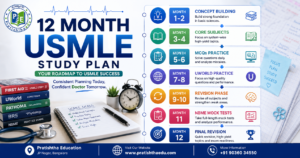
12-Month USMLE Study Plan
Preparing for the USMLE requires consistency rather than studying for long hours over a short period. A well-structured study plan helps students complete the syllabus on time, revise important topics regularly, and practice sufficient questions before the examination.
The following 12-month study plan provides a balanced approach for most candidates.
| Duration | Study Plan |
| Months 1–2 | Build strong concepts in Anatomy, Physiology, and Biochemistry. |
| Months 3–4 | Complete Pathology, Pharmacology, and Microbiology with daily revision. |
| Months 5–6 | Cover Immunology, Genetics, and Behavioral Sciences while solving chapter-wise MCQs. |
| Months 7–8 | Begin intensive UWorld practice and analyze every incorrect answer carefully. |
| Months 9–10 | Revise the complete syllabus and strengthen weak subjects. |
| Month 11 | Attempt NBME assessments and full-length mock examinations under timed conditions. |
| Month 12 | Final revision, high-yield notes, formula review, and light practice before the examination. |
Students preparing alongside MBBS may require additional flexibility, whereas full-time aspirants may progress more quickly depending on their study schedule.
How to Prepare While Studying MBBS
Many students begin their USMLE preparation during their MBBS course, which provides a significant advantage. Studying simultaneously allows candidates to strengthen concepts while learning them in medical college, reducing the overall preparation burden later.
The key is maintaining consistency without compromising university examinations.
A practical approach includes:
- Studying one USMLE topic every day after college.
- Revising university subjects using USMLE-oriented resources whenever possible.
- Solving a small number of quality MCQs daily.
- Increasing study hours during semester breaks.
- Revising completed subjects every weekend.
Preparing gradually over a longer period is often more effective than attempting to complete everything after graduation.
Time Management Tips for USMLE Preparation
One of the biggest challenges during USMLE preparation is managing time efficiently. Students often spend excessive time reading theory while neglecting revision and question practice.
A balanced daily routine generally produces better results than studying continuously without a clear plan.
Some practical time-management strategies include:
Set Weekly Targets
Rather than planning only one day at a time, create realistic weekly goals for syllabus completion, revision, and MCQ practice. Weekly planning provides flexibility while keeping preparation on track.
Focus on Active Learning
Reading the same chapter repeatedly is less effective than testing yourself through flashcards, question banks, and self-assessment. Active recall strengthens memory and improves long-term retention.
Practice Questions Every Day
Question practice should become a daily habit. Even if you are still learning new topics, solving a few clinical questions each day improves analytical thinking and familiarizes you with the examination style.
Revise Frequently
Revision should never be postponed until the end of preparation. Regular revision prevents forgetting previously studied topics and improves confidence before the examination.
Track Your Progress
Maintain a simple notebook or digital tracker to record completed subjects, mock test scores, weak areas, and revision schedules. Reviewing your progress regularly helps maintain motivation and ensures balanced preparation.
Common Mistakes to Avoid During USMLE Preparation
Many students fail to achieve their target scores not because they lack ability, but because they make avoidable mistakes throughout their preparation journey.
Recognizing these mistakes early can save valuable time and improve overall performance.
Studying Without a Clear Plan
Beginning preparation without a structured roadmap often results in incomplete syllabus coverage and unnecessary stress closer to the examination.
Using Too Many Study Resources
Collecting multiple books and changing resources frequently creates confusion. Focus on mastering a few reliable resources instead of trying to study everything available.
Ignoring Clinical Question Practice
The USMLE emphasizes clinical reasoning. Students who spend all their time reading textbooks without solving questions often struggle to apply concepts during the examination.
Skipping Revision
Completing the syllabus only once is rarely sufficient. Repeated revision strengthens memory and improves confidence during the final weeks of preparation.
Avoiding Mock Tests
Mock examinations simulate the actual testing environment and help identify weak areas before the real examination. Students who regularly take mock tests generally perform better under exam conditions.
Comparing Yourself With Others
Every student’s preparation journey is different. Comparing study hours, resources, or progress with friends often creates unnecessary pressure. Focus on consistent improvement rather than comparison.
Neglecting Physical and Mental Health
Long study hours without proper sleep, exercise, and relaxation can reduce concentration and productivity. Maintaining a healthy lifestyle is equally important for long-term preparation.
Preparing for the USMLE is a marathon rather than a sprint. Consistent effort, disciplined planning, and regular self-evaluation contribute much more to success than studying excessively for short periods. Candidates who remain patient, revise regularly, and continue improving every day are better positioned to achieve their desired results.
Career Opportunities After USMLE
Successfully clearing the USMLE is a significant milestone for medical students and graduates who aspire to build a career in the United States. While passing the examination is only one part of the overall journey, it plays a crucial role in becoming eligible for residency training and advancing toward medical licensure.
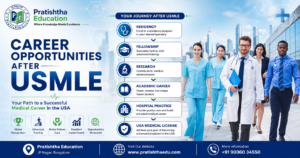
The opportunities available after the USMLE extend beyond clinical practice. Doctors can pursue residency programs, specialized fellowships, research positions, academic careers, and leadership roles in healthcare. The knowledge and clinical skills gained during USMLE preparation are also valued internationally, making it a strong foundation for long-term professional growth.
Residency Training in the United States
For most candidates, the primary goal after completing the USMLE is securing a residency position in the United States. Residency programs provide structured clinical training under experienced physicians and allow graduates to develop practical skills in their chosen specialty.
Residency duration varies depending on the specialty but generally ranges from three to seven years. During this period, doctors gain extensive hands-on experience in diagnosing, treating, and managing patients while working in hospitals and healthcare institutions.
Some of the most popular residency specialties include:
- Internal Medicine
- General Surgery
- Pediatrics
- Family Medicine
- Emergency Medicine
- Psychiatry
- Obstetrics and Gynecology
- Neurology
- Radiology
- Anesthesiology
Choosing a specialty depends on personal interests, career goals, academic performance, research experience, and the competitiveness of the residency program.
Fellowship and Super-Specialization
After completing residency, many physicians choose to pursue fellowship programs to gain expertise in a specific medical specialty.
Fellowship training provides advanced education and practical experience in highly specialized fields such as:
- Cardiology
- Gastroenterology
- Oncology
- Endocrinology
- Nephrology
- Pulmonology
- Critical Care Medicine
- Infectious Diseases
- Pediatric Subspecialties
- Sports Medicine
A fellowship allows doctors to expand their expertise, improve career prospects, and contribute to specialized patient care.
Research Opportunities
The United States offers outstanding opportunities for medical research in universities, teaching hospitals, and research institutes. Doctors interested in academic medicine can participate in clinical trials, biomedical research, public health projects, and healthcare innovation.
Research experience strengthens professional profiles, enhances analytical skills, and may improve competitiveness for residency applications in certain specialties.
Academic Careers
Many physicians develop a passion for teaching alongside clinical practice. Academic medicine allows doctors to educate medical students, supervise residents, conduct research, and contribute to the advancement of medical education.
Working in academic institutions also provides opportunities to publish research papers, attend international conferences, and collaborate with experts from different areas of medicine.
Global Career Growth
Although the USMLE is designed for medical licensure in the United States, the preparation process develops skills that are respected across the world. Doctors who prepare for the examination strengthen their understanding of evidence-based medicine, improve clinical reasoning, and become more confident in patient management.
These competencies contribute to professional development regardless of where a doctor ultimately chooses to practice.
Why Choose Pratishtha Education for USMLE Preparation?
Preparing for the USMLE requires dedication, discipline, and the right academic support. A structured learning environment can make a significant difference by helping students stay organized, maintain consistency, and prepare with confidence.
At Pratishtha Education, our approach focuses on building strong medical concepts while ensuring that students receive continuous academic guidance throughout their preparation. The program is designed to help students develop conceptual clarity, improve problem-solving skills, and gain confidence through regular practice and assessment.
Students preparing with Pratishtha Education benefit from a balanced learning experience that combines classroom teaching, structured study plans, comprehensive learning resources, and continuous performance evaluation.
Some of the key features of our USMLE preparation program include:
- Comprehensive coverage of the latest USMLE syllabus.
- Concept-based teaching with a focus on clinical application.
- Regular mock tests to evaluate progress.
- Detailed performance analysis after every assessment.
- Personalized guidance for improving weaker subjects.
- Interactive doubt-clearing sessions with experienced faculty.
- Flexible learning options for classroom and online students.
- A disciplined study environment that encourages consistent preparation.
Our goal is not only to help students prepare for the examination but also to build the confidence, clinical reasoning, and problem-solving abilities required for a successful medical career.
Final Thoughts
Preparing for the USMLE is a journey that requires commitment, patience, and a well-planned strategy. While the examination is challenging, students who begin their preparation early and follow a disciplined study schedule are better positioned to achieve their goals.
Rather than focusing only on completing the syllabus, candidates should aim to build strong conceptual foundations, practice clinical questions regularly, revise consistently, and evaluate their progress through self-assessment. Small improvements made every day gradually lead to significant progress over time.
Success in the USMLE is not determined by studying the greatest number of books or spending the longest hours at a desk. It comes from understanding concepts thoroughly, applying them effectively, learning from mistakes, and maintaining consistency throughout the preparation journey.
Whether you are an MBBS student planning, a recent graduate preparing for residency, or an international medical graduate pursuing opportunities in the United States, beginning your preparation with the right strategy can make the entire journey more structured and rewarding.
With determination, continuous learning, and the right guidance, achieving your USMLE goals is an attainable milestone that can open the door to a successful and fulfilling medical career.
Frequently Asked Questions
1. What is the USMLE?
The United States Medical Licensing Examination (USMLE) is a standardized medical licensing examination for students and graduates who wish to practice medicine in the United States. It assesses a candidate’s knowledge, clinical reasoning, and ability to apply medical concepts in patient care.
2. Who can apply for the USMLE?
Medical students and graduates from eligible medical schools can apply for the USMLE after meeting the applicable eligibility requirements. International Medical Graduates (IMGs) are also eligible after completing the necessary certification process.
3. How many steps are included in the USMLE?
The current USMLE pathway includes Step 1 and Step 2 Clinical Knowledge (CK). Candidates should always refer to the latest official guidelines for any updates regarding the examination process.
4. How long does it take to prepare for the USMLE?
Preparation time varies depending on a student’s academic background and study schedule. Most candidates prepare for approximately 9 to 12 months, while some may require additional time if they are studying alongside their MBBS course or internship.
5. Is the USMLE difficult?
Yes, the USMLE is considered one of the most challenging medical licensing examinations because it emphasizes conceptual understanding and clinical decision-making rather than simple memorization. However, consistent preparation and regular practice can significantly improve performance.
6. Can Indian MBBS students appear for the USMLE?
Yes. Indian MBBS students and graduates can take the USMLE if they fulfill the applicable eligibility and certification requirements. Every year, many Indian doctors successfully clear the examination and pursue residency training in the United States.
7. Which subjects are covered in USMLE Step 1?
Step 1 primarily includes Anatomy, Physiology, Biochemistry, Pathology, Pharmacology, Microbiology, Immunology, Genetics, and Behavioral Sciences. These subjects form the foundation of medical science and are integrated into clinical problem-solving.
8. What does USMLE Step 2 CK assess?
Step 2 CK evaluates a candidate’s ability to diagnose diseases, interpret clinical information, manage patients, and make evidence-based medical decisions. The examination focuses on real-life clinical scenarios rather than theoretical questions.
9. Which books are best for USMLE preparation?
Some of the most recommended resources include First Aid for the USMLE Step 1, UWorld, Pathoma, Sketchy Medical, AnKing Flashcards, and NBME Self-Assessments. Students should focus on mastering a few trusted resources instead of collecting numerous books.
10. Is coaching necessary for USMLE preparation?
Coaching is not mandatory, but many students benefit from structured guidance, expert mentorship, regular mock tests, and a disciplined study plan. The right learning environment can help candidates stay consistent and identify areas that need improvement.
11. How many hours should I study every day?
There is no fixed number of study hours that guarantees success. Most successful candidates prioritize consistent daily study, regular revision, and quality question practice over simply studying for long hours.
12. How important are mock tests?
Mock tests are an essential part of USMLE preparation. They help students become familiar with the examination pattern, improve time management, identify weak areas, and build confidence before the actual examination.
13. Can I prepare for the USMLE while pursuing MBBS?
Yes. Many students begin preparing during their MBBS course. Starting early allows them to build strong concepts gradually and balance university studies with USMLE preparation more effectively.
14. What career opportunities are available after clearing the USMLE?
After clearing the USMLE and completing the residency application process, candidates can pursue residency training, fellowship programs, research opportunities, academic medicine, and long-term medical practice in the United States.
15. What is the best strategy to crack the USMLE?
The most effective strategy is to begin preparation early, understand the syllabus thoroughly, use reliable study resources, solve clinical practice questions regularly, revise consistently, take mock tests, and continuously evaluate your progress. Maintaining discipline and following a structured study plan are key to long-term success.
Conclusion
The USMLE is one of the most respected medical licensing examinations in the world and serves as a gateway to residency training and medical practice in the United States. Although the journey requires dedication, consistency, and careful planning, it is achievable for students who follow a structured preparation strategy and remain committed to continuous learning.
Building a strong foundation in the basic medical sciences, understanding clinical concepts, practicing high-quality questions, and revising regularly are the cornerstones of successful preparation. Rather than focusing on studying more resources, candidates should concentrate on mastering trusted study materials, analyzing their mistakes, and improving steadily over time.
Whether you are an MBBS student planning your future, a recent graduate preparing for residency, or an international medical graduate exploring global career opportunities, beginning your preparation with the right approach can make a significant difference. Every topic you learn, every question you solve, and every revision session you complete bring you one step closer to achieving your goal.
If you are looking for USMLE Coaching in Bangalore, choosing the right guidance and a structured preparation program can help you stay focused throughout your journey. At Pratishtha Education, students receive comprehensive academic support, experienced faculty guidance, and a disciplined learning environment to prepare confidently for the USMLE. If you have any questions about the course, admissions, or upcoming batches, feel free to contact us. You can also explore our latest blogs for more preparation strategies and exam-related updates.
Leave a Reply