
How to Choose USMLE Coaching is an important question for Indian medical students planning to pursue a medical career in the United States. The United States Medical Licensing Examination (USMLE) is an important part of the pathway for many international medical students and graduates seeking medical licensure in the US. Before selecting a preparation program, understand the exam structure, compare available study resources, and choose a realistic study plan that matches your learning needs and schedule.
If you are searching for USMLE Coaching in Bangalore, you may have questions about course structure, preparation strategies, learning resources, faculty guidance, and how to balance USMLE studies with your medical education. Choosing a suitable preparation program requires more than comparing advertisements or course fees. You should understand what academic support is available and whether the program matches your learning needs.
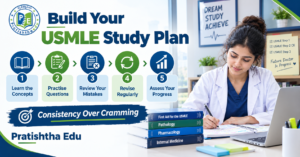
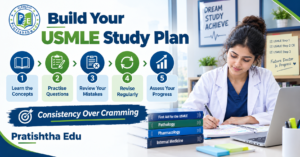
A well-planned USMLE preparation strategy includes building strong medical concepts, practising examination-style questions, reviewing mistakes, and regularly assessing your progress. Your preparation timeline should also reflect your current knowledge, college schedule, and target examination.
At Pratishtha Edu, you can enquire about available USMLE preparation options and discuss your academic requirements with the institute. Before enrolling, confirm the current course availability, teaching format, faculty details, study resources, and fee structure.
In this guide, we will explain seven important factors to consider when choosing a USMLE preparation program in Bangalore, along with practical study strategies and tips to help you make an informed decision.
Why Choosing the Right USMLE Preparation Program Matters
USMLE preparation involves consistent learning, practice, revision, and a clear understanding of the examination requirements. A structured preparation program may help students organise their study routine, clarify difficult concepts, and identify areas that need further improvement.
However, every student has different academic strengths, preparation needs, and time constraints. Before selecting a coaching institute, consider the teaching approach, available academic support, course duration, learning format, and opportunities for practice and revision.
The right choice should support your preparation goals while allowing you to develop independent learning habits and confidence in applying medical knowledge.
Looking for USMLE preparation guidance in Bangalore?
Explore Pratishtha Edu and enquire about currently available preparation options.
What Is the USMLE and Why Is It Important for Indian Medical Students?
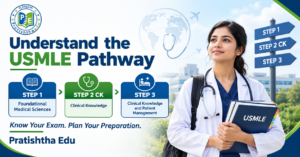
The United States Medical Licensing Examination (USMLE) is a three-step examination sequence used in the United States medical licensing system. It assesses a candidate’s ability to apply medical knowledge, clinical concepts, and patient-centred skills relevant to medical practice.
For Indian medical students and graduates who are considering postgraduate medical training in the United States, understanding the USMLE pathway is an important first step. Candidates need to understand the purpose of each examination, verify their eligibility, and plan their preparation according to their academic background and career goals.
When researching USMLE Coaching in Bangalore, students should first identify which examination they are preparing for and what kind of academic support they need.
Understanding USMLE Step 1
USMLE Step 1 focuses on foundational medical science concepts and their application to health, disease, and clinical situations.
Preparation commonly involves subjects such as:
- Anatomy and physiology
- Biochemistry and genetics
- Pathology and pathophysiology
- Pharmacology
- Microbiology and immunology
- Related foundational medical science topics
Students should focus on understanding core concepts, connecting related subjects, and applying their knowledge to examination-style questions. Regular revision and careful review of incorrect answers can help identify areas that need further study.
If you are beginning your preparation, read our USMLE Step 1 Preparation 2027 guide for a more detailed discussion of study planning and examination preparation.
Understanding USMLE Step 2 CK
USMLE Step 2 Clinical Knowledge (CK) assesses the application of clinical knowledge and the ability to reason through patient-care scenarios.
Preparation generally requires students to develop their understanding of clinical presentations, differential diagnosis, investigations, management, prevention, and other areas covered in the official examination content outline.
Students should practise interpreting clinical vignettes, identifying relevant findings, and explaining why one answer is more appropriate than the alternatives.
Although Step 1 and Step 2 CK are related, they have different objectives. Your study resources and preparation strategy should therefore match the examination you intend to take.
What Is USMLE Step 3?
USMLE Step 3 assesses whether a physician can apply medical knowledge and clinical understanding in the context of unsupervised medical practice.
Its eligibility requirements differ from those for Step 1 and Step 2 CK. International medical graduates generally need to pass Step 1 and Step 2 CK and obtain the required ECFMG Certification before applying for Step 3.
Students should check the current official requirements rather than relying only on advice from coaching providers or online discussions.
USMLE Eligibility for Indian Medical Students
Before enrolling in a preparation program or selecting an examination date, Indian medical students and graduates should verify that they meet the applicable eligibility requirements.
For Step 1 and Step 2 CK, international medical students and graduates must meet the relevant USMLE and ECFMG eligibility criteria. These include requirements relating to the medical school, enrolment or graduation status, and applicable certification procedures.
Eligibility Checklist for Indian Applicants
Before applying, check the following:
- Medical school eligibility: Verify that your medical school is listed in the World Directory of Medical Schools and meets the applicable ECFMG eligibility requirements.
- Student or graduate status: Confirm that your current enrolment or graduation status meets the requirements for the examination.
- Certification requirements: Review the current ECFMG Certification process and the requirements relevant to your situation.
- Application procedure: Follow the official registration instructions for international medical students and graduates.
- Current policies: Read the applicable USMLE Bulletin of Information and any relevant updates before applying.
Eligibility can depend on individual circumstances, so do not assume that every Indian medical student automatically qualifies.
For the latest requirements, consult the official USMLE Eligibility Guidelines and the ECFMG eligibility information.
Understanding these requirements early can help you plan your preparation timeline more effectively and avoid relying on outdated information.
Planning your USMLE preparation in Bangalore?
Once you understand your examination goals and eligibility requirements, the next step is to evaluate course structure, learning resources, academic guidance, and preparation schedules.
You can visit Pratishtha Edu to enquire about currently available preparation options and confirm the course details directly with the institute.
How to Choose the Right USMLE Coaching in Bangalore: 7 Essential Factors
When deciding how to choose USMLE coaching, compare the course structure, faculty experience, study resources, practice questions, revision schedule, and academic support. The programme should match your target examination, current preparation level, available study time, and preferred learning style. Before enrolling, confirm the actual services offered and review the course details carefully.
When comparing USMLE coaching in Bangalore, look beyond promotional claims and focus on the actual course structure, teaching approach, learning resources, and academic support available to students.
1. Check the USMLE Course Structure
Before enrolling, confirm whether the program covers USMLE Step 1, Step 2 CK, or both. These examinations assess different aspects of medical knowledge, so the course content and teaching strategy should match your target examination.
Ask the institute about the subjects covered, course duration, class schedule, revision sessions, and availability of doubt-solving support.
A clearly defined course structure can help you organise your preparation and understand what to expect before joining.
2. Evaluate the Faculty and Teaching Approach
Medical concepts can be challenging to understand without a clear explanation and a structured learning process. When evaluating a USMLE preparation program, ask about the faculty’s relevant teaching experience, subject expertise, and approach to explaining difficult topics.
Consider whether the teaching method includes conceptual explanations, clinical case discussions, question analysis, and opportunities to ask questions.
Rather than relying only on claims about faculty experience, request specific information about who teaches the course and how classes are conducted.
3. Understand the Study Materials and Practice Resources
USMLE preparation involves more than reading textbooks. Candidates need to understand the examination content, practise relevant questions, and learn from their mistakes.
Before choosing a coaching program, check which study materials are provided and whether external resources require separate subscriptions.
Useful preparation resources may include:
- Official USMLE content outlines and sample questions.
- Subject-specific study materials.
- Examination-style practice questions.
- Revision notes and topic summaries.
- Suitable self-assessment resources.
You can explore the official USMLE preparation resources to understand the practice materials available directly from the examination program.
Remember that third-party coaching programs are not affiliated with or endorsed by the USMLE program unless explicitly stated by an official source.
4. Compare Online and Classroom Learning Options
Your preferred learning format should fit your academic schedule and personal circumstances.
Classroom coaching: May suit students who prefer fixed class timings, direct interaction, and a structured learning environment.
Online coaching: May be suitable for students who need flexibility because of college classes, clinical rotations, or other responsibilities.
Hybrid learning: May combine online and classroom learning, depending on the institute’s available arrangements.
Before enrolling, confirm which formats are currently offered, whether recorded sessions are available, and how students can ask questions outside scheduled classes.
5. Ask About Mentorship and Doubt-Solving Support
Students often need different levels of academic support during preparation. Some may struggle with foundational concepts, while others may need help interpreting clinical questions or managing their study schedule.
Ask whether the course includes doubt-solving sessions, progress reviews, revision guidance, or individual academic discussions.
It is also useful to understand how frequently students receive feedback and whether the support continues throughout the course.
These details can help you determine whether a program suits your learning needs.
6. Review the Study Plan and Assessment Process
A preparation schedule should include concept learning, question practice, revision, and regular evaluation of progress.
Ask how the institute helps students organise their preparation and identify weak areas. If mock tests or assessments are offered, confirm their frequency, format, and whether feedback is provided after each assessment.
Practice assessments can help you understand your strengths and weaknesses, but they should be used alongside careful review of the examination content and your learning progress.
Avoid selecting an examination date based only on the number of study hours completed or a single practice-test result.
7. Compare Fees, Course Duration, and Included Services
Course fees are an important consideration, but the lowest price does not necessarily provide the best fit for every student.
Before making a payment, request written details covering:
- Total course fees and any applicable additional charges.
- Course duration and class schedule.
- Study materials included in the fee.
- Access to online classes or recordings, where applicable.
- Mock tests, assessments, and academic support included.
- Cancellation, transfer, and refund policies.
Compare institutes using the same criteria so that you can make an informed decision.
Questions to Ask Before Joining USMLE Coaching
Before choosing a preparation program in Bangalore, ask the institute these questions:
- Does the course cover Step 1, Step 2 CK, or both?
- What is the course duration and weekly timetable?
- Which faculty members teach the relevant subjects?
- Which study materials and practice resources are included?
- How are doubts addressed and progress reviewed?
- Are there any additional fees for resources or assessments?
- Can I review the course outline before enrolling?
Taking time to compare these details can help you choose a preparation program that aligns with your goals and expectations.
Explore USMLE Preparation Options at Pratishtha Edu
If you are considering USMLE coaching in Bangalore, you can contact Pratishtha Edu to enquire about the current course structure, available learning formats, academic support, and fees.
Review the details carefully and confirm that the available program matches your preparation requirements before enrolling.
USMLE Preparation Strategy: How to Create an Effective Study Plan
Preparing for the United States Medical Licensing Examination requires a structured approach to learning, question practice, revision, and self-assessment. For Indian medical students balancing college classes, clinical rotations, or internship responsibilities, a realistic timetable can make preparation more manageable.
When planning your USMLE preparation in Bangalore, start by identifying your target examination, assessing your current knowledge, and deciding how much time you can consistently dedicate to studying.
There is no single study plan that works for every candidate. Your schedule should reflect your academic background, available time, preparation level, and progress.
Step 1: Identify Your Target USMLE Examination
Begin by deciding whether you are preparing for USMLE Step 1 or Step 2 CK. Each examination has different learning objectives, so your study resources and preparation strategy should match the relevant exam.
For Step 1, focus on understanding foundational medical science concepts and applying them to health and disease.
For Step 2 CK, prioritise clinical reasoning, patient presentations, diagnosis, investigations, management, and other topics included in the official examination content outline.
If you are unsure where to begin, review the official exam content before building your timetable.
Step 2: Assess Your Current Preparation Level
Before starting an intensive study schedule, identify your strengths and weaknesses.
Review the subjects you have already studied, note the topics that require additional attention, and become familiar with the types of questions used in your target examination.
You can use suitable practice questions or assessments to establish a baseline. Treat the results as a guide for planning rather than as a guarantee of your eventual examination performance.
This initial review helps you allocate more time to difficult topics instead of spending equal time on every subject.
Step 3: Build a Realistic Weekly Study Timetable
Divide your study time between concept learning, question practice, reviewing explanations, and revision.
A practical routine should be flexible enough to accommodate medical college commitments and other responsibilities.
For example, you could organise your study sessions around the following activities:
- Concept learning: Study one topic or a manageable group of related concepts.
- Question practice: Answer relevant examination-style questions after studying the topic.
- Explanation review: Understand why an answer is correct and why the alternatives are less suitable.
- Revision: Revisit difficult concepts and previously identified weaknesses.
- Weekly review: Evaluate your progress and adjust the next week’s plan.
Avoid creating a timetable that is too demanding to maintain. Consistency and meaningful review are more useful than simply counting study hours.
Step 4: Practise Questions Alongside Learning
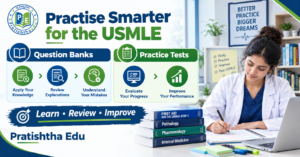
Question practice helps you apply medical knowledge, identify gaps, and become familiar with examination-style scenarios.
Instead of waiting until you have completed every topic, introduce suitable practice questions alongside your learning schedule.
After each session, review both correct and incorrect responses. A correct answer may still reveal a knowledge gap if you selected it by guessing or misunderstood the reasoning.
For each important question, try to understand the clinical clues, the underlying concept, and the reason the other options are less appropriate.
Step 5: Use Revision to Strengthen Weak Areas
Revision should be a regular part of your preparation rather than something reserved for the final few days.
Maintain a record of difficult topics, recurring mistakes, and concepts that you frequently forget. Revisit these areas at planned intervals and test your understanding with relevant questions.
For Step 1, this may involve revisiting difficult foundational science concepts. For Step 2 CK, revision may focus on clinical presentations, differential diagnosis, investigations, and management decisions.
Your revision plan should change as you identify new strengths and weaknesses.
Step 6: Monitor Your Progress with Practice Assessments
Practice assessments can help you evaluate your readiness and identify areas requiring additional preparation.
Review your performance across different subjects, the types of errors you make, and whether your reasoning improves over time.
Do not rely on a single score to decide whether you are ready for the actual examination. Consider your overall performance, consistency, understanding of the content, and the applicable examination guidance.
Use the results to make specific adjustments to your preparation plan.
Sample Daily Study Timetable for USMLE Preparation
The following is an illustrative schedule for a student who has a substantial amount of time available for preparation. It is not a mandatory routine, and students attending medical college or clinical rotations may need a shorter schedule.
| Study activity | Example duration |
| Review previously studied topics | 45 minutes |
| Learn new concepts | 2 hours |
| Practice examination-style questions | 1 hour |
| Review question explanations | 1 hour |
| Revise difficult topics | 45 minutes |
| Review daily progress and plan the next session | 15 minutes |
Adjust these durations according to your academic commitments, energy levels, and preparation stage. The aim is to balance learning with active practice and review.
Common Study Planning Mistakes to Avoid
Trying to Study Too Many Topics at Once
Switching frequently between unrelated subjects can make it harder to complete meaningful learning sessions.
Better approach: Set a clear objective for each session and finish it before moving to the next task, where practical.
Solving Questions Without Reviewing Explanations
Completing a large number of questions is not enough if you do not understand your mistakes.
Better approach: Allocate dedicated time to reviewing explanations and recording recurring errors.
Following Someone Else’s Timetable Without Adapting It
A schedule designed for a full-time candidate may not suit a student attending classes or clinical rotations.
Better approach: Set realistic weekly targets and modify the plan according to your available time and progress.
Ignoring Rest and Consistency
An excessively demanding routine can be difficult to sustain over several months.
Better approach: Build a balanced schedule with breaks, adequate rest, and achievable study goals.
How USMLE Coaching Can Support Your Preparation Strategy
A structured preparation program may help students organise their learning, clarify difficult concepts, and maintain a regular study routine. However, the support available varies by institute and course.
Before enrolling in USMLE coaching in Bangalore, ask whether the program offers a subject-wise timetable, practice-question guidance, doubt-solving sessions, progress reviews, or revision support.
At Pratishtha Edu, prospective students can enquire about the currently available USMLE preparation options and confirm the course structure, learning format, and academic support directly with the institute.
Online vs Classroom USMLE Coaching in Bangalore: Which Is Better?
Choosing between online and classroom learning is an important consideration for students preparing for the United States Medical Licensing Examination. The right format depends on your medical college schedule, clinical responsibilities, preferred learning environment, and ability to study independently.
When comparing USMLE coaching in Bangalore, consider how each learning format fits into your daily routine rather than assuming that one option is automatically better than the other.
Classroom USMLE Coaching
Classroom-based preparation may suit students who prefer scheduled lessons, direct interaction with teachers, and a structured learning environment.
Some potential advantages include:
- A fixed timetable that encourages regular study.
- Opportunities to ask questions during classes.
- Direct interaction with teachers and other students.
- A more structured routine for learners who find independent scheduling difficult.
However, classroom attendance may require commuting time and coordination with medical college classes or clinical rotations.
Before enrolling, ask about class timings, batch size, attendance requirements, and the availability of additional academic support.
Online USMLE Coaching
Online preparation may be suitable for students who need greater flexibility because of college schedules, internships, or other commitments.
Potential advantages include:
- Greater flexibility in organising study time.
- Reduced commuting requirements.
- Access to online lessons, if provided by the course.
- More convenient revision when recorded sessions are available.
Online learning also requires self-discipline and a reliable study routine. Before enrolling, confirm whether the course includes live classes, recorded lessons, question-solving sessions, and opportunities to discuss academic doubts.
Do not assume that all online programs provide the same resources or support.
Hybrid USMLE Preparation
A hybrid program combines online and classroom learning, where both formats are available.
This approach may appeal to students who want scheduled teaching alongside the flexibility to revise independently.
Before choosing a hybrid course, clarify which sessions are conducted in person, which are online, whether recordings are provided, and how academic questions are handled.
How to Choose the Most Suitable Learning Format
Use the following comparison to evaluate your options.
| Factor | Classroom learning | Online learning |
| Schedule | Usually follows fixed class timings | May offer greater flexibility |
| Interaction | Direct, in-person interaction | Depends on the online teaching format |
| Travel | May require commuting | Usually avoids daily commuting |
| Revision | Depends on notes and available recordings | Recordings may be available if included |
| Study discipline | A scheduled routine may help | Independent time management is important |
| Best fit | Students who prefer structured attendance | Students who need more scheduling flexibility |
These are general differences, not guarantees about every institute. Confirm the actual features of each course before making a decision.
What Should a Good USMLE Preparation Program Include?
A suitable preparation program should have a clear structure that matches the examination you intend to take. It should also explain what academic support and learning resources are included.
A Clearly Defined Course Curriculum
Check whether the course is designed for USMLE Step 1, Step 2 CK, or both. Review the subjects covered, course duration, revision schedule, and expected learning outcomes.
Qualified and Relevant Teaching Support
Ask about the faculty members who will teach your course, their subject expertise, and the approach they use to explain difficult concepts.
Practice Questions and Performance Reviews
Question practice helps students apply knowledge and identify weak areas. Confirm which practice resources are included, whether separate subscriptions are needed, and how progress is reviewed.
Doubt-Solving and Revision Support
Find out how you can ask academic questions, whether revision sessions are available, and whether the course includes structured feedback on your progress.
Transparent Fees and Course Conditions
Request written details of the total fee, additional charges, course duration, included materials, attendance policies, and applicable refund terms.
USMLE Coaching in Bangalore: Checklist Before Enrolling
Before selecting a coaching institute, use this checklist to compare your options:
- Confirm the course is suitable for your target USMLE examination.
- Review the curriculum and teaching schedule.
- Ask about faculty and academic support.
- Check the availability of practice questions and assessments.
- Understand whether the program is online, classroom-based, or hybrid.
- Confirm which study resources are included in the fee.
- Request written information about additional costs and course terms.
- Verify official examination and eligibility requirements independently.
Taking time to evaluate these factors can help you avoid choosing a program based solely on advertising or price.
Explore USMLE Preparation Options at Pratishtha Edu
Students considering USMLE preparation in Bangalore can contact Pratishtha Edu to enquire about the currently available courses and learning arrangements.
Before enrolling, confirm the course curriculum, faculty, schedule, study resources, academic support, and fees directly with the institute. Choose a program only after determining whether its available features match your preparation requirements.
Common USMLE Preparation Mistakes and How to Avoid Them
Preparing for the United States Medical Licensing Examination (USMLE) requires more than studying for long hours. Medical students need to understand concepts, practise clinical questions, review mistakes, and evaluate their progress regularly. Even students who study consistently may struggle if their preparation lacks direction.
For Indian medical students preparing alongside MBBS studies, internships, or other academic responsibilities, avoiding common mistakes can make preparation more organised and manageable.
In this guide, we will discuss frequent USMLE preparation mistakes, why they can affect your progress, and how to correct them with practical strategies.
1. Starting USMLE Preparation Without Understanding the Exam
One common mistake is beginning preparation without understanding the exam structure, eligibility requirements, or the purpose of each USMLE Step.
Students may start collecting books and question banks before deciding which examination they need to prepare for or checking the latest official requirements.
How to avoid this mistake
- Understand the purpose and format of Step 1, Step 2 CK, and Step 3.
- Review the official eligibility requirements applicable to your situation.
- Check the current exam content outline before choosing study resources.
- Set a realistic target based on your academic background and available preparation time.
Official requirements can change, so always confirm the latest information through the USMLE website and the relevant eligibility information.
2. Using Too Many Books and Study Resources
Another common mistake is collecting too many books, video lectures, notes, and online resources. Students may feel that using more materials automatically improves their preparation, but switching between multiple sources can make revision difficult.
The result may be incomplete coverage of important topics and insufficient time for question practice.
How to avoid this mistake
Choose a manageable set of reliable resources that matches your learning needs. Before adding a new resource, ask yourself whether it fills a genuine gap in your understanding.
A practical approach is to:
- Select a primary resource for each major subject or topic.
- Use question banks to practise applying concepts.
- Maintain concise notes for difficult concepts and recurring mistakes.
- Revisit existing resources before purchasing or starting additional ones.
- Verify that your preparation covers the current official exam content outline.
The objective is not to use every available resource. It is to understand the material and apply it accurately to exam-style questions.
3. Memorising Facts Without Understanding Clinical Concepts
Memorisation can help students learn definitions, classifications, and essential facts. However, relying on memorisation alone may make it difficult to solve questions that require interpretation, clinical reasoning, or application of knowledge.
USMLE preparation involves understanding how information connects across subjects, rather than studying every topic in isolation.
How to avoid this mistake
Whenever you study a concept, try to understand:
- The underlying mechanism or principle.
- The relationship between symptoms, findings, and possible explanations.
- Why one answer option is more appropriate than another.
- Why the other options are less suitable in the given context.
- How the same concept may be tested through a different question format.
After reviewing a topic, solve relevant practice questions to check whether you can apply what you have learned.
4. Solving Practice Questions Without Reviewing the Explanations
Completing a large number of practice questions does not automatically mean that your preparation is improving. If you only check whether an answer is correct or incorrect, you may miss the reasoning needed to improve future performance.
Reviewing mistakes is an important part of learning.
How to avoid this mistake
After each practice session, review both incorrect answers and correct answers that involved guessing or uncertainty.
For every important mistake, identify the reason:
- Knowledge gap: You did not know the relevant concept.
- Misinterpretation: You missed a key detail in the question.
- Reasoning error: You understood the facts but selected an unsuitable answer.
- Time-management issue: You spent too long on one question.
- Careless error: You overlooked a detail despite knowing the concept.
Record recurring patterns in a mistake log. Revisit these entries during revision and solve related questions to check whether the same problem continues.
5. Ignoring Revision Until the Final Weeks
Some students spend most of their preparation time learning new topics and leave revision until the end. This can make it difficult to recall previously studied information, particularly when several subjects need to be reviewed.
Revision should be a regular part of preparation, not a last-minute activity.
How to avoid this mistake
Build revision into your routine from the beginning.
- Review important concepts after completing a topic.
- Revisit difficult questions and notes at planned intervals.
- Schedule weekly sessions for topics that need additional attention.
- Keep notes concise so that they remain useful during later revision.
- Adjust your revision priorities based on practice-question performance.
The aim is to identify weak areas early and revisit them before they become persistent problems.
6. Depending Only on Mock Test Scores
Practice tests can help students assess their preparation, but a single score cannot explain every strength or weakness. Focusing only on the final number may prevent you from identifying why mistakes occur.
Likewise, one practice result should not be treated as a guarantee of performance on the actual examination.
How to avoid this mistake
Use assessments to understand your progress across several areas:
- Topics where you perform consistently well.
- Concepts that repeatedly cause errors.
- Question types that require more practice.
- Whether you can manage time effectively.
- Whether your performance is becoming more consistent.
Follow the guidance provided by your assessment resource and use the findings to revise your study priorities. Choose an exam date only after considering your preparation, eligibility, practical constraints, and the relevant scheduling requirements.
7. Following an Unrealistic Study Schedule
A timetable that assumes several uninterrupted hours of study every day may look impressive but can be difficult to maintain alongside MBBS classes, clinical duties, or personal responsibilities.
Repeatedly missing an unrealistic target may lead to unfinished topics and rushed revision.
How to avoid this mistake
Create a schedule around your actual availability rather than an idealised routine.
- Set specific, achievable targets for each study session.
- Divide larger topics into smaller tasks.
- Reserve time for question practice and reviewing explanations.
- Keep some flexibility for difficult topics or unexpected commitments.
- Review your weekly progress and adjust the next week’s plan.
Consistency and meaningful practice are more useful than following a timetable that cannot be sustained.
8. Ignoring Official Exam Updates and Eligibility Requirements
Exam policies, registration procedures, eligibility rules, and administrative requirements may change. Depending entirely on old videos, outdated articles, or advice from other students can lead to confusion.
This is particularly important for international medical students and graduates who need to verify requirements relevant to their own circumstances.
How to avoid this mistake
Use official sources when checking exam policies, eligibility, scheduling, and content outlines. Confirm the information again when you are preparing to register or schedule an examination.
Useful starting points include:
Treat coaching advice and peer experiences as supplementary guidance, not as a replacement for official requirements.
9. Neglecting Well-Being and Sustainable Study Habits
Long preparation periods can become difficult when students consistently sacrifice sleep, breaks, or other essential routines to increase study hours. Fatigue may make it harder to concentrate, retain information, and review questions carefully.
How to avoid this mistake
Build a sustainable routine that includes sufficient sleep, regular breaks, physical activity where possible, and realistic daily targets. If you fall behind, reassess your schedule instead of automatically extending every study session.
A manageable routine can help you maintain consistency over the longer preparation period.
10. Preparing Without Seeking Help for Persistent Difficulties
Independent study is an important part of USMLE preparation, but some students continue struggling with particular concepts, question interpretation, or planning despite repeated attempts.
Continuing with the same approach without evaluating the problem may waste valuable preparation time.
How to avoid this mistake
First, identify the specific difficulty. Is it a lack of conceptual understanding, insufficient question practice, difficulty interpreting clinical scenarios, or an inconsistent schedule?
Then choose a suitable response. You might revisit a foundational topic, change your question-review method, discuss a difficult concept with a qualified mentor, or seek structured academic guidance.
If you are considering a coaching programme, review its teaching approach, available academic support, practice resources, and suitability for your requirements before enrolling.
USMLE Preparation Mistakes: Quick Self-Assessment Checklist
Use this checklist to review your current preparation. Mark the areas that need attention and work on them one at a time.
- I understand the exam structure and have checked the relevant official requirements.
- I use a manageable set of study resources.
- I focus on understanding concepts, not just memorising facts.
- I review explanations after practice questions.
- I maintain a record of recurring mistakes.
- I revise previously studied topics regularly.
- I analyse practice-test performance beyond the score.
- My study timetable matches my actual availability.
- I check official updates when making exam-related decisions.
- I seek appropriate academic guidance when a difficulty persists.
You do not need to change everything at once. Identify the two or three areas affecting your preparation most and address them first.
Final Thoughts
Successful USMLE preparation depends on a clear understanding of the exam, suitable study resources, consistent question practice, meaningful revision, and regular evaluation. Avoiding common mistakes can help you use your available preparation time more effectively.
For Indian medical students, the right preparation approach will depend on academic commitments, individual strengths, the intended examination, and the time available. Review your progress regularly and make changes based on evidence rather than simply increasing study hours.
If you are exploring structured academic support, compare the available preparation options and choose an approach that fits your learning needs and schedule.
USMLE Preparation Resources, Question Banks and Practice Tests: How to Use Them Effectively
Choosing suitable study resources is an important step when preparing for the United States Medical Licensing Examination (USMLE). Medical students often have access to textbooks, video lectures, question banks, practice assessments, and online study materials. However, using all these resources at once can make preparation confusing and difficult to manage.
The key is to choose resources according to your exam stage, learning needs, and available preparation time. You should also understand how to use practice questions and assessments to identify knowledge gaps and improve your approach.
This guide explains how to select USMLE preparation resources, use question banks effectively, organise revision, and evaluate your progress.
1. Understand Which Resources You Need for Each USMLE Step
Before selecting study materials, identify which examination you are preparing for. Step 1 and Step 2 Clinical Knowledge (CK) have different purposes, so your preparation resources should reflect the examination’s content and format.
Step 3 has its own requirements and preparation needs as well.
Resources for USMLE Step 1
Step 1 focuses on the foundational sciences relevant to medicine. Your preparation should help you understand underlying mechanisms and connect scientific concepts with clinical scenarios.
Useful resource categories include:
- Foundational medical science review materials.
- Video lectures or explanations for difficult concepts.
- Practice questions aligned with Step 1 content.
- Concise revision notes.
- Practice assessments to evaluate readiness.
Resources for USMLE Step 2 CK
Step 2 CK focuses on the application of medical knowledge in clinical settings.
Preparation resources may include:
- Clinical subject review materials.
- Question banks covering relevant clinical topics.
- Explanations of clinical scenarios and management decisions.
- Revision notes for frequently misunderstood concepts.
- Practice assessments that reflect the current exam format.
Resources for USMLE Step 3
Step 3 assesses the application of medical knowledge in patient care and clinical management. Candidates should review the official examination content and format before choosing preparation resources.
Depending on their needs, candidates may use clinical review materials, practice questions, and official sample questions or assessments.
Important: Resource requirements vary by examination and individual preparation level. Check the latest official USMLE exam information before finalising your study materials.
2. How to Choose the Right USMLE Study Resources
A popular resource is not automatically the best choice for every student. The right selection depends on your existing knowledge, preferred learning method, and preparation timeline.
Before choosing a resource, consider the following factors.
Match the resource to your exam
Confirm that the material is designed for the examination you intend to take. A resource created primarily for foundational science review may not meet all your needs for a clinically focused examination.
Check the quality of explanations
For practice questions, explanations should help you understand why an answer is appropriate and why alternative options may be less suitable.
Consider ease of revision
Resources that allow you to review important concepts efficiently can be useful during later stages of preparation. Avoid creating excessively long notes that are difficult to revisit.
Check whether the content is current
Medical knowledge and examination guidance can evolve. Prefer resources that are maintained and relevant to the current exam content outline.
Avoid collecting unnecessary materials
Start with a manageable set of resources. Add another book, course, or question bank only when you identify a specific need that your existing materials do not address.
3. How to Use a USMLE Question Bank Effectively
Question banks can help you apply concepts, practise clinical reasoning, and discover areas that require further study. However, their value depends on how carefully you review your answers.
Simply completing hundreds of questions without analysing your mistakes can limit the learning benefit.
Step 1: Attempt questions before checking the answers
Read the question carefully and identify the main problem being tested. Pay attention to relevant clinical findings, laboratory results, and other details provided.
Choose an answer based on your understanding before opening the explanation.
Step 2: Review every important explanation
After answering, review the explanation even when your answer was correct but based on guessing.
Ask yourself:
- What concept was being tested?
- Which details in the question were important?
- Why was the selected answer appropriate?
- Why were the alternative options less suitable?
- What should I review before attempting similar questions?
This approach helps turn a practice session into a structured learning activity.
Step 3: Identify patterns in your mistakes
Record recurring difficulties in a simple error log. You can categorise mistakes as knowledge gaps, misinterpretation, reasoning errors, or time-management problems.
For example, if you repeatedly struggle with questions involving a particular physiological mechanism, revise that concept and attempt related questions afterward.
Step 4: Revisit difficult questions
Mark questions that reveal important knowledge gaps or concepts you repeatedly misunderstand. Revisit them after an interval to check whether you can apply the concept independently.
Avoid relying only on memorising the correct answer. Focus on understanding the reasoning behind it.
4. Timed Practice vs Untimed Practice: Which Should You Use?
Both timed and untimed practice can have a role in preparation. The right approach depends on your current stage and the skill you want to develop.
| Practice method | Main purpose | When it may help |
| Untimed practice | Understand concepts and review reasoning carefully | When learning a topic or addressing foundational gaps |
| Timed practice | Practise pacing and making decisions within time limits | When you have sufficient topic knowledge and want to improve exam technique |
| Mixed-topic practice | Apply knowledge across different subjects | When preparing to handle varied questions |
| Full-length or official practice assessments | Evaluate performance under exam-like conditions | When appropriate for your preparation stage and the assessment available |
You do not need to use every format in every session. Select the method that addresses your current learning objective.
As your preparation progresses, include timed practice where appropriate, while continuing to review incorrect answers and uncertain responses.
5. How to Use Practice Tests to Measure Progress
Practice assessments can help you understand your current performance and identify topics that need additional attention. However, a single score should not be treated as a guarantee of your result on the actual examination.
Analyse more than the final score
After an assessment, review:
- Your performance across different subject areas.
- Questions answered incorrectly.
- Correct answers selected through guessing.
- Questions that took longer than expected.
- Topics that need revision before the next assessment.
Use these findings to adjust your study plan rather than simply taking another test immediately.
Create an action plan after each assessment
For example, if your review identifies a recurring difficulty in a particular subject, schedule a focused revision session and solve related questions. Afterward, check whether your understanding has improved.
Keep a record of assessment dates, recurring errors, and the steps taken to address them. This can help you evaluate progress over time.
Use official practice materials where available and review the current guidance on the USMLE exam preparation page.
6. Build a Simple Weekly Resource-Use Plan
A weekly plan can help you balance learning, question practice, and revision without trying to use every resource each day.
Here is an illustrative structure that you can adapt to your academic commitments.
| Day | Suggested focus |
| Monday | Learn or revise a selected topic |
| Tuesday | Continue the topic and attempt related questions |
| Wednesday | Review question explanations and update mistake notes |
| Thursday | Study another topic and practise applying concepts |
| Friday | Revisit difficult questions and weak areas |
| Saturday | Complete a suitable mixed-question session or practice assessment |
| Sunday | Review weekly progress and plan the next week |
This is only an example, not a mandatory timetable. Adjust the number and duration of study sessions according to your available time, current preparation stage, and upcoming academic responsibilities.
7. Free Official Resources and Additional Study Materials
Before paying for additional materials, explore the official information and sample resources provided by USMLE.
Useful starting points include:
- USMLE official website: https://www.usmle.org/
- Exam preparation resources: https://www.usmle.org/prepare-your-exam
- Eligibility information: https://www.usmle.org/bulletin-information/eligibility
These sources can help you review examination requirements, content information, and available preparation materials.
Commercial question banks, review books, and video courses may provide additional practice and explanations. Before purchasing them, compare their coverage, format, cost, update frequency, and suitability for your learning needs.
Do not assume that a particular resource is compulsory for every candidate. Choose materials that support your preparation without creating unnecessary duplication.
8. How Structured Academic Guidance Can Support Your Preparation
Some students are comfortable organising their own study schedule, while others benefit from structured academic guidance. Support may be useful when you need help identifying weak areas, organising revision, or understanding difficult concepts.
If you are considering USMLE coaching, evaluate the programme carefully before enrolling.
Consider asking these questions:
- Does the programme explain its teaching structure clearly?
- Is academic guidance available for difficult topics?
- Are practice questions and revision activities included?
- Can the schedule fit around your academic responsibilities?
- Are the course details, fees, and support arrangements clearly explained?
Compare the available options and verify the specific services offered rather than assuming that every coaching programme provides the same features.
Students exploring preparation support in Bangalore can review the information available from Pratishtha Edu and contact the institute to confirm its current USMLE-related offerings.
USMLE Preparation Resources: Quick Checklist
Before continuing with your preparation, check whether you have a clear plan for using your study materials.
- I have identified the USMLE Step I am preparing for.
- My resources match the relevant exam content.
- I use a manageable selection of study materials.
- I review question explanations rather than checking scores alone.
- I maintain notes on recurring mistakes.
- I include revision and suitable timed practice.
- I analyse practice assessments and act on the findings.
- I verify examination information through official sources.
- I avoid buying additional resources without a clear reason.
Final Thoughts
Effective USMLE preparation is not about collecting the largest number of books or completing the most questions. It is about selecting appropriate resources, understanding the concepts being tested, learning from mistakes, and using assessments to guide further study.
For Indian medical students, a well-organised approach can make it easier to balance preparation with MBBS studies, internships, or other commitments. Review your resources periodically and make adjustments when your learning needs change.
Choose your materials carefully, follow a realistic routine, and use official examination information when making important decisions about eligibility, registration, and exam preparation.
USMLE Preparation FAQs for Indian Medical Students: Eligibility, Study Timeline, Resources and Coaching
Indian medical students planning to pursue medical training in the United States often have questions about USMLE eligibility, examination stages, preparation time, study resources, and coaching options. Understanding these basics can help students make informed decisions before beginning their preparation.
The United States Medical Licensing Examination (USMLE) is a multi-step examination pathway used in the assessment of physicians seeking licensure in the United States. Candidates should understand the requirements applicable to their individual circumstances and verify important decisions through official sources.
In this guide, we answer frequently asked questions about USMLE preparation, particularly for students and medical graduates in India.
1. What Is the USMLE?
USMLE stands for the United States Medical Licensing Examination. It assesses a physician’s ability to apply medical knowledge and clinical reasoning at different stages of the examination pathway.
The examination sequence includes Step 1, Step 2 Clinical Knowledge (CK), and Step 3, subject to the applicable requirements. Candidates should consult the official USMLE website to understand the purpose, format, and current requirements of each examination.
Official website: USMLE
2. Can Indian Medical Students Take the USMLE?
Indian medical students and graduates may be eligible to pursue the USMLE pathway if they meet the applicable requirements. Eligibility depends on factors such as medical school eligibility, educational status, and the rules in effect when applying.
Before registering, candidates should verify that their medical school meets the relevant requirements and check the current instructions for international medical students.
Read the official USMLE eligibility information before making plans.
3. When Should Indian Students Start USMLE Preparation?
There is no single starting point that is ideal for every student. The appropriate time depends on academic commitments, foundational knowledge, career goals, and the examination being targeted.
Some students begin exploring the examination during medical school, while others organise their preparation around later academic stages or graduation.
Before choosing a start date, consider:
- Your current academic workload.
- Your understanding of foundational medical subjects.
- The examination you intend to take first.
- The time you can realistically dedicate to preparation.
- The applicable eligibility and registration requirements.
Build a schedule around your circumstances rather than copying another student’s timetable.
4. How Long Does USMLE Preparation Take?
USMLE preparation time varies according to the examination, the candidate’s background, previous preparation, and available study hours. There is no universal timeline that guarantees readiness or a particular result.
To estimate your preparation period, review the exam content, assess your current knowledge, and divide the syllabus into manageable topics.
Include time for learning, question practice, revision, and practice assessments. Reassess your progress regularly and adjust your schedule when necessary.
For Step-specific information, refer to the official USMLE exam preparation resources.
5. What Is the Difference Between USMLE Step 1 and Step 2 CK?
Step 1 and Step 2 CK assess different aspects of medical knowledge.
Step 1 focuses on foundational sciences relevant to medicine, while Step 2 CK focuses on applying clinical knowledge.
Because their objectives differ, candidates should choose study materials and practice activities that match the examination they are preparing for. Review the official content outlines to understand the current scope and format.
6. Is USMLE Coaching Necessary?
Coaching is not automatically necessary for every candidate. Some students prefer independent preparation, while others benefit from structured teaching, academic guidance, or additional support with difficult topics.
Before choosing a coaching programme, consider your learning style, available study time, budget, and areas of difficulty.
If you are comparing programmes, check the course structure, faculty information, teaching format, practice resources, fees, and support arrangements. Confirm exactly what is included before enrolling.
7. How Should I Choose USMLE Study Materials?
Begin by identifying the examination you are preparing for and reviewing its official content outline.
Then choose a manageable set of suitable resources. Depending on your needs, these may include review materials, video explanations, practice questions, and assessment tools.
When evaluating resources, consider:
- Relevance to the intended examination.
- Quality of explanations.
- Ease of revision.
- Alignment with current examination information.
- Cost and accessibility.
- Whether the resource adds value beyond the materials you already use.
Using more resources does not automatically improve preparation. Understanding concepts and learning from practice questions are important parts of an effective study approach.
8. Are Online USMLE Classes Better Than Classroom Coaching?
Neither format is automatically better for every student. The right choice depends on your schedule, preferred learning environment, access to academic support, and ability to study independently.
Online learning may offer flexibility, while classroom learning may provide a more structured environment and direct interaction. Some students may prefer a combination of both, where available.
Before enrolling, ask about the actual teaching format, timetable, interaction with faculty, course access, and support arrangements. Compare the programme with your needs instead of choosing solely on the basis of format.
9. How Important Are Question Banks and Practice Tests?
Question banks can help candidates apply medical knowledge, identify weak areas, and practise interpreting exam-style questions. Reviewing explanations is essential because it helps students understand the reasoning behind correct and incorrect answers.
Practice assessments can also help evaluate progress and identify areas for further study. However, a practice score is not a guarantee of performance on the actual examination.
Use results to guide revision and consult official sample materials where available.
10. Where Can I Find Official USMLE Information?
The official USMLE website is the best starting point for current examination information and preparation guidance.
Useful links include:
Candidates should also check the relevant official guidance for international medical graduates and any registration or certification requirements applicable to their situation.
Always verify important decisions through official sources rather than relying only on older articles, social media posts, or informal advice.
11. What Should I Check Before Booking a USMLE Examination?
Before booking an examination, review the current eligibility requirements and application instructions relevant to your circumstances.
Use this checklist as a starting point:
- Confirm the requirements applicable to your medical school and educational status.
- Review the current exam content and format.
- Check registration instructions and any required documentation.
- Review the applicable scheduling and administrative rules.
- Assess your preparation and identify remaining knowledge gaps.
- Make sure your intended examination date fits your circumstances.
This checklist is general guidance, not a substitute for the official requirements that apply to an individual candidate.
12. Can USMLE Preparation Be Managed Alongside MBBS Studies?
It may be possible, but the approach depends on your academic workload, available time, and preparation goals. A realistic routine is more useful than an overly demanding schedule that is difficult to maintain.
Start by identifying consistent study periods during the week. Break topics into smaller tasks, include question practice, and schedule regular revision.
During examinations, clinical postings, or other demanding periods, adjust your preparation rather than assuming you must maintain the same workload every day.
Final Conclusion: Plan Your USMLE Preparation With Clear Goals
Preparing for the USMLE requires a clear understanding of the examination pathway, appropriate study resources, consistent practice, and regular review of your progress. Indian medical students should also pay close attention to eligibility and administrative requirements before making examination-related decisions.
Start by identifying your target examination, reviewing official information, and building a realistic preparation plan. Choose study materials that address your learning needs and use practice questions to understand your strengths and weaknesses.
If you are exploring structured academic support, compare available programmes carefully and confirm their current offerings before making a decision.
For more information about preparation options, visit the Pratishtha Edu website.
Leave a Reply