
The Reserve Bank of India (RBI) Grade B examination is one of the most competitive banking examinations in India. Every year, thousands of graduates prepare for this examination to secure an officer-level position at the Reserve Bank of India. However, beginners may find it challenging to know where to start, which subjects to study, and how to manage their preparation.
If you plan to appear for the RBI Grade B 2027 examination, a structured preparation strategy from the start can make your journey more organised and effective. Candidates need to develop strong conceptual knowledge, stay updated with current affairs, practise objective questions, and improve their descriptive writing skills to prepare for different stages of the examination.
How to Prepare for RBI Grade B 2027 is an important question for aspirants who want to begin their preparation with a clear direction. Rather than studying multiple subjects randomly, beginners should follow a systematic study plan that includes understanding the examination structure, covering the syllabus, creating a daily timetable, practising mock tests, and revising important topics regularly.
In this complete guide, we will explain how beginners can start their RBI Grade B preparation from scratch, create an effective daily study routine, follow a six-month preparation roadmap, and choose suitable study resources. Whether you are a college graduate, a working professional, or a first-time banking exam aspirant, this guide will help you understand the important steps involved in preparing for the examination.
Understanding how to prepare for RBI Grade B 2027 requires a clear study plan, regular practice, subject-wise preparation and consistent revision. Beginners should focus on building strong concepts before moving towards advanced topics and full-length mock tests.
1.How to Prepare for RBI Grade B 2027 as a Beginner?
Starting preparation for a competitive examination like RBI Grade B requires proper planning, consistency, and a clear understanding of the subjects. Beginners should not immediately focus on completing the entire syllabus. Instead, they should first understand the examination requirements and gradually build their preparation around the important subjects.
Here are some essential steps to help beginners start their preparation effectively.
1.1 Understand the RBI Grade B Exam Structure
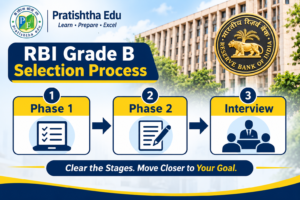
Before beginning your preparation, understand the different stages of the RBI Grade B selection process. The General Cadre examination generally consists of Phase 1, Phase 2, and the interview.
Each stage evaluates different skills and requires a different preparation approach. Phase 1 focuses on objective questions, speed and accuracy, while Phase 2 tests subject knowledge, analytical understanding and descriptive writing abilities.
Understanding the examination structure helps candidates plan their preparation and allocate sufficient time to each stage.
1.2 Check the Complete Subject-Wise Syllabus
After understanding the examination structure, candidates should review the complete syllabus and identify all the subjects and topics they need to prepare.
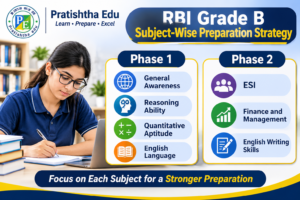
The preparation generally covers:
- General Awareness
- Reasoning Ability
- Quantitative Aptitude
- English Language
- Economic and Social Issues (ESI)
- Finance and Management (FM)
- English Writing Skills
Divide each subject into smaller topics and prepare a checklist to monitor your progress. For a detailed explanation of the examination topics, refer to our RBI Grade B Syllabus 2027 – Complete Phase 1 and Phase 2 Preparation Guide.
1.3 Build Strong Fundamental Concepts
Beginners should focus on understanding basic concepts before moving towards advanced-level preparation. A strong foundation helps candidates solve questions more accurately and understand complex topics.
For example, candidates should strengthen basic mathematical concepts before practising advanced Quantitative Aptitude questions. Similarly, understanding fundamental economic concepts makes it easier to study Economic and Social Issues and Finance.
Developing conceptual clarity from the beginning can make the overall preparation process more manageable.
1.4 Prepare a Realistic Study Schedule
A well-planned timetable helps candidates maintain consistency and cover different subjects without unnecessary pressure.
Beginners can initially dedicate three to four hours daily to focused preparation. As their understanding improves, they can gradually increase their study time.
Your daily schedule should include concept learning, question-solving practice, current affairs reading, and revision. Allocate additional time to subjects that you find difficult.
1.5 Practise Questions Regularly
Reading concepts alone is not sufficient for competitive examination preparation. Candidates should solve practice questions after completing every topic.
Regular practice helps improve problem-solving ability, accuracy, and time management. It also helps candidates understand the types of questions commonly asked in competitive examinations.
Maintain a separate notebook to record incorrect answers, important formulas, and difficult concepts so that you can revise them regularly.
1.6 Follow a Consistent Revision Routine
Revision plays an important role in retaining information throughout the preparation journey. Candidates should revise previously studied topics instead of continuously moving towards new chapters.
Prepare short notes for important concepts, economic developments, current affairs, and formulas. Set aside time every week to review completed topics and practise questions based on them.
A consistent revision routine can help beginners improve their understanding and approach the examination with greater confidence.
2. Understand the RBI Grade B Examination Before Starting Preparation
Before following a study timetable, candidates should understand the RBI Grade B examination pattern and selection process. Knowing how the examination is conducted helps beginners plan their preparation according to the requirements of each stage.
The RBI Grade B General Cadre selection process generally consists of three stages: Phase 1, Phase 2, and Interview. Each stage evaluates different skills, so candidates should prepare for all three stages rather than focusing only on the preliminary examination.
Candidates should refer to the latest official RBI notification for the confirmed examination pattern, marks distribution, and eligibility requirements. The 2027 examination details should be verified once the official notification is released.
2.1 RBI Grade B Phase 1 Examination
Phase 1 is the first stage of the RBI Grade B selection process. It is an objective-type examination designed to evaluate candidates’ knowledge, reasoning ability, numerical skills, and English language proficiency.
The examination generally covers four major subjects:
- General Awareness: Current affairs, banking awareness, financial news, economic developments, and important national and international events.
- Reasoning Ability: Logical reasoning, puzzles, seating arrangements, syllogism, coding-decoding and other reasoning topics.
- Quantitative Aptitude: Simplification, number series, data interpretation, percentages, ratios, averages, and other mathematical topics.
- English Language: Reading comprehension, grammar, vocabulary, sentence correction, and other language-based questions.
Beginners should focus on building conceptual clarity and improving speed and accuracy. Regular sectional practice and mock tests can help candidates understand their strengths and weaknesses.
2.2 RBI Grade B Phase 2 Examination
Phase 2 is an important stage of the selection process because it evaluates candidates’ understanding of economic, financial, and management-related subjects, along with their English writing skills.
The examination generally includes the following papers:
- Economic and Social Issues (ESI): Covers Indian economic developments, growth, social issues, government policies, poverty, employment, and other important economic topics.
- Finance and Management (FM): Includes financial systems, banking, financial markets, risk management, corporate governance and management principles.
- English Writing Skills: Evaluates descriptive writing, comprehension, analytical thinking, and the ability to communicate ideas effectively.
Candidates should develop the habit of reading newspapers, understanding economic developments, and preparing short notes on important topics. Regular descriptive answer-writing practice is also useful for improving writing quality and presentation.
2.3 RBI Grade B Interview
Candidates who qualify for Phase 2 are shortlisted for the interview stage according to the official selection criteria.
The interview generally evaluates a candidate’s personality, communication skills, subject knowledge, awareness of economic and financial developments, and understanding of the role of the Reserve Bank of India.
Beginners should gradually develop confidence in explaining their opinions, discussing current economic issues, and answering questions related to their educational background.
Some useful interview preparation activities include:
- Reading about the functions and responsibilities of RBI.
- Staying updated with important banking and economic developments.
- Understanding basic financial and monetary policy concepts.
- Practising communication and answering questions confidently.
- Preparing questions related to educational qualifications and professional experience.
2.4 Why Should Beginners Prepare for Phase 1 and Phase 2 Together?
One common mistake among beginners is focusing entirely on Phase 1 and postponing Phase 2 preparation until after the preliminary examination.
A balanced preparation approach is more effective because several concepts related to economics, finance, and current affairs are useful across different stages of the examination.
Candidates should dedicate time to objective question practice while gradually developing their understanding of ESI, Finance and Management, and descriptive English.
Preparing for both phases from the beginning can reduce last-minute pressure and help candidates maintain a consistent study routine.
Note: The examination structure and paper details mentioned above are based on the established RBI Grade B General Cadre examination scheme. Candidates should check the official RBI Opportunities website for the confirmed 2027 notification and any changes to the examination pattern.
3. RBI Grade B Subject-Wise Preparation Strategy for Beginners
A proper subject-wise preparation strategy is essential for candidates who want to perform well in the RBI Grade B 2027 examination. Since the examination covers different areas of knowledge, beginners should understand how to approach each subject and allocate sufficient time for learning, practice, and revision.
Instead of preparing all subjects in the same way, candidates should follow a subject-specific approach based on the nature and difficulty of each topic. Some subjects require regular question-solving practice, while others need conceptual understanding, reading habits, and continuous revision.
The following subject-wise preparation strategies can help beginners organise their studies effectively.
3.1 General Awareness Preparation Strategy
General Awareness is an important part of Phase 1 preparation. It mainly covers current affairs, banking awareness, financial developments, economic news, and important national and international events.
Beginners should develop a regular reading habit and focus on understanding important developments rather than memorising random facts.
How to prepare for General Awareness:
- Read daily news related to banking, finance and the Indian economy.
- Follow important RBI announcements, monetary policy updates and financial developments.
- Prepare monthly current affairs notes for regular revision.
- Study government schemes, reports, indexes and important economic events.
- Practise General Awareness questions regularly to improve retention.
Candidates should give special attention to banking and economic current affairs because these topics are closely related to the responsibilities and functions of the Reserve Bank of India.
3.2 Reasoning Ability Preparation Strategy
Reasoning Ability evaluates a candidate’s logical thinking, analytical skills and problem-solving ability. Beginners should first understand basic reasoning concepts and gradually move towards moderate and difficult questions.
Important areas include:
- Puzzles and Seating Arrangements
- Syllogism
- Coding-Decoding
- Inequality
- Blood Relations
- Direction Sense
- Logical Reasoning
- Input-Output
How to prepare Reasoning Ability:
Start with basic topics and understand the methods used to solve different question types. Practise a few questions daily and gradually increase the difficulty level.
Focus on puzzles and seating arrangements because they require regular practice and effective time management. Analyse incorrect answers to understand where you are making mistakes.
3.3 Quantitative Aptitude Preparation Strategy
Quantitative Aptitude requires mathematical understanding, calculation speed and accuracy. Beginners who are not comfortable with mathematics should spend sufficient time strengthening their basic concepts.
Important topics include:
- Percentage
- Ratio and Proportion
- Average
- Profit and Loss
- Simple and Compound Interest
- Time and Work
- Speed, Time and Distance
- Number Series
- Data Interpretation
- Simplification and Approximation
How to prepare Quantitative Aptitude:
Begin with fundamental mathematical concepts and learn important calculation techniques. Practise questions topic-wise before attempting mixed practice sets.
Solve data interpretation questions regularly and maintain a notebook of important formulas and calculation methods. Consistent practice can help improve speed, accuracy and confidence.
3.4 English Language Preparation Strategy
English Language preparation requires regular reading, vocabulary development and a good understanding of grammar. Beginners should focus on improving their reading comprehension and ability to understand written passages.
Important topics include:
- Reading Comprehension
- Vocabulary
- Grammar
- Error Detection
- Sentence Improvement
- Para Jumbles
- Fill in the Blanks
- Cloze Test
How to prepare English Language:
Read quality newspaper articles and editorials regularly to improve reading speed and vocabulary. Practise grammar exercises and solve reading comprehension questions to understand different question patterns.
Maintain a list of new words, their meanings and usage. Regular reading and practice can gradually improve language skills.
3.5 Economic and Social Issues (ESI) Preparation Strategy
Economic and Social Issues is an important Phase 2 subject that requires conceptual understanding and awareness of India’s economic and social developments.
Beginners should first understand basic economic concepts before studying advanced topics. Focus on the Indian economy, economic growth, inflation, poverty, employment, sustainable development and government initiatives.
How to prepare ESI:
- Understand basic economic terminology and concepts.
- Study important economic and social developments in India.
- Read relevant government reports and official publications.
- Follow important policies and schemes related to economic development.
- Prepare short notes for important facts, data, and developments.
- Practise descriptive answers on relevant economic and social topics.
Reading the Economic Survey and understanding important government initiatives can help candidates develop a broader understanding of the Indian economy.
3.6 Finance and Management (FM) Preparation Strategy
Finance and Management covers financial concepts, banking systems, financial markets and management principles. Beginners should focus on understanding the concepts rather than memorising definitions without context.
Important areas include:
- Financial System
- Financial Markets
- Banking Sector
- Risk Management
- Financial Institutions
- Corporate Governance
- Principles of Management
- Leadership and Motivation
- Communication
- Organisational Behaviour
How to prepare Finance and Management:
Start with basic financial terminology and understand how the Indian financial system operates. Study important banking concepts, financial institutions and management theories systematically.
Prepare concise notes for definitions, concepts and important topics. Regular revision and topic-wise practice can help improve understanding and recall.
3.7 English Writing Skills Preparation Strategy
English Writing Skills is a descriptive component of Phase 2. It evaluates a candidate’s ability to communicate ideas clearly through written responses.
Beginners should develop a regular writing habit rather than waiting until the final stage of preparation.
How to improve English writing skills:
- Practise writing essays on economic, financial and social topics.
- Develop the ability to summarise lengthy passages.
- Improve grammar, sentence formation and vocabulary.
- Organise answers with a clear introduction, main discussion and conclusion.
- Practise writing within the prescribed time limit.
Regular descriptive writing practice can help candidates improve clarity, structure and presentation.
3.8 How to Balance All Subjects During Preparation
Preparing for multiple subjects requires proper time management. Beginners should avoid spending all their study time on one subject while ignoring the others.
A balanced routine should include daily practice for Phase 1 subjects along with dedicated study sessions for Phase 2 topics. General Awareness and current affairs should be covered regularly, while ESI and Finance and Management require consistent conceptual preparation.
Candidates should review their weekly progress, identify weaker subjects and adjust their study timetable accordingly. This balanced approach can help build a strong foundation for the overall RBI Grade B examination.
4. RBI Grade B Daily Study Timetable for Beginners
An effective daily timetable is an important part of how to prepare for RBI Grade B 2027, especially for beginners who need to balance multiple subjects and regular revision.
Creating a proper daily study timetable is one of the most important steps in preparing for the RBI Grade B 2027 examination. Beginners often struggle to manage multiple subjects, current affairs, practice questions and revision within a limited amount of time.
A realistic study schedule helps candidates maintain consistency and complete their preparation systematically. Instead of studying for long hours without direction, candidates should divide their daily study time into smaller sessions and assign specific subjects to each session.
The ideal study duration depends on a candidate’s preparation level, daily responsibilities and available time. Beginners can start with three to four hours of focused study and gradually increase their study hours as they become more comfortable with the subjects.
4.1 RBI Grade B 3-Hour Daily Study Timetable
Candidates who are beginning their preparation or have limited time can follow a three-hour daily study schedule. The main objective should be to understand basic concepts, practise questions and revise important topics regularly.
| Study Activity | Daily Time |
| General Awareness and Current Affairs | 30 minutes |
| Quantitative Aptitude | 40 minutes |
| Reasoning Ability | 40 minutes |
| English Language | 30 minutes |
| ESI or Finance and Management | 30 minutes |
| Revision and Practice Questions | 10 minutes |
| Total | 3 Hours |
This timetable provides a balanced starting point for beginners. Candidates can adjust the subject allocation depending on their strengths and weaknesses.
4.2 RBI Grade B 5-Hour Daily Study Timetable
Candidates who can dedicate more time to preparation may follow a five-hour study routine. This schedule provides additional time for conceptual learning, question-solving practice and Phase 2 preparation.
| Study Activity | Daily Time |
| General Awareness and Current Affairs | 45 minutes |
| Quantitative Aptitude | 45 minutes |
| Reasoning Ability | 45 minutes |
| English Language | 30 minutes |
| Economic and Social Issues | 60 minutes |
| Finance and Management | 45 minutes |
| Revision and Practice | 30 minutes |
| Total | 5 Hours |
Candidates should also include descriptive writing practice in their weekly routine to improve their Phase 2 preparation.
4.3 Study Timetable for Working Professionals
Working professionals may find it difficult to dedicate long hours to preparation because of office responsibilities and personal commitments. However, a consistent routine can help them manage their preparation effectively.
A practical schedule may look like this:
- Morning: Spend 30–45 minutes reading current affairs and important economic news.
- After Work: Dedicate 60–90 minutes to Quantitative Aptitude or Reasoning practice.
- Evening: Spend 45–60 minutes studying ESI or Finance and Management.
- Before Sleeping: Revise important concepts, formulas and current affairs for 15–20 minutes.
On weekends, candidates can dedicate additional time to mock tests, descriptive writing and weekly revision.
4.4 Weekly Study and Revision Plan
Along with a daily timetable, candidates should prepare a weekly study plan to ensure that all subjects receive sufficient attention.
A simple weekly preparation routine can include:
- Monday to Friday: Focus on concept learning, subject-wise practice and current affairs.
- Saturday: Complete pending topics, practise descriptive writing and solve mixed question sets.
- Sunday: Attempt a mock test, analyse performance and revise the topics covered during the week.
Candidates should not ignore revision while preparing new topics. A weekly review helps identify weak areas and keeps preparation on track.
4.5 Important Tips for Following a Study Timetable
Preparing a timetable is only the first step. Candidates must follow it consistently and make adjustments whenever necessary.
Consider these practical tips:
- Set realistic daily study targets instead of creating an overloaded timetable.
- Start with difficult subjects when your concentration level is high.
- Keep separate time for current affairs and revision.
- Avoid switching between multiple books and study resources unnecessarily.
- Take short breaks between longer study sessions.
- Track completed topics and pending chapters every week.
- Review your timetable regularly and give additional attention to weaker subjects.
A well-organised daily routine can help beginners develop discipline, improve subject knowledge, and maintain consistent progress throughout their RBI Grade B preparation.
5. RBI Grade B 6-Month Study Plan 2027 for Beginners
Following a six-month preparation plan can help candidates organise their studies, cover important subjects, and dedicate sufficient time to revision and mock tests. Beginners should divide their preparation into different phases instead of trying to complete the entire syllabus at once.
A systematic RBI Grade B study plan should include concept building, subject-wise preparation, current affairs, question-solving practice, descriptive writing, and regular performance analysis.
The following six-month roadmap provides a structured approach for candidates who want to prepare for the RBI Grade B 2027 examination.
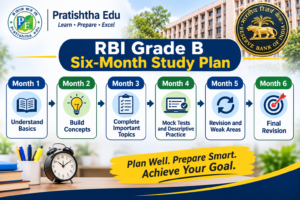
5.1 Month 1 – Build Basic Concepts and Understand the Syllabus
The first month should focus on understanding the examination requirements and developing strong fundamentals in all major subjects.
Candidates should begin with basic concepts and gradually become familiar with the types of questions asked in the examination.
Preparation targets for Month 1:
- Understand the examination structure and subject-wise syllabus.
- Start basic Quantitative Aptitude and Reasoning preparation.
- Improve English grammar, vocabulary, and reading comprehension.
- Understand fundamental economic and financial concepts.
- Develop a daily current affairs reading habit.
- Prepare short notes for important topics.
At this stage, candidates should focus more on conceptual clarity than attempting difficult mock tests.
5.2 Month 2 – Strengthen Subject-Wise Preparation
During the second month, candidates should increase their preparation level and start covering important topics from each subject.
The focus should be on improving problem-solving ability and developing a better understanding of Phase 1 and Phase 2 subjects.
Preparation targets for Month 2:
- Practise important Reasoning and Quantitative Aptitude topics.
- Improve English comprehension and grammar.
- Study banking awareness and important financial developments.
- Cover fundamental topics in Economic and Social Issues.
- Begin Finance and Management preparation.
- Revise the concepts completed during the first month.
Candidates should start solving topic-wise practice questions regularly to evaluate their understanding.
5.3 Month 3 – Complete Important Topics and Increase Practice
The third month should focus on covering the remaining important topics and improving question-solving speed.
Candidates should gradually move from basic practice to moderate-level questions and begin attempting sectional tests.
Preparation targets for Month 3:
- Complete major topics from Phase 1 subjects.
- Strengthen ESI and Finance and Management concepts.
- Continue daily current affairs preparation.
- Start practising descriptive English writing.
- Attempt sectional tests for different subjects.
- Identify weak areas and work on improving them.
By the end of the third month, candidates should have covered a significant portion of their planned syllabus.
5.4 Month 4 – Start Mock Tests and Descriptive Practice
The fourth month should focus on applying the concepts learned during the initial preparation stages. Candidates should increase their practice through mock tests, previous year questions and descriptive answer-writing exercises.
Preparation targets for Month 4:
- Attempt regular Phase 1 sectional and full-length mock tests.
- Analyse incorrect answers and improve accuracy.
- Practise important ESI and Finance and Management questions.
- Write essays and practise descriptive answers.
- Revise current affairs and important economic developments.
- Work on time management and question selection.
Mock test analysis is especially important during this stage. Candidates should understand why they are making mistakes and take steps to avoid repeating them.
5.5 Month 5 – Focus on Revision and Weak Areas
The fifth month should be dedicated to strengthening preparation and revising important topics. Candidates should avoid collecting unnecessary study materials and focus on the resources they have already used.
Preparation targets for Month 5:
- Revise completed Phase 1 and Phase 2 topics.
- Attempt regular full-length mock tests.
- Review important current affairs and banking updates.
- Practise descriptive writing within time limits.
- Revise formulas, economic concepts and management theories.
- Improve performance in weaker subjects.
Candidates should maintain short revision notes so that important information can be reviewed quickly.
5.6 Month 6 – Final Revision and Examination Readiness
The final month should focus on revision, mock test analysis and improving examination readiness. Candidates should avoid starting too many new resources at this stage.
Preparation targets for Month 6:
- Revise important topics from the complete syllabus.
- Attempt full-length mock tests according to the examination stage.
- Analyse mock test performance and improve weak areas.
- Revise current affairs, reports and important economic developments.
- Practise descriptive answers and essay writing.
- Focus on accuracy, time management and question selection.
Candidates should also maintain a balanced routine, take sufficient rest and avoid unnecessary preparation pressure before the examination.
5.7 Important Tips to Follow the Six-Month Preparation Plan
A study plan works effectively only when candidates follow it consistently. Beginners should review their progress every week and adjust their preparation according to their learning speed.
Some useful tips include:
- Set weekly and monthly preparation targets.
- Avoid skipping revision to complete new topics.
- Give equal importance to Phase 1 and Phase 2 preparation.
- Practise questions regularly instead of relying only on reading.
- Analyse mock tests to understand performance gaps.
- Follow reliable sources for current affairs and economic updates.
- Keep sufficient time for final revision.
Important: A six-month study plan is a suggested preparation roadmap, not a guarantee of completing the examination syllabus within six months. Actual preparation time depends on a candidate’s existing knowledge, daily study hours and the official RBI Grade B 2027 examination schedule. Candidates should adjust this plan after the official notification is released.
6. Best Books and Study Resources for RBI Grade B 2027 Preparation
Choosing the right books and study materials is an important part of RBI Grade B preparation. Beginners often get confused because several books, online resources and coaching materials are available for different subjects. Instead of collecting too many resources, candidates should select a limited number of reliable study materials and follow them consistently.
A good preparation strategy should include standard books, official RBI publications, current affairs resources, previous year question papers and regular practice materials. Candidates should also make their own short notes to revise important concepts before the examination.
The following resources can help candidates organise their RBI Grade B 2027 preparation.
6.1 Books for Quantitative Aptitude and Reasoning Ability
Quantitative Aptitude and Reasoning require regular practice and a clear understanding of basic concepts. Beginners should start with fundamental topics before moving towards advanced-level questions.
Suggested books:
- Quantitative Aptitude for Competitive Examinations by R.S. Aggarwal.
- A Modern Approach to Verbal and Non-Verbal Reasoning by R.S. Aggarwal.
- Analytical Reasoning by M.K. Pandey.
Candidates should practise topic-wise questions, learn calculation techniques and regularly solve puzzles, seating arrangements and data interpretation problems.
6.2 Books for English Language Preparation
English preparation requires improvement in grammar, vocabulary, comprehension and writing skills. Candidates should combine book-based learning with regular reading and writing practice.
Suggested resources:
- Objective General English by S.P. Bakshi.
- Word Power Made Easy by Norman Lewis.
- English newspaper editorials and quality articles for reading comprehension practice.
Candidates should maintain a vocabulary notebook and practise grammar exercises regularly. Reading editorials can also help improve comprehension and descriptive writing skills.
6.3 Books and Resources for Economic and Social Issues
Economic and Social Issues requires a combination of conceptual understanding and awareness of current economic developments.
Suggested resources:
- Indian Economy by Ramesh Singh.
- NCERT Economics textbooks for building basic concepts.
- RBI publications and reports.
- Union Budget documents.
- Economic Survey of India.
- Government reports related to economic and social development.
Beginners should first understand fundamental economic concepts and then connect them with current developments, government policies and important economic issues.
6.4 Books and Resources for Finance and Management
Finance and Management preparation requires an understanding of banking, financial markets, financial institutions and management principles.
Suggested resources:
- Indian Financial System by Bharati V. Pathak.
- Principles and Practice of Management by L.M. Prasad.
- RBI publications related to banking and financial systems.
- Official reports and financial sector updates.
Candidates should prepare short notes on important financial terms, banking concepts, management theories and regulatory developments. Regular revision can help improve conceptual understanding.
6.5 Important Official Websites for RBI Grade B Preparation
Official websites are valuable resources for candidates preparing for RBI Grade B because they provide authentic information about recruitment, financial developments, government policies and economic reports.
Candidates should regularly refer to the following websites:
- Reserve Bank of India: https://www.rbi.org.in/ – For RBI notifications, monetary policy updates, financial reports and banking-related information.
- RBI Opportunities: https://opportunities.rbi.org.in/ – For official recruitment notifications, examination updates and application-related information.
- Union Budget: https://www.indiabudget.gov.in/ – For government expenditure, taxation, economic policies and budget announcements.
- Economic Survey: https://www.indiabudget.gov.in/economicsurvey/ – For economic performance, sector-wise developments and important economic data.
These resources can help candidates develop a better understanding of the Indian economy and financial system.
6.6 How to Choose the Right Study Materials
Selecting too many books and online resources can create confusion and waste valuable preparation time. Beginners should choose study materials according to their subject requirements and preparation level.
Follow these suggestions while selecting resources:
- Choose one standard book for each major subject wherever appropriate.
- Use NCERT textbooks to understand basic economic concepts.
- Follow official RBI publications for banking and financial developments.
- Use reliable current affairs resources for daily and monthly revision.
- Practise previous year questions to understand examination trends.
- Prepare personal notes for important topics and difficult concepts.
- Revise selected resources instead of continuously changing study materials.
A limited and well-organised collection of study resources can make preparation more focused and manageable.
7. Importance of Mock Tests and Previous Year Question Papers for RBI Grade B 2027
Mock tests and previous year question papers play an important role in competitive examination preparation. Understanding concepts and completing the syllabus are essential, but candidates also need to develop the ability to solve questions accurately within the examination time limit.
For beginners, regular practice helps identify weak subjects, understand question patterns and improve overall performance. Mock tests also provide an opportunity to evaluate preparation and make necessary improvements before the actual examination.
7.1 Why Are Mock Tests Important for RBI Grade B Preparation?
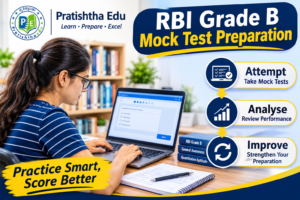
Mock tests help candidates understand their preparation level and become familiar with the examination environment.
Some important benefits of attempting mock tests include:
- Improves Time Management: Helps candidates learn how to distribute time across different subjects and questions.
- Increases Accuracy: Regular practice helps reduce calculation errors and incorrect answers.
- Identifies Weak Areas: Performance analysis highlights topics that require additional attention.
- Builds Examination Confidence: Practising under timed conditions helps candidates become more comfortable with the examination format.
- Improves Question Selection: Helps candidates identify which questions to attempt first and which ones to leave.
Candidates should focus on learning from every mock test instead of only checking their scores.
7.2 When Should Beginners Start Attempting Mock Tests?
Beginners do not need to wait until the entire syllabus is completed before starting practice tests.
Initially, candidates can attempt topic-wise tests after completing individual chapters. Once they develop a basic understanding of the subjects, they can gradually move towards sectional tests and full-length mock examinations.
A suitable practice approach includes:
- Initial Preparation: Topic-wise tests after completing important concepts.
- Intermediate Preparation: Sectional tests to improve subject-wise performance.
- Advanced Preparation: Full-length mock tests under timed conditions.
- Final Revision: Regular mock tests followed by detailed performance analysis.
The frequency of mock tests should increase according to the candidate’s preparation level and examination schedule.
7.3 How to Analyse RBI Grade B Mock Test Performance
Attempting a mock test is only one part of the preparation process. Analysing the results is equally important because it helps candidates understand their mistakes and improve their performance.
After completing each test, candidates should:
- Identify questions answered incorrectly.
- Understand the concepts behind incorrect answers.
- Review questions that took too much time.
- Identify topics where accuracy is consistently low.
- Revise the concepts that need improvement.
- Compare performance across previous tests to track progress.
Maintaining a separate mock test analysis notebook can help candidates avoid repeating the same mistakes.
7.4 Importance of Previous Year Question Papers
Previous year question papers help candidates understand the examination format, question difficulty and commonly tested concepts.
Solving previous year questions can also help beginners understand how theoretical concepts are applied in objective and descriptive questions.
Candidates should use previous year papers to:
- Understand different question formats.
- Identify important topics and subject areas.
- Practise solving questions within a time limit.
- Evaluate their understanding of the syllabus.
- Improve question selection and examination strategy.
However, candidates should not assume that questions from previous examinations will be repeated. The purpose of solving previous year papers is to understand the examination approach and improve preparation.
7.5 How to Improve Speed and Accuracy During the Examination
Speed and accuracy are important for performing well in objective examinations. Candidates should develop these skills gradually through regular practice rather than rushing to solve questions.
Some useful techniques include:
- Practise calculations regularly to improve numerical speed.
- Learn shortcuts only after understanding the basic concepts.
- Avoid spending excessive time on a single difficult question.
- Read questions carefully before selecting an answer.
- Attempt mock tests under realistic time conditions.
- Review incorrect answers and understand the reason behind each mistake.
For Phase 2, candidates should also practise writing structured answers within the prescribed time limit.
7.6 Maintain a Consistent Practice and Performance Record
Candidates should maintain a record of their mock test scores, subject-wise accuracy, time taken and topics that need improvement.
This record helps identify preparation gaps and makes it easier to adjust the study timetable.
A simple weekly performance review can include the number of tests attempted, topics revised, mistakes corrected and improvements achieved.
Consistent practice, proper analysis and regular revision can help candidates develop the confidence and examination skills required for RBI Grade B 2027.
8. Common Mistakes to Avoid, Expert Guidance and FAQs for RBI Grade B 2027
Preparing for RBI Grade B requires consistency, proper planning, and a clear understanding of the examination. While candidates focus on completing the syllabus and practising questions, avoiding common preparation mistakes is equally important.
Beginners should identify habits that can slow down their progress and follow a balanced approach throughout their preparation journey.
8.1 Common Mistakes Beginners Should Avoid During RBI Grade B Preparation
Many candidates spend considerable time preparing but fail to achieve the expected results because of improper planning and inconsistent practice.
Here are some common mistakes candidates should avoid:
- Starting Preparation Without Understanding the Syllabus
Preparing without reviewing the complete syllabus can lead to unnecessary study and incomplete topic coverage. Candidates should understand the examination requirements before creating a study plan.
- Ignoring Phase 2 Preparation
Focusing only on Phase 1 can create difficulties later. Beginners should gradually prepare ESI, Finance and Management and English Writing Skills alongside their Phase 1 subjects.
- Collecting Too Many Books and Study Materials
Using multiple resources for the same subject can create confusion. Candidates should select reliable books and follow them consistently instead of frequently changing their preparation materials.
- Avoiding Mock Tests and Question Practice
Reading concepts without solving questions may not provide sufficient examination practice. Candidates should regularly attempt topic-wise tests, sectional tests, and full-length mock examinations.
- Not Revising Current Affairs and Important Topics
Current affairs and economic developments require regular revision. Candidates should prepare short notes and review important information periodically.
- Following an Unrealistic Study Timetable
Creating a timetable with excessive study hours can make preparation difficult to maintain. Candidates should set practical daily targets and follow a routine that suits their availability.
8.2 Can You Prepare for RBI Grade B 2027 Through Self-Study?
Yes, candidates can prepare for the RBI Grade B examination through self-study if they follow a disciplined routine and use reliable study resources. However, self-study requires proper planning, consistency and regular performance evaluation.
Candidates preparing independently should focus on:
- Understanding the complete syllabus and examination pattern.
- Following a structured daily and weekly study timetable.
- Choosing reliable books and official study resources.
- Practising questions and previous year papers regularly.
- Attempting mock tests and analysing performance.
- Revising important topics and current affairs consistently.
However, beginners may sometimes face difficulties in understanding complex topics, selecting appropriate study materials and maintaining a consistent preparation schedule.
In such situations, structured classes and expert guidance can help candidates organise their preparation and receive subject-wise support.
8.3 RBI Grade B Preparation with Expert Guidance in Bangalore
Preparing for RBI Grade B requires a systematic approach, subject-wise understanding and regular practice. Candidates who prefer structured learning can consider joining a coaching programme that provides guidance throughout their preparation journey.
Pratishtha Edu offers competitive examination preparation support in JP Nagar, Bangalore, with learning options designed to help students strengthen their concepts and prepare systematically.
Candidates can explore the following learning support:
- Expert faculty guidance and subject-wise preparation.
- Structured classes covering important examination topics.
- Regular practice sessions and mock tests.
- Study materials and preparation resources.
- Doubt-solving support and performance improvement.
- Online and offline learning options.
- Personalised guidance according to preparation requirements.
Students looking for RBI Grade B Coaching in Bangalore can explore the course details and preparation support offered by Pratishtha Edu.
Explore the course: RBI Grade B Coaching at Pratishtha Edu
9. Frequently Asked Questions About RBI Grade B Preparation 2027
9.1 How Should a Beginner Start RBI Grade B Preparation?
Beginners should start by understanding the examination structure and the complete syllabus. After that, they should build basic concepts, prepare a daily timetable, follow reliable study resources and practise questions regularly. Consistent revision and mock tests are also important.
9.2 How Many Hours Should I Study Daily for RBI Grade B?
The number of study hours depends on the candidate’s preparation level and daily schedule. Beginners can start with three to four hours of focused study and gradually increase their study time. Working professionals can follow a flexible timetable that includes regular practice and revision.
9.3 Can I Prepare for RBI Grade B in Six Months?
Yes, six months can be a useful preparation period for candidates who follow a structured study plan and dedicate sufficient time to learning, practice and revision. However, the actual preparation time depends on the candidate’s existing knowledge, learning speed and the examination schedule.
9.4 Is Self-Study Enough for RBI Grade B Preparation?
Self-study can be sufficient for candidates who are disciplined and know how to select the right study materials. However, some beginners may benefit from structured classes, expert guidance and regular doubt-solving support.
9.5 Which Subject Should I Study First for RBI Grade B?
Beginners should first understand the complete syllabus and then start with fundamental concepts in Quantitative Aptitude, Reasoning, English and Economics. They should also begin reading current affairs regularly rather than postponing it until later.
9.6 When Should I Start Taking Mock Tests for RBI Grade B?
Candidates can begin topic-wise tests after completing individual chapters. Once they understand the basic concepts, they should gradually attempt sectional and full-length mock tests. Mock test analysis should be included in their regular preparation routine.
9.7 Can Working Professionals Prepare for RBI Grade B?
Yes, working professionals can prepare by following a realistic daily timetable. They can study current affairs in the morning, practise quantitative and reasoning questions after work and use weekends for mock tests, revision and descriptive writing.
Conclusion: Start Your RBI Grade B 2027 Preparation with a Clear Study Plan
Preparing for RBI Grade B 2027 requires proper planning, consistent effort and a balanced preparation strategy. Beginners should start by understanding the examination structure, building strong subject fundamentals and following a realistic daily study timetable.
Regular question practice, current affairs preparation, mock tests and revision can help candidates improve their knowledge and examination performance. Instead of following multiple preparation strategies, candidates should select a suitable study plan and follow it consistently.
Candidates should also keep checking the official RBI website for the latest 2027 recruitment notification, examination dates and updates.
If you are looking for structured preparation support, explore RBI Grade B Coaching in Bangalore at Pratishtha Edu.
Begin your RBI Grade B 2027 preparation with the right guidance and a consistent study routine.
Pratishtha Edu – RBI Grade B Preparation
- Website: https://pratishthaedu.com/
- Course Details: https://pratishthaedu.com/rbi.html
- Contact: 7676047382 / 8660208963
- Address: Pratishtha edu, 15, 23rd Main Rd, opposite road of LIC Head Office, R.K. Colony, Marenahalli,2nd Phase, J. P. Nagar, Bengaluru, Karnataka 560078
Leave a Reply